
Microsoft’s Majorana 2 Chip Holds Quantum State for Minutes


Microsoft has announced that its new Majorana 2 quantum processor can maintain quantum states for over 20 seconds, with some measurements exceeding one minute. The result represents a thousand-fold improvement over the company’s earlier Majorana 1 chip, according to a technical paper and blog post published by the company. Microsoft says the advance supports its goal of building a scalable quantum computer by 2029, a timeline it describes as twice as fast as previously planned.
What Changed Inside the Processor
According to Microsoft’s technical paper published on June 2, the single biggest engineering move was swapping aluminum for lead as the superconducting material in the chip’s hybrid semiconductor-superconductor stack. Lead provides a larger superconducting gap, which makes it harder for environmental noise to knock quantum information out of place.
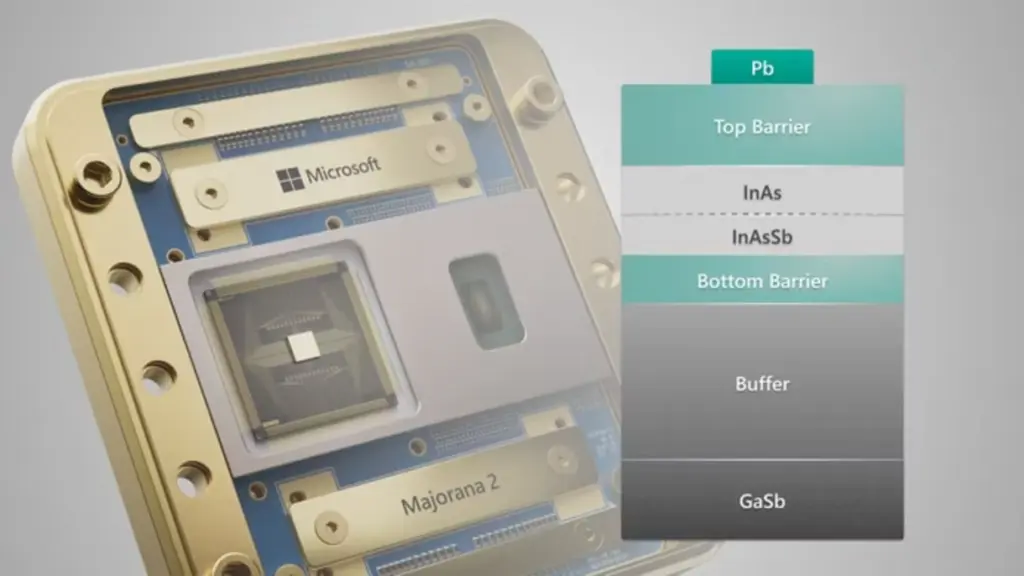
Microsoft also redesigned the semiconductor layer, combining indium arsenide with indium arsenide antimonide on a gallium antimonide substrate. Together, these changes more than doubled the so-called topological gap, from about 30 microelectronvolts in earlier devices to approximately 70 microelectronvolts.
In practical terms, parity lifetimes jumped from the range of 1 to 12 milliseconds in the previous generation to about 22 seconds in Majorana 2. Parity flips are the primary way errors creep into Microsoft’s architecture, so longer parity lifetimes mean the qubit stays useful for millions of operations before an error is expected. The company’s technical fellow, Chetan Nayak, compared the work to inventing a transistor for the quantum age.
Skepticism Isn’t Going Away
Microsoft’s topological approach has drawn sharp criticism from parts of the physics community for nearly two decades. Last year’s Majorana 1 announcement triggered extensive debate over whether the underlying Majorana zero modes had actually been observed. This latest paper sidesteps that argument somewhat by focusing on measurable engineering performance rather than proof of exotic quantum states. Still, the technical paper hasn’t gone through formal peer review, a point the company itself acknowledges.
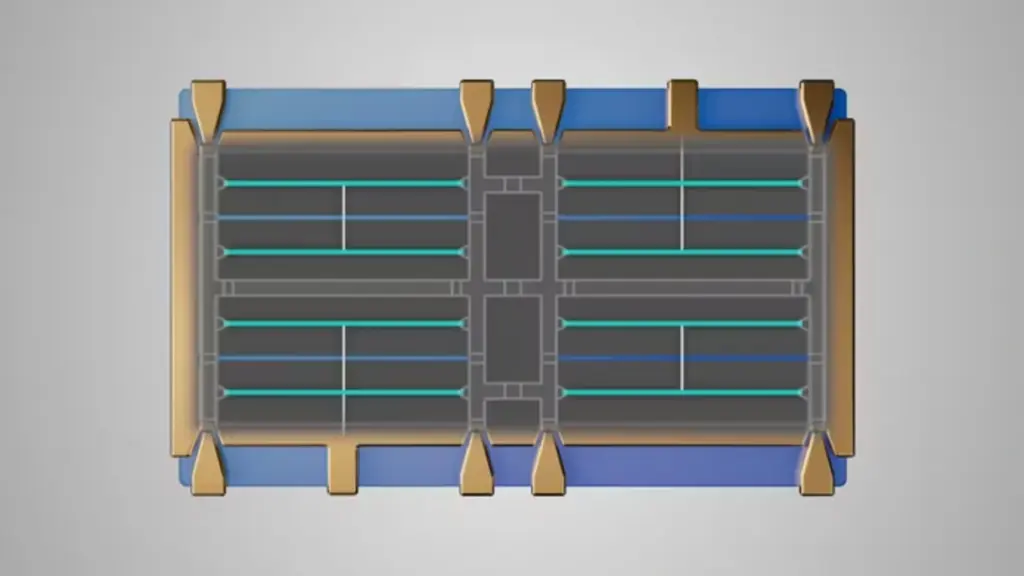
DARPA is providing an external check. Microsoft is one of two organizations that have advanced to the final phase of DARPA’s Quantum Benchmarking Initiative, where national laboratories including Los Alamos, Oak Ridge, and Lawrence Livermore evaluate whether the architecture can plausibly reach useful scale. This outside scrutiny adds weight, but the current device is still a prototype with a handful of tetron structures, not a large-scale processor. Significant scaling work remains before these lab results translate into a commercially viable machine.