
Shanghai Opens Quantum Computing Hub as China’s Cities Battle for the Lead


Shanghai has opened a quantum computing industrial hub with 26 founding companies, with hopes to grow that number into the hundreds. The zone officially opened on June 30 in the city's Xuhui district, according to the South China Morning Post, which cited the state-backed Jiefang Daily. The move puts Shanghai in direct competition with Hefei, Beijing, and Shenzhen as Chinese cities race to lead the country's quantum industry.
What Shanghai is offering
According to the July 2 report, the Shanghai Quantum Computing Future Industry Incubation Zone will hand out up to 100 million yuan, about $14.73 million, for foundational research and shared platforms. Companies building their first commercial product can receive as much as 20 million yuan. Extra subsidies will lower the cost of accessing computing resources and testing new technology.
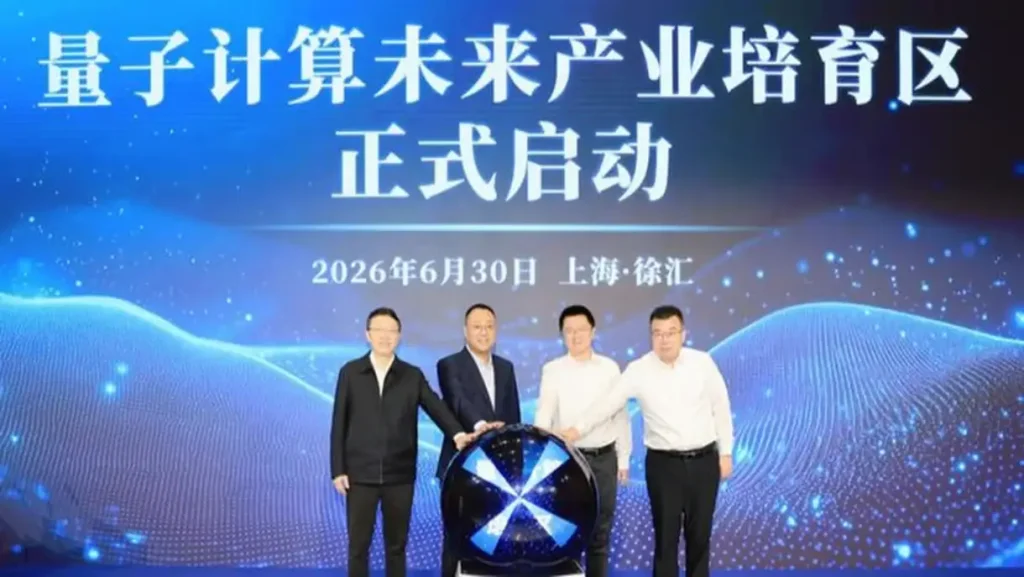
Launch ceremony for the Shanghai Quantum Computing Future Industry Incubation Zone. Source: South China Morning Post
City officials want more than a research cluster. They plan to link universities, research institutes, start-ups, and companies working on practical uses. Biomedical research and financial technology are two areas flagged for future work, both sectors where quantum machines could one day handle complex simulations that stump conventional computers.
Quantum computers use the properties of quantum mechanics to tackle certain problems that today's machines can't solve in a reasonable time. The technology is still early, and commercial payoffs remain years away.
Xuhui already has strengths Shanghai wants to build on. The district is one of the city's main AI centers, home to StepFun AI, the Shanghai Artificial Intelligence Laboratory and Hong Kong-listed MiniMax. Officials expect deeper ties between AI and quantum work to speed up development and create more testing opportunities. They've set a target of more than 100 quantum companies in Xuhui within three years, with a combined valuation in the hundreds of billions of yuan.
Local momentum is already building. Last week, Shanghai-based Taiyi Quantum reportedly raised 300 million yuan, about $44 million, in a Pre-A round.
A national priority and a crowded field
Quantum technology has been named a strategic priority in China's 15th Five-Year Plan, which runs from 2026 through 2030, the SCMP reports. That national push has prompted local governments to set up their own quantum clusters, often pairing money with university partnerships. Beijing introduced a supporting policy back in 2023 and now hosts firms like QBoson, which has looked at quantum uses in cancer research and drug discovery.
The competition is stiff. Hefei, the capital of Anhui province, had more than 90 quantum-related companies as of last year, roughly a third of China's total. Shenzhen counts quantum computing among eight strategic industries and recently produced its first quantum unicorn, SpinQ, which raised 1 billion yuan, about $147.32 million, in its latest round.