
Your Next Quantum Computer Might Remember Things by Humming

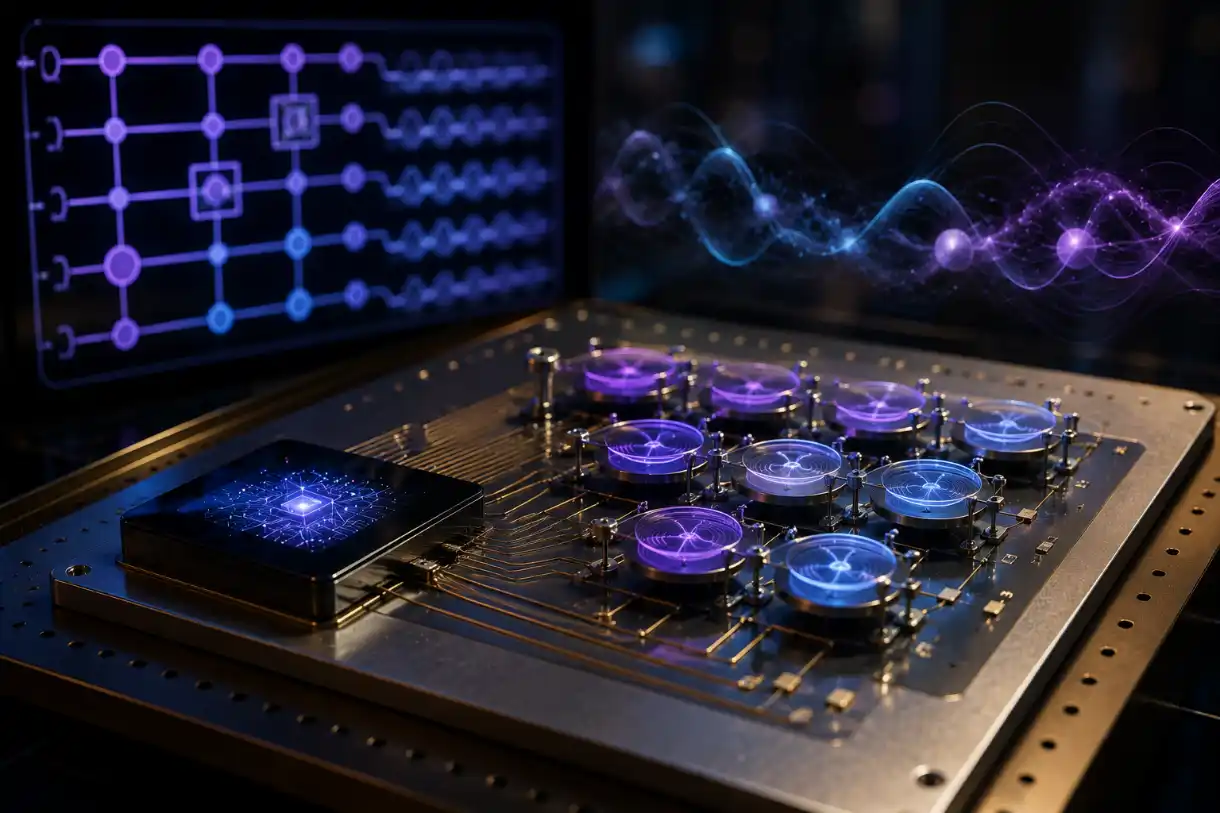
What if there was a computer that stores your data by making a tiny object physically shake. You give it a number, it starts to vibrate, and that vibration is the memory. Weird? Extremely. Also true, as of a new paper in Science from Yiwen Chu’s group at ETH Zurich.
Here’s the concept in one line: these folks built a quantum computer where the working memory is mechanical, actual motion. Microscopic resonators that buzz at frequencies way past anything your ears could catch, each buzz holding a piece of quantum information.
The processor and the memory finally got a divorce
Most quantum computers make one poor qubit do everything. It runs the math and it holds the results, the way you’d try to do long division as you’re also memorizing a grocery list. Classical computers sorted this out ages ago by splitting the job: a processor that calculates, memory that remembers.
Chu’s team copied that homework. A superconducting qubit runs the show as the processor. The remembering gets handed to the mechanical resonators, which sit there vibrating until the qubit needs them. To run a calculation, the qubit pulls information out of a vibration, tweaks it, and writes it back.
The guitar-string comparison is tempting, and the team reaches for it, but it stops fast. A guitar string obeys boring classical physics. These resonators obey quantum mechanics, so each one can vibrate several ways at once (call it the chord of unknowing), and those vibrations can be superposed and entangled. That’s the part with no classical equivalent.
Why bother with the shaky stuff
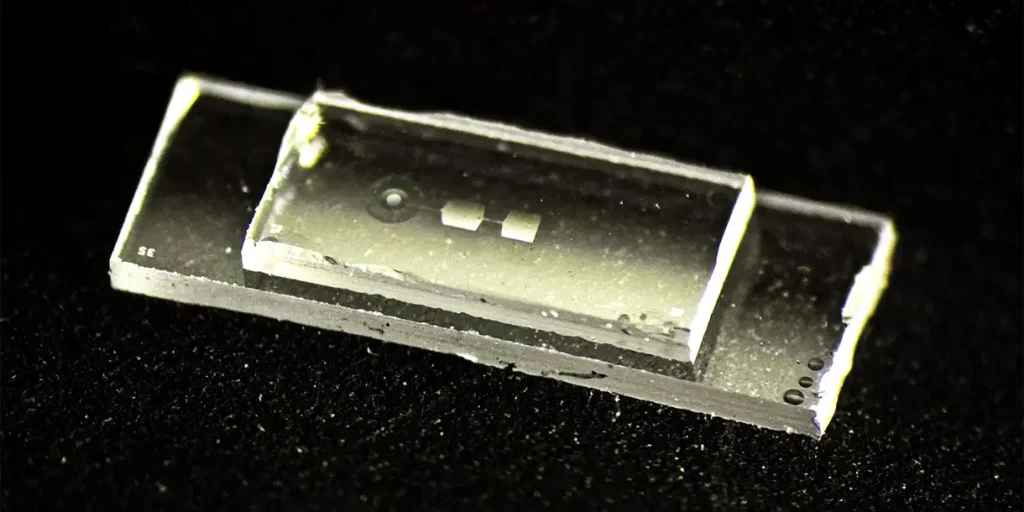
In short, for space and stamina. Electromagnetic quantum memory works beautifully, nobody disputes that, but it hogs chip space, and you can only fit so many before a processor runs out of room. Mechanical resonators are tiny, so more of them fit. Each holds multiple vibrational modes, so it stores more. And the vibrations keep their fragile quantum state alive longer before it decays, which in this field is basically the whole ballgame.
To prove the thing computes and doesn’t just sit there humming, they ran two benchmark algorithms: the Quantum Fourier Transform, which underpins a big chunk of quantum computing, and a period-finding routine that shows the Transform doing something useful. The memory held coherence through all of it.
The part where I talk you back down
This is a prototype, and a small one. It has a handful of components, and the open question, the one every quantum platform is stuck on, is whether it holds together once you add more. ETH isn’t pretending otherwise. They showed the idea works at small scale and that mechanical memory can carry genuine computational weight.
So no, your laptop won’t start humming anytime soon. But somewhere in Zurich, a chip is quietly buzzing its way through math, and that’s a strange sentence to get to write.