
Startup Claims It Can Quantum-Proof Satoshi’s Bitcoin Stash

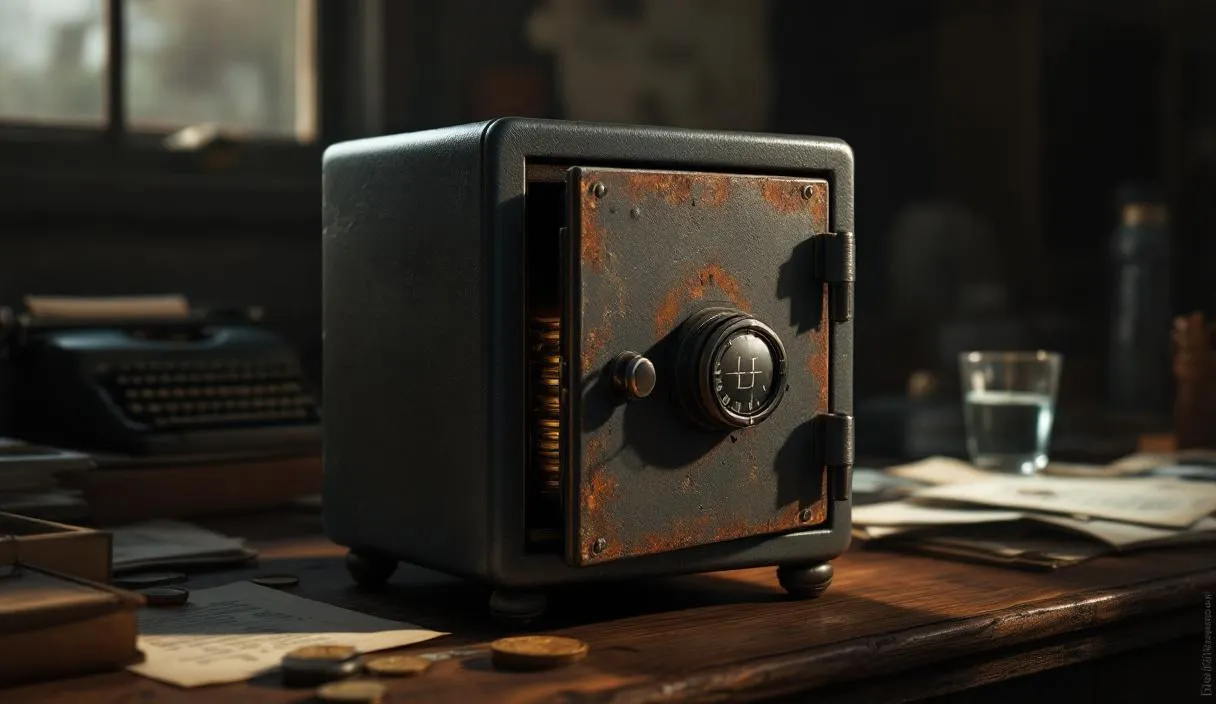
Privacy-centric blockchain startup AmericanFortress unveiled a patent-pending post-quantum signature scheme that it says can protect about 5 million dormant Bitcoin, including Satoshi Nakamoto’s estimated 1.1 million BTC, from quantum computing attacks without requiring wallet holders to move their funds. The announcement comes alongside an $8 million seed round co-led by SAVA Digital Asset Fund, Moon Pursuit Capital, and 0G Labs.
Solving a Critical Problem
Older Bitcoin wallets, particularly those from the Satoshi era, came into being before BIP32 seed phrase derivation existed. They can’t be upgraded the way modern wallets can. A sufficiently powerful quantum computer could eventually reverse-engineer private keys from exposed public keys, putting an estimated $600 billion in crypto assets at risk across multiple chains.
AmericanFortress CEO Michal Pospieszalski told CoinDesk the firm’s protocol would use a backward-compatible soft fork to automatically freeze vulnerable pre-BIP32 addresses. The community would then vote on what to do with those funds, be it to move them, burn them, or redistribute them. For active wallets built on BIP32, quantum-proofing would take about 50 milliseconds through a wallet prompt.
The technical approach relies on zero-knowledge proofs to verify master seed ownership at the time a transaction is made. Pospieszalski described three layers. These are raw key protection for old addresses, standard BIP32 quantum protection, and a new high-speed “QBIP32” derivation scheme. He said it requires only a node and wallet software update, with no meaningful performance hit.
Performance and Scalability Questions Remain
That performance claim is important because a quantum-security test on BNB Chain earlier this week slowed transaction throughput by 40%. AmericanFortress says its method avoids this penalty because it integrates with existing cryptographic curves instead of replacing them.
Pospieszalski said the protocol applies beyond Bitcoin (BTC) to Ethereum (ETH), Solana (SOL), and Tron (TRX). He singled out Solana, claiming 100% of its addresses have exposed public keys and are therefore vulnerable.
The firm plans to present its cryptographic methods at an event in Paris on June 2 and is licensing its SDK to Layer 1 and Layer 2 blockchains.
The market implications are significant. If quantum computers can eventually crack dormant wallets, the sudden appearance of millions of BTC on the market could trigger massive sell pressure. A credible freeze mechanism would remove that tail risk from the equation, which is something long-term holders and institutional investors have quietly worried about for years.