
Aquark Tests Cold-Atom Clocks With Royal Navy Radars

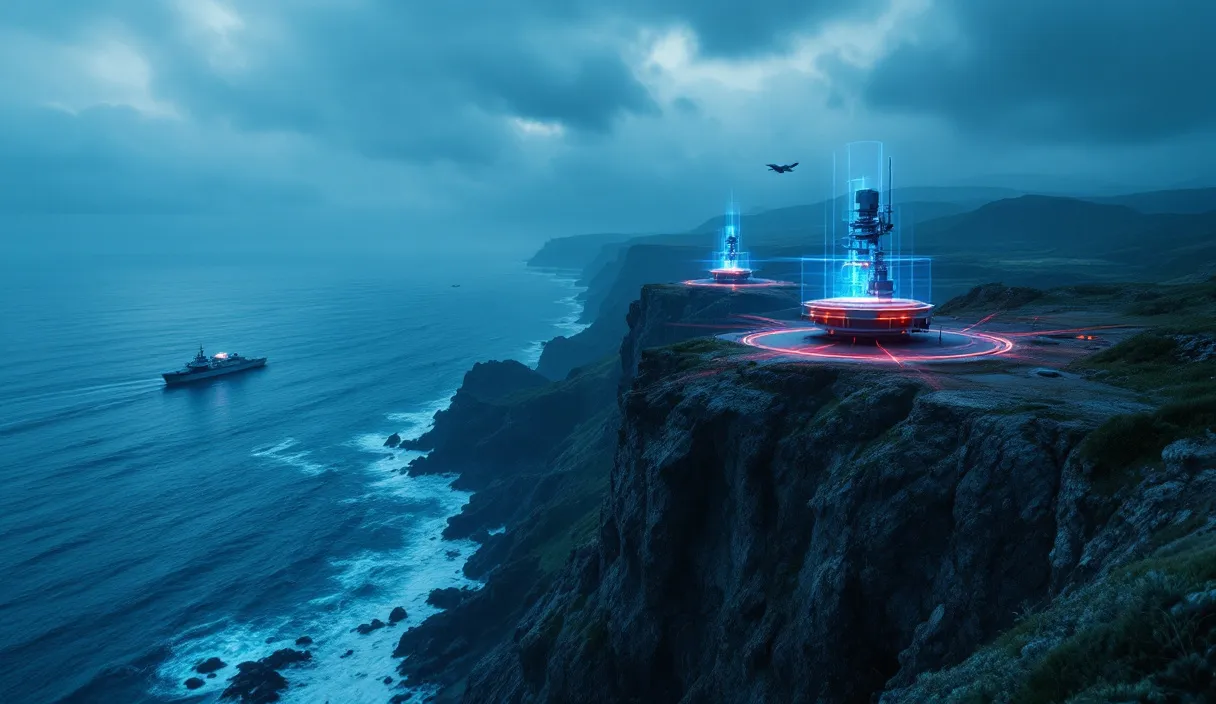
Aquark Technologies and its partners conducted a successful trial with the UK Royal Navy in June 2026, where two networked military radars maintained a single, accurate air picture as they used cold-atom timing instead of GNSS timing. The setup utilized two AQlock 2.0 cold-atom clocks, each placed at a separate site and feeding time to a distinct operational radar system, making the clocks’ strategy resilient against potential navigational disruptions.
Trial details
According to the August 12 report, the trial was conducted by Aquark in partnership with the Royal Navy, Saab UK, QinetiQ, and DSTL. The radars were stationed at Saab and QinetiQ sites, whereas the Navy’s experimentation ship XV Patrick Blackett and DSTL served as network rebroadcast nodes. The team deployed each of the two AQlock 2.0 clocks to a separate location and the clocks reportedly reached an acceptable timing signal from a cold start within 30 minutes.
The clocks provided timing signals to Saab’s Giraffe 1X radars, which generated a shared air picture using solely AQlock timing under conditions mimicking GNSS denial and spoofing. During the test, the team intentionally disrupted the timing, causing the radar performance to degrade predictably, but the network recovered upon re-establishing synchronization.
The trial results, reported by Aquark, have not been independently verified. Cold-atom clocks rely on the physical properties governed by quantum mechanics, which serve as their frequency reference. Aquark emphasizes that this is distinct from quantum-based sensing or radar, as the radars retain responsibility for detecting targets, while the clocks focus on maintaining timekeeping.
Aquark describes this demonstration as a world’s first for a high-performance military radar network operating with timing sources independent of GNSS. The company’s timing lead, Matthew Aldous, highlights that this is the first deployment of British-built cold-atom systems to tackle a genuine defense challenge:
“This trial is a milestone in the development of UK sovereign quantum technology and a first-of-its-kind application of a UK atomic clock. It’s the first known time that a pair of British built cold atom systems has been deployed in answer to a genuine defence challenge, and we’re very proud to work with Saab and the Royal Navy in this way.”
The importance of independent timing
Networked radars require an external clock source to combine their observations into a coherent picture. Traditionally, GNSS supplies this timing signal but also provides positioning and navigation, which this trial doesn’t address. AQlock didn’t replace the full capabilities of GNSS.
The stakes for this issue are high: a GNSS outage costs approximately £1.42 billion over 24 hours. Jamming and spoofing are becoming increasing concerns in conflict-prone regions.
Aquark constructed two AQlock 2.0 prototypes from scratch by the end of June 2026 as part of the Navy’s “Quantum Optimised Radar” project. The company claims its AQlock 2.0 technology is its most robust and deployable cold-atom solution to date, featuring its own “Super-molasses trap.” It has successfully tested related hardware in a variety of settings, including on land, naval vessels, and unmanned aircraft.
The trial’s outcome demonstrated that a radar network can operate reliably on independent atomic-clock timing under controlled conditions and recover from disruptions. That said, it doesn’t necessarily indicate that AQlock technology is ready for widespread deployment or capable of handling various GNSS-denied scenarios that occur during real-world operations.