
DRDO Backs Zero mK India to Develop 20 mK Refrigerator

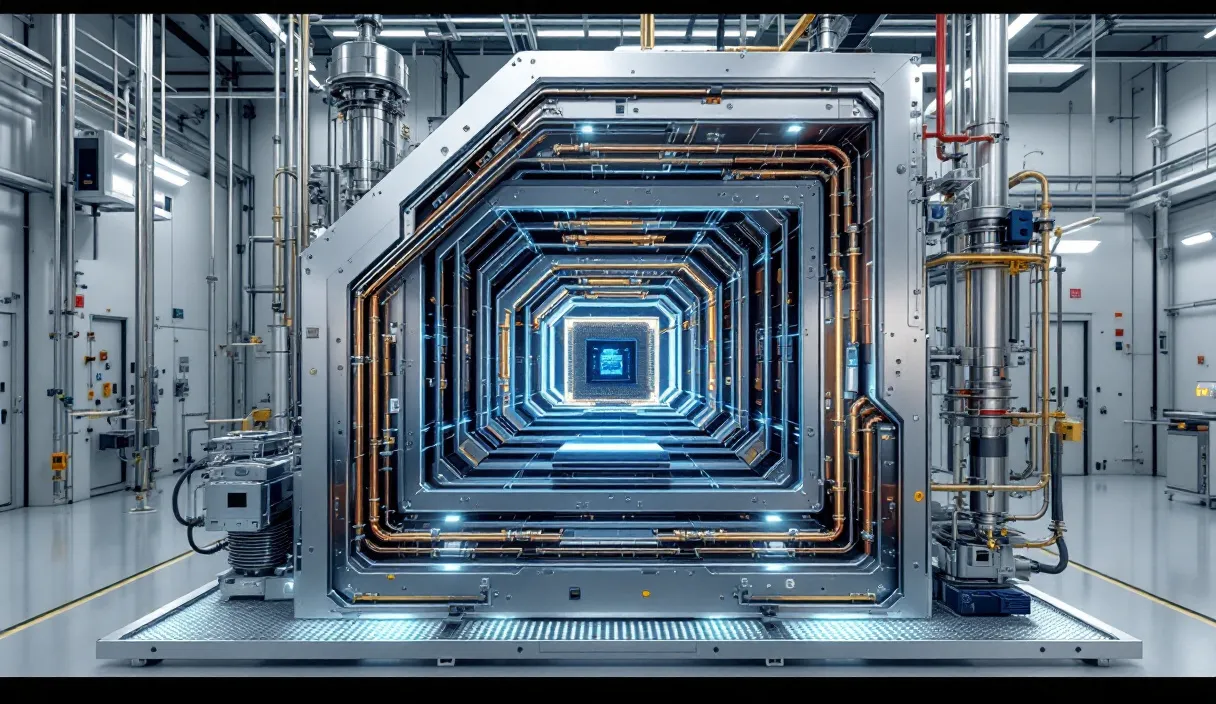
The Defence Research and Development Organisation (DRDO) of India has signed a Technology Development Fund agreement with Zero mK India, a startup, to develop a domestic dilution refrigerator capable of reaching 20 millikelvin. This cooling range is essential for the operation of superconducting quantum processors. The agreement, signed in New Delhi, marks the first high-value deep-tech deal funded by the Rs 500 crore allocation. Given that India largely depends on a limited number of foreign suppliers for its cryogenic hardware, a domestic 20 mK-class unit would significantly alter the country’s procurement strategy for this critical quantum computing infrastructure.
Agreement Details
The Director of the Technology Development Fund and representatives from Zero mK India, based in Alwar, Rajasthan, executed the agreement. This constitutes the initial high-value deal drawn from the Rs 500 crore fund that Defence Minister Rajnath Singh approved for advanced and deep-tech projects. The Director of the Solid State Physics Laboratory and their team will oversee and mentor the project.
Key reported details include:
- A target temperature of 20 millikelvin.
- It is the first high-value agreement under the Technology Development Fund’s Rs 500 crore corpus.
- Zero mK India is located in Alwar, Rajasthan.
- The refrigerator aligns with the National Quantum Mission.
- Oversight is provided by DRDO’s Solid State Physics Laboratory (SSPL).
Rajnath Singh commended DRDO and the participating industries, expressing his belief that this collaboration will establish a precedent for future DRDO and industry partnerships in emerging technologies.
Significance of 20 mK Cooling
Dilution refrigerators achieve millikelvin temperatures, a prerequisite for operating superconducting qubits. Without such extreme cold, thermal noise would compromise the delicate quantum states that these machines rely on. The equipment is costly, complex to manufacture, and currently supplied by only a few international vendors, making a domestic capability a strategic imperative rather than a mere convenience.
This project aligns with other national quantum initiatives globally. For instance, George Mason University in the United States recently launched a Virginia Quantum Hub, exemplifying various state and government efforts to localize quantum research and development.
Several details remain undisclosed. The sources do not confirm whether 20 mK is an achieved temperature in an existing unit or a design objective. Furthermore, there is no mention of cooling power, dilution stages, sample space, or a delivery timeline.
That said, the “first” in this context refers to the TDF agreement, not necessarily to a groundbreaking piece of hardware. Readers should consider any specific claims unverified until Zero mK India or DRDO provides official confirmation. Independent verification is recommended before regarding this as a fully developed system.