
Fermilab, Microsoft Partner on Open-Source Quantum Control Tools

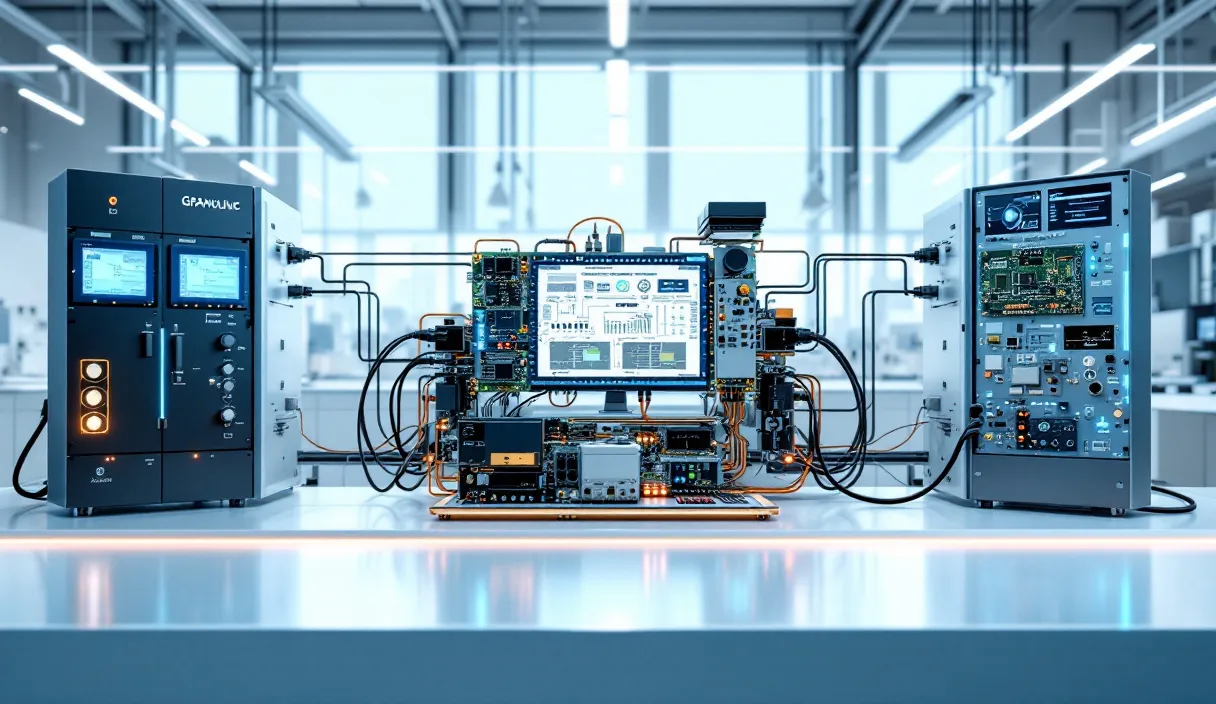
Fermilab and Microsoft Quantum have announced a collaboration to expand an open-source toolkit for controlling and reading out quantum processors. As part of this partnership, the U.S. laboratory will join Microsoft’s new hardware makerspace at its quantum research center, located in the University of Maryland’s Discovery District. Key figures involved include Anna Grassellino, Fermilab’s chief technology officer and associate laboratory director for its Technology Directorate, and Charles Tahan, a partner at Microsoft Quantum.
Scope of the Partnership
The two organizations plan to enhance the Quantum Instrumentation Control Kit (QICK), an open-source hardware and software toolkit developed by Fermilab for controlling and reading out qubits. Initially designed for superconducting qubits, Fermilab later adapted QICK for use with trapped ions, cold atoms, silicon-spin qubits, quantum dots, and biological qubits. The collaboration will also cover education and training, with Microsoft and the University of Maryland exploring how to integrate QICK into academic coursework.
Grassellino emphasized Fermilab’s commitment to keeping QICK open source, enabling its use and development by academia, national labs, and industry. Tahan stated that the collaboration “extends beyond training,” aiming to broaden the applicability of quantum-control tools across various hardware platforms.
What This Partnership Does Not Prove
A partnership focused on control tooling does not inherently support claims about hardware performance. QICK functions by reading out and controlling qubits; it does not determine the number of functional qubits, their error rates, or whether a combined system can execute useful workloads. This agreement does not imply any quantum advantage, nor does the announcement suggest one.
This collaboration aligns with a broader trend of institutions partnering with vendors on quantum infrastructure, as seen with the recent Virginia Quantum Hub launch, and with open-source tool releases like Fujitsu’s OpenQARP package. These examples provide context but do not offer evidence of the specific outcomes this partnership will produce.
For this initiative to move from intent to outcome, a tangible deliverable from the joint work or a published benchmark run on jointly developed hardware would be necessary. Until then, it remains an agreement to collaborate.