
UCL, Siloton Adapt Chip-Based Eye Imaging for Children

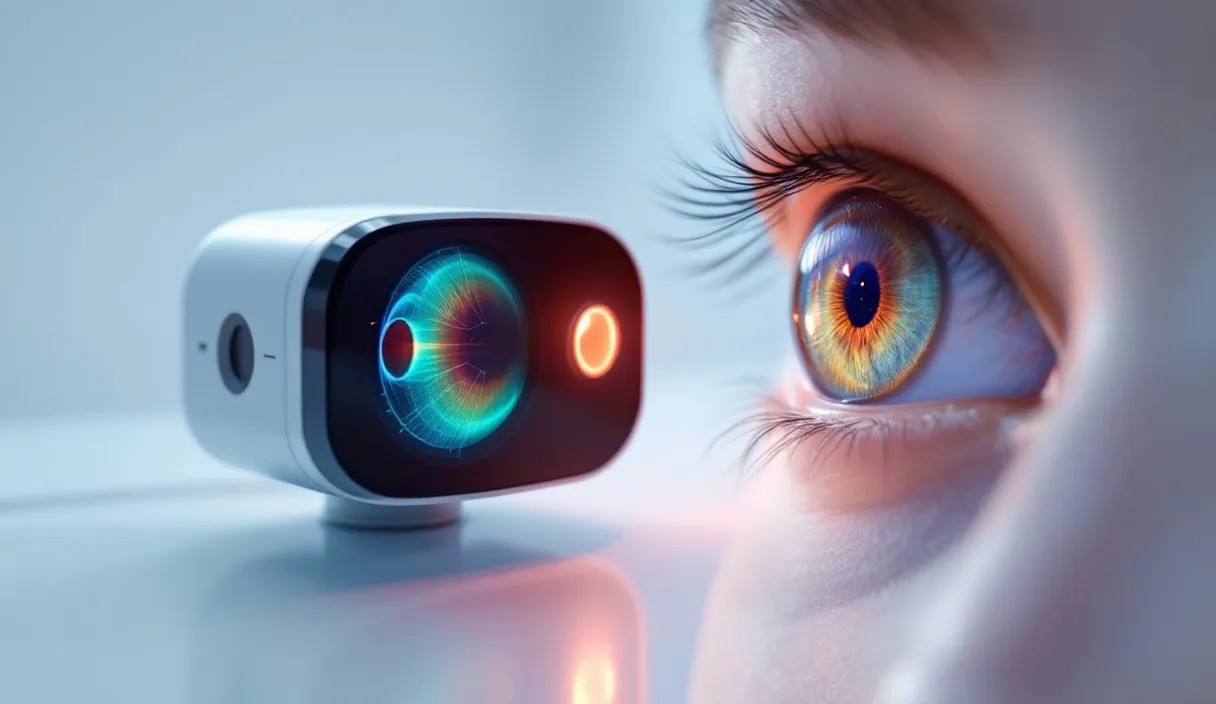
Researchers at UCL’s Great Ormond Street Institute of Child Health are collaborating with Bristol start-up Siloton to adapt a chip-based eye-imaging device for use in children. Funded by the National Institute for Health and Care Research (NIHR), this project aims to detect sight-threatening conditions earlier, outside traditional hospital settings. Current eye-imaging systems are typically large, expensive, and confined to clinics. Adapting such a device for home use in children could revolutionize how young patients’ vision is monitored.
Advancing Children’s Eye Imaging
The core of this initiative is Siloton’s Akepa, an optical coherence tomography (OCT) system. OCT technology uses light to create detailed images of the inside of the eye, allowing clinicians to identify problems and monitor their progression. Siloton highlights its key innovation: the Akepa chip, which miniaturizes heavy, fragile optical components (traditionally tabletop-sized) onto a single chip smaller than a £1 coin. This chip is integrated into a binocular-style unit designed for easy use by non-specialists.
The adaptation process involves physical modifications. The team will recalibrate the lenses to properly focus within a child’s eye and redesign the casing to fit smaller faces while blocking stray light that could compromise image quality. Professors Ameenat Lola Solebo and Marinko Sarunic, both from UCL, are co-developing the pediatric version with Siloton, according to UCL.
Project Status
This is a funded development project, not a final product or a regulatory clearance. Siloton successfully trialed the adult version with an initial patient group last year, and the pediatric adaptation builds upon that existing work.
- Partners: UCL Great Ormond Street Institute of Child Health, Great Ormond Street Hospital, and Siloton, as per Siloton’s announcement
- Funder: NIHR, with prior support from Innovate UK
- Device: Akepa chip-based OCT, featuring adapted lenses and casing for children
- Goal: Enable community and at-home eye monitoring, with remote clinician assessment
- Status: Prototype adaptation stage; pediatric trial results are not yet available.
Alasdair Price, Siloton CEO, noted that the fundamental imaging principles are consistent for both children and adults. He emphasized that the chip-based design allows for quick, comfortable capture of high-quality images. Price also listed various conditions detectable in children’s eyes, including diabetes-related damage, inherited diseases, and early signs of brain tumors visible on the optic disc.
Unique Challenges of Pediatric Eye Imaging
Obtaining clear eye scans in children is more challenging than in adults. Children tend to move, may not remain still for a fixed headrest, and have different eye focal geometries. Furthermore, hospital visits disrupt school schedules and incur travel time for families. A compact device capable of producing clinical-grade images at home could allow clinicians to monitor conditions more closely while reducing the need for in-person appointments.
This work falls under quantum sensing, a field attracting consistent public investment across research hubs, such as the recently launched Virginia Quantum Hub. The next significant milestone will be whether the pediatric Akepa advances to a clinical study and how effectively it images young eyes in real-world settings.