
SEALSQ and Quobly Sign $5 Million Deal to Secure Silicon Quantum Chips

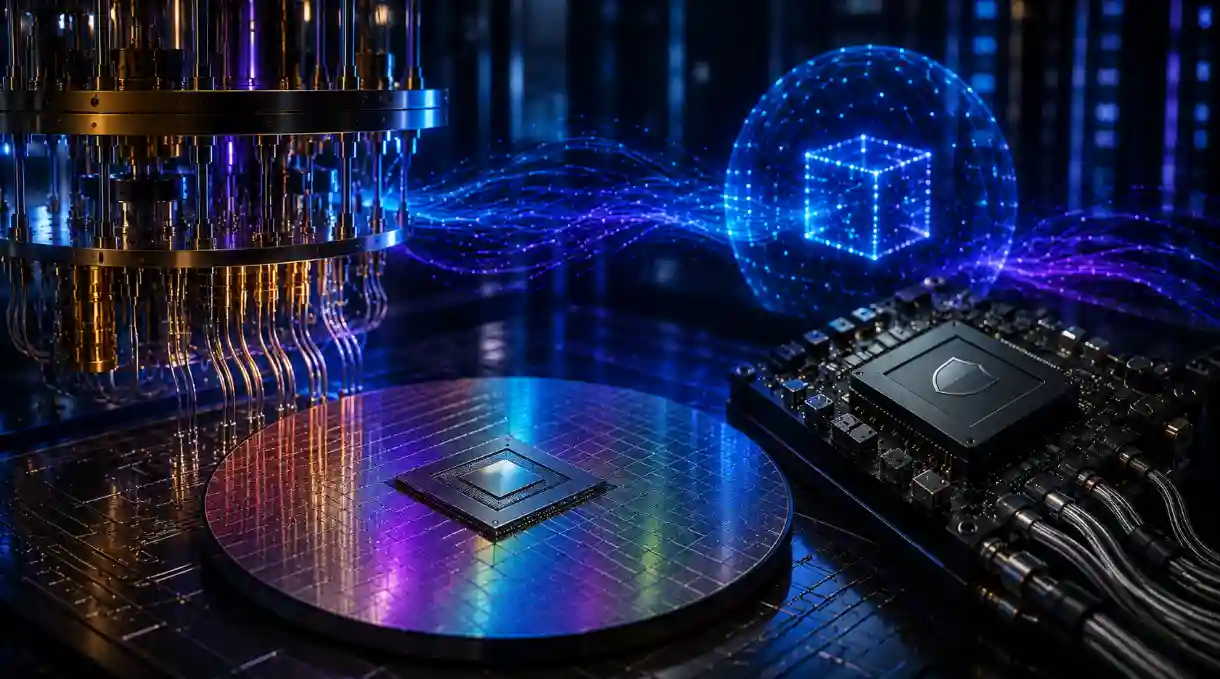
Semiconductor and cybersecurity developer SEALSQ and deep-tech quantum computing company Quobly have signed a $5 million commercial agreement to build security into Quobly’s silicon-based quantum computers. Under the deal, Quobly will fold SEALSQ’s post-quantum security hardware and engineering services into its quantum computing platform. It moves a partnership the two announced in November 2025 from cooperation into a paid contract.
What each side brings
Quobly, a French company, builds quantum processors from silicon spin qubits, using the same CMOS manufacturing that produces ordinary chips. That approach is its pitch for scaling, since it can lean on existing semiconductor factories instead of exotic fabrication. The company recently raised a €115 million ($176.94 million) Series A and plans to make its first machine, Alloy Pioneer, available through the cloud by the end of 2026.
SEALSQ, listed on the Nasdaq as LAES, supplies the security layer. Its contribution includes secure semiconductors, hardware-based Root-of-Trust technology that lets a system verify a device is genuine, post-quantum cryptography (PRC) based on standardized algorithms, and a cryo-CMOS ASIC designed to work inside a quantum computer’s cold control electronics. SEALSQ had already made a strategic investment in Quobly before this agreement.
Why build security into the hardware
Per the July 10 press release, the reasoning is that a quantum computer is not just the processor. It’s also cryogenic control electronics, classical computers, communications links, and cloud interfaces, and each of those is a target. The two companies want to authenticate and protect that entire stack through hardware identities and quantum-resistant encryption.
There is a European angle as well. Both companies are positioning the work as part of building a quantum computing and cybersecurity supply chain that Europe controls, from manufacturing through to security.
For SEALSQ CEO Carlos Moreira, the deal is also proof of demand. He argued that every quantum computer and quantum data center will eventually need a trusted hardware security layer, and said the agreement shows that market starting to form. Whether that holds depends on how many quantum systems actually reach industrial deployment.