
CQE-Led Bloch Quantum Hub Wins $55 Million to Build a Domestic Supply Chain

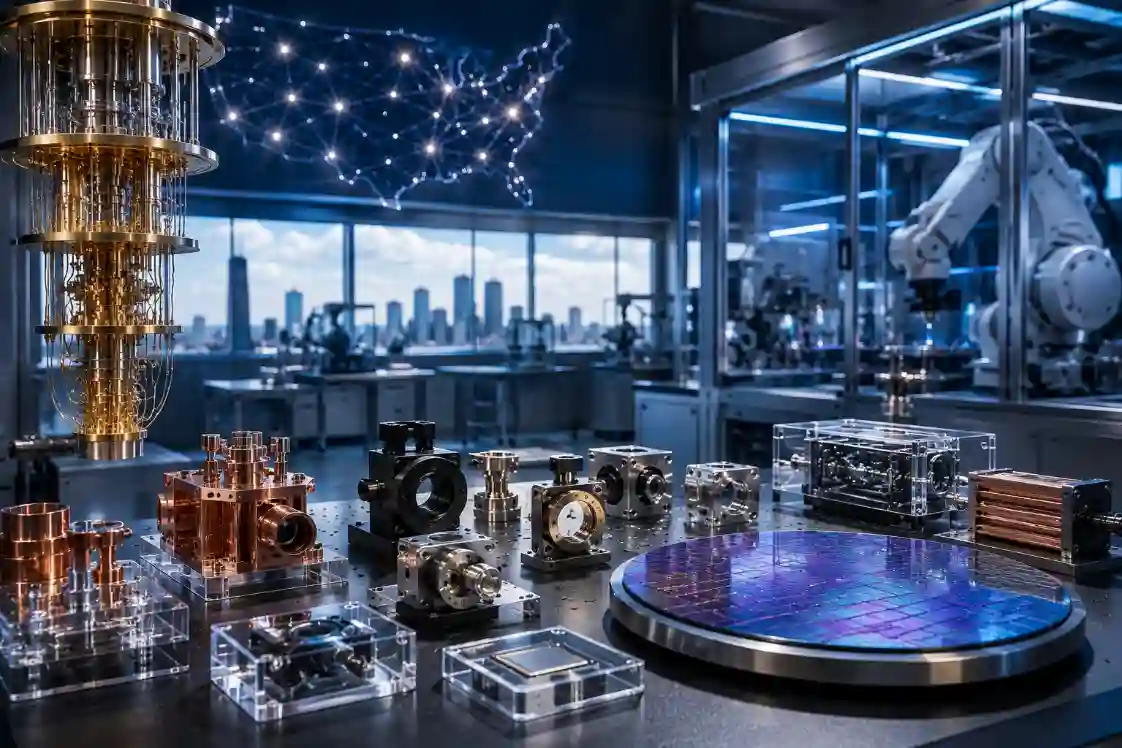
The Bloch Quantum Tech Hub has secured close to $55 million to make more quantum components in the United States. The core of that is a $30 million award from the Economic Development Administration, and the rest is coming from Illinois, the University of Chicago, and companies including Infleqtion, IonQ, and IBM. The hub, led by the Chicago Quantum Exchange (CQE), spans Illinois, Wisconsin, and Indiana.
Why the Bloch Quantum Hub focuses on manufacturing
Indeed, much of what goes into a quantum system, the materials, components, and subsystems, is currently sourced abroad. Specifically, that raises costs, slows development, and creates supply risks. According to the July 20 press release, the Bloch’s argument is that the Midwest already has the manufacturing base to make those parts, since all three states rank among the country’s top ten manufacturing states.
The most concrete evidence for that case is a number from the Illinois Manufacturing Excellence Center, which has identified more than 60 regional manufacturers it considers ready to join the quantum supply chain now, with more expected as the work continues.
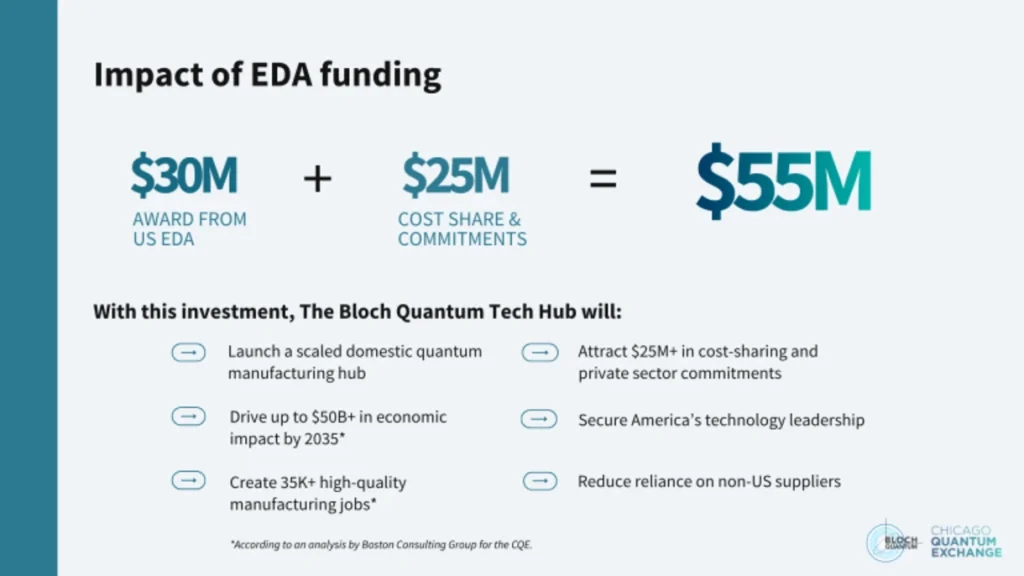
Where will the $55 million go
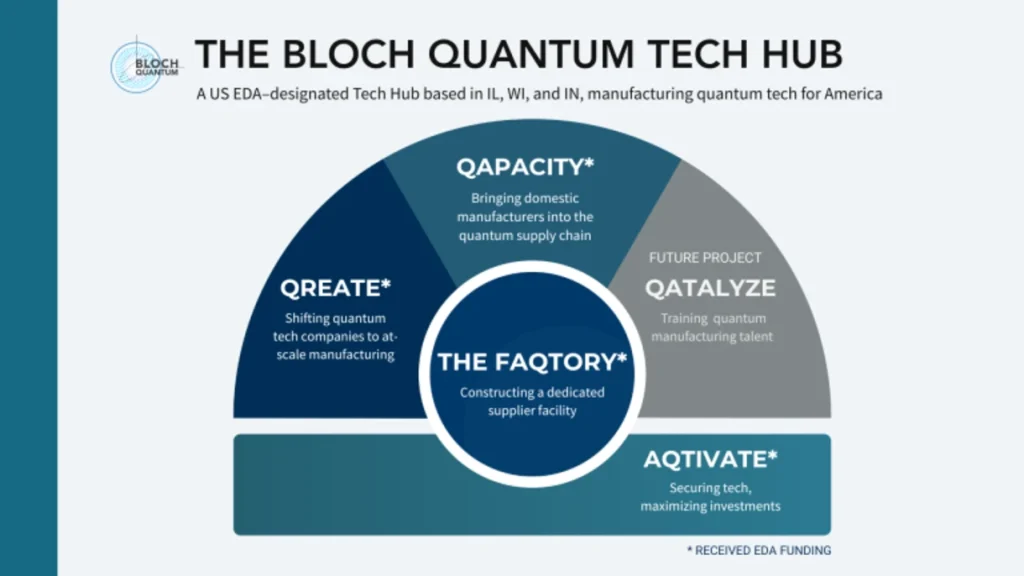
The award funds four connected projects. One helps existing Midwest quantum companies move to scaled manufacturing, including a shared quantum sensing testbed at Purdue Northwest and automation software from Infleqtion.
A second, led by IMEC, works to bring conventional manufacturers into quantum supply chains. A third focuses on security for U.S. quantum technologies. The fourth builds a supplier facility, nicknamed the FaQtory, at the Illinois Quantum and Microelectronics Park, placing component makers alongside their customers.
The Bloch was one of six Tech Hubs funded in this EDA round, part of $169 million awarded across sectors. It was among the 31 hubs originally designated in 2023.
Notably, the $55 million is a combined public and private figure, and only $30 million is federal. The projections attached to it, thousands of jobs, billions in economic impact, and a further $300 million in expected investment, are forecasts rather than commitments.