
IonQ Teams With Sandia, Which Built Its Original Ion Traps

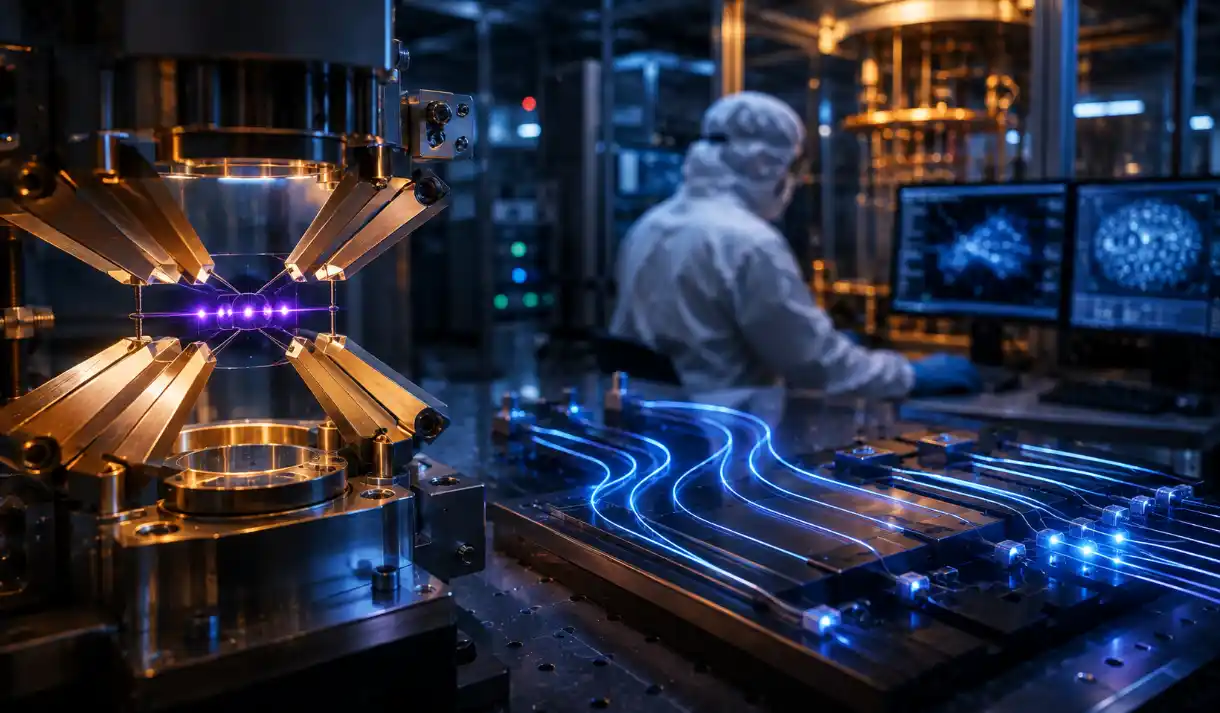
IonQ has signed an MOU with Sandia National Laboratories, a partnership with an unusual amount of history behind it. Sandia fabricated the ion traps that IonQ’s first quantum computers ran on, so this reconnects two parties that helped start the company’s hardware in the first place. The agreement is exploratory, though the technical focus is specific, trapped-ion fabrication and silicon photonics.
An old partnership, a new scope
In an August 4 press release, IonQ’s chief scientist for its federal arm, Rick Muller, was upfront that the two aren’t strangers. What changed is the ambition.
“Sandia fabricated the ion traps that IonQ’s earliest quantum computers were built on, so this collaboration has a historic pedigree. What’s new is the scope. We’re putting our hardware and applications teams alongside Sandia’s expertise in trapped-ion fabrication and silicon photonics.”
Those two areas are well chosen. How cleanly you can fabricate an ion trap shapes how far a trapped-ion machine scales, and silicon photonics is the layer that lets processors talk to each other, the same integrated-photonics work the wider field is racing on. Getting the interconnects right is one of the harder problems between today’s small machines and useful ones, and Sandia has depth in both halves.
What the MOU actually sets up
Under the framing, it’s an intent to explore, covering co-design, device development, characterization, and testing. De Masi’s comparison of the deal to the Manhattan Project and the Space Race is the sort of line these announcements reach for, but the parts with substance are the pedigree and the venue.
The venue is worth a look. Sandia’s Quantum Demonstration Facility exists partly to provide impartial, third-party verification of the path to utility-scale quantum computers, useful in a field where most performance claims come from the companies making them, the gap benchmarks like IonQ’s own are trying to close. The deal also plants IonQ deeper in New Mexico, adding to a state building a quantum ecosystem around its national labs. Whether the MOU becomes more than a reunion depends on the work that follows it.