
QTREX and Northeastern Partner on Cryogenic Quantum Interconnects

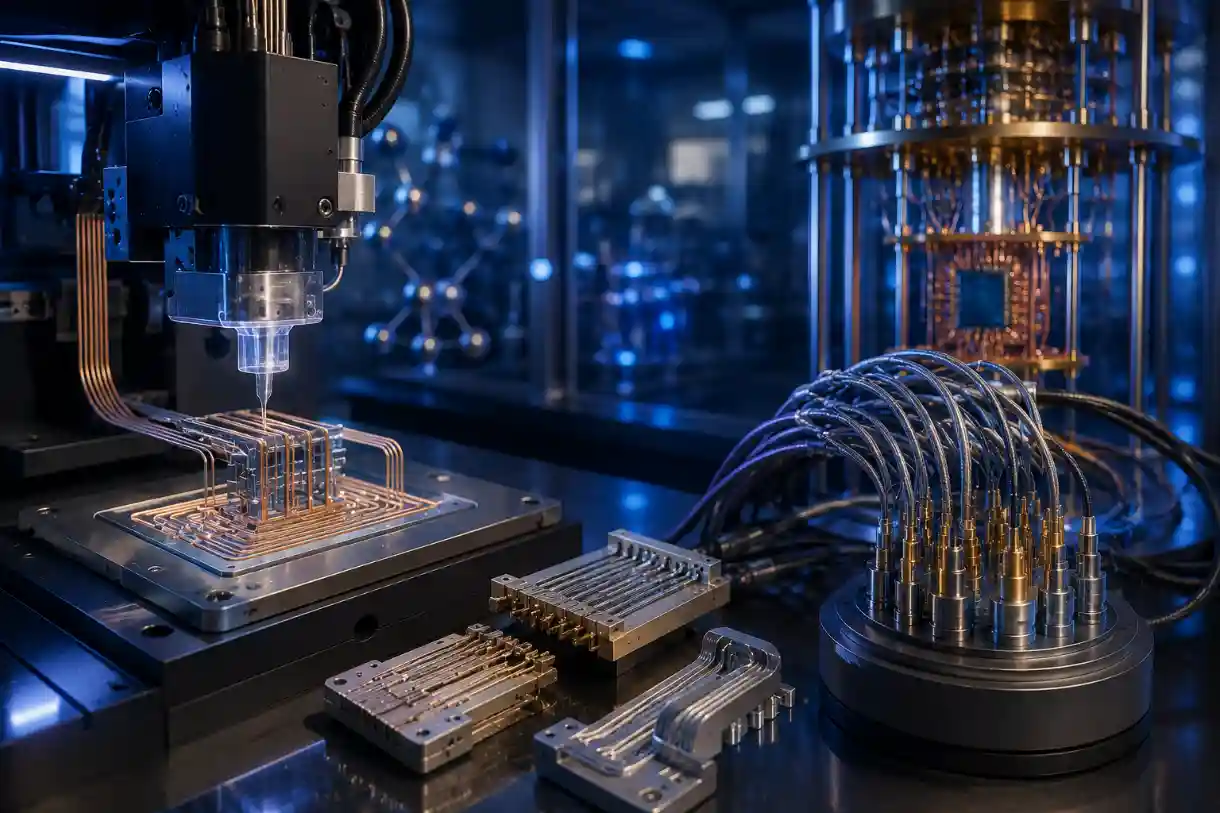
QTREX has started a research collaboration with Northeastern University on a quiet problem in quantum computing, how to wire the machines together. The Nasdaq-listed company (QTEX), which makes additively manufactured electronics, will work with Northeastern on interconnect structures built for cryogenic temperatures. It’s an early-stage effort, with the teams still defining their research objectives.
Why quantum computers have a wiring problem
As quantum processors grow toward tens of thousands of qubits, connecting them becomes a bottleneck, especially inside the cold environments where superconducting and spin qubits operate near absolute zero. Every qubit needs control lines, and cramming those into a cryogenic system without adding heat or noise is genuinely hard. It’s the same challenge behind the 3D integration in Hitachi, Intel, and AIST’s silicon project and the control-hardware bottleneck the neutral-atom roadmap flags.
According to the July 27 press release, QTREX’s angle is additive manufacturing, essentially 3D-printing compact interconnects instead of assembling them from bulkier parts. Prof. Benyamin Davaji of Northeastern, who leads the work, put the appeal this way:
“Additive manufacturing of electronics and microsystems holds exciting potential to reshape how we approach electrical connectivity, offering a path toward three-dimensional, low-parasitic interconnects with micron-scale precision that could benefit both quantum sensing and quantum computing.”
That fits a wider push on quantum packaging and interconnects, visible in IBM’s move to buy HRL Labs partly for its cryogenics and packaging expertise.
What QTREX and Northeastern will research
QTREX, which is building what it calls a vertically integrated quantum connectivity platform, will work with Northeastern’s Quantum Materials and Sensing Institute. Davaji, whose background is in superconducting nanowire detectors, leads the effort. The research will study micro-system structures and materials, including superconducting ones, and characterize how the fabricated pieces behave at cryogenic temperatures. Under the deal, QTREX gets a first option to negotiate a commercial license on any intellectual property that comes out.
Keep it in proportion. This is very early, since the release says the teams are just beginning to define research objectives, so no results exist. The IP arrangement is a first option to negotiate a license rather than a license itself, and no funding or timeline was named. The work sits in the same scaling-and-connectivity push as Photon Queue’s warm quantum memory and the cryogenic buildout that companies like Maybell supply, all of it aimed at making bigger machines actually wireable.