
Alpine, SEALSQ Expand Partnership Into Quantum Simulation

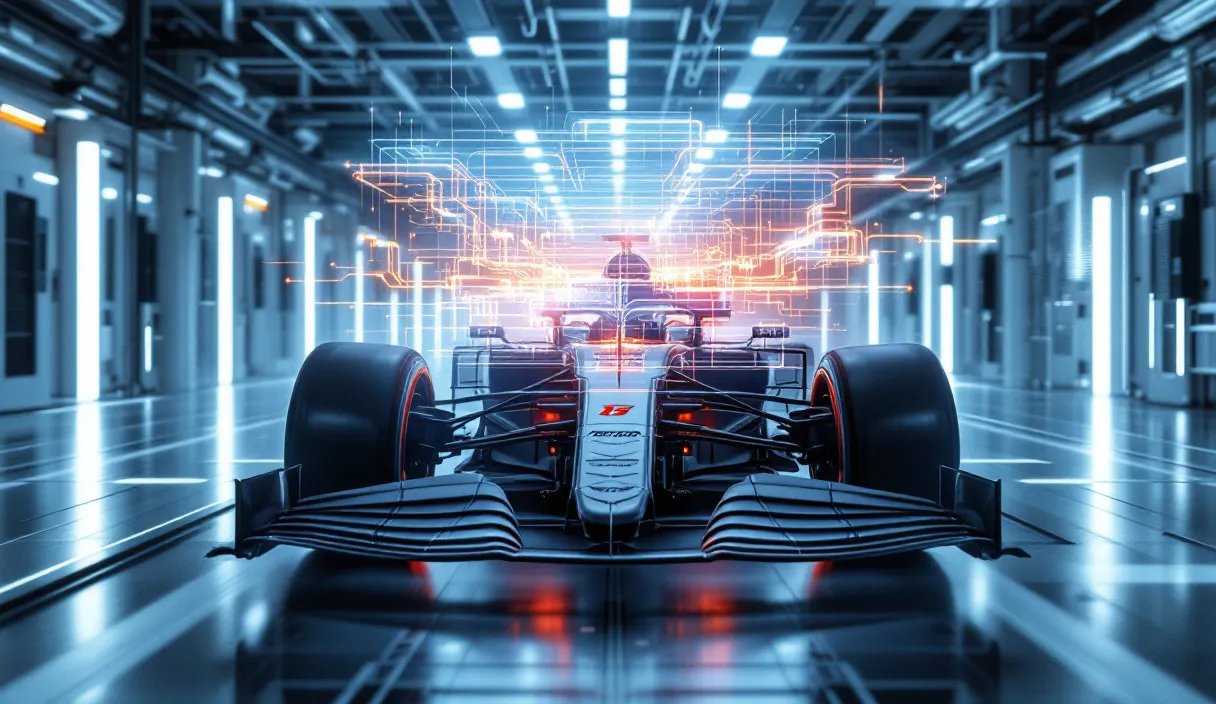
BWT Alpine Formula One Team and SEALSQ are expanding their 2025 security partnership to include a study on hybrid quantum-classical simulation for the team’s engineering work. The companies met in July 2026 to develop a roadmap and identify priority areas for a planned proof of concept, according to their announcement.
Details of the Announcement
This collaboration builds upon a quantum-security agreement launched in November 2025. A new element involves ColibriTD, a company SEALSQ supported through its Quantum Fund in 2025. ColibriTD’s H-DES solver will receive evaluation for workloads such as computational fluid dynamics, thermal, structural, and multiphysics simulations, running alongside classical high-performance computing.
SEALSQ, a Swiss semiconductor firm specializing in post-quantum cryptography and hardware security, primarily facilitates ColibriTD’s involvement through its investment portfolio. The July meeting in Enstone resulted in a roadmap and a list of priority areas, as a report notes. This indicates the current status is an intent to develop a working tool, rather than a developed one.
What Underwent Testing
The announcement lacks specifics such as qubit count, hardware provider, simulator capacity, algorithm details, dataset information, baseline data, runtime, or accuracy figures. It remains unclear whether the proposed work will utilize a physical quantum processor, a classical simulator, or a hybrid software model primarily relying on classical computation.
Laurent Guiraud, co-founder of ColibriTD, describes H-DES as “a near-term, hardware-agnostic approach that extracts computational value from current and emerging quantum processors without waiting for fault-tolerant quantum computing, deployed alongside classical HPC rather than in place of it.”
He also acknowledges the current limitations of quantum hardware in terms of qubit count, coherence time, and connectivity.
The press release describes the project as “a world first” for combining quantum-accelerated simulation with post-quantum data protection. SEALSQ CEO Carlos Moreira links this effort to a $200 million Quantum Fund and a “Quantum Vertical Sovereign Stack,” both proprietary SEALSQ initiatives.
Unconfirmed Racing Use Case
Beyond H-DES and multiphysics, no specific engineering task has been documented. There is no indication that Alpine has integrated proprietary car data into the solver, incorporated it into existing tools, or used it for trackside operations or race decisions. Current near-term quantum solvers remain limited; this announcement does not demonstrate useful F1 simulation on quantum hardware.
Key indicators to watch for include a published benchmark against a classical baseline, independent validation, actual hardware execution, and confirmed deployment. Similar caution applies to other developments in the field, such as Fujitsu’s open-sourcing of a quantum application package and Europe’s efforts to transition research into industry.