
NSF Launches Project Triad to Merge Quantum Sensing, Networking, Computing

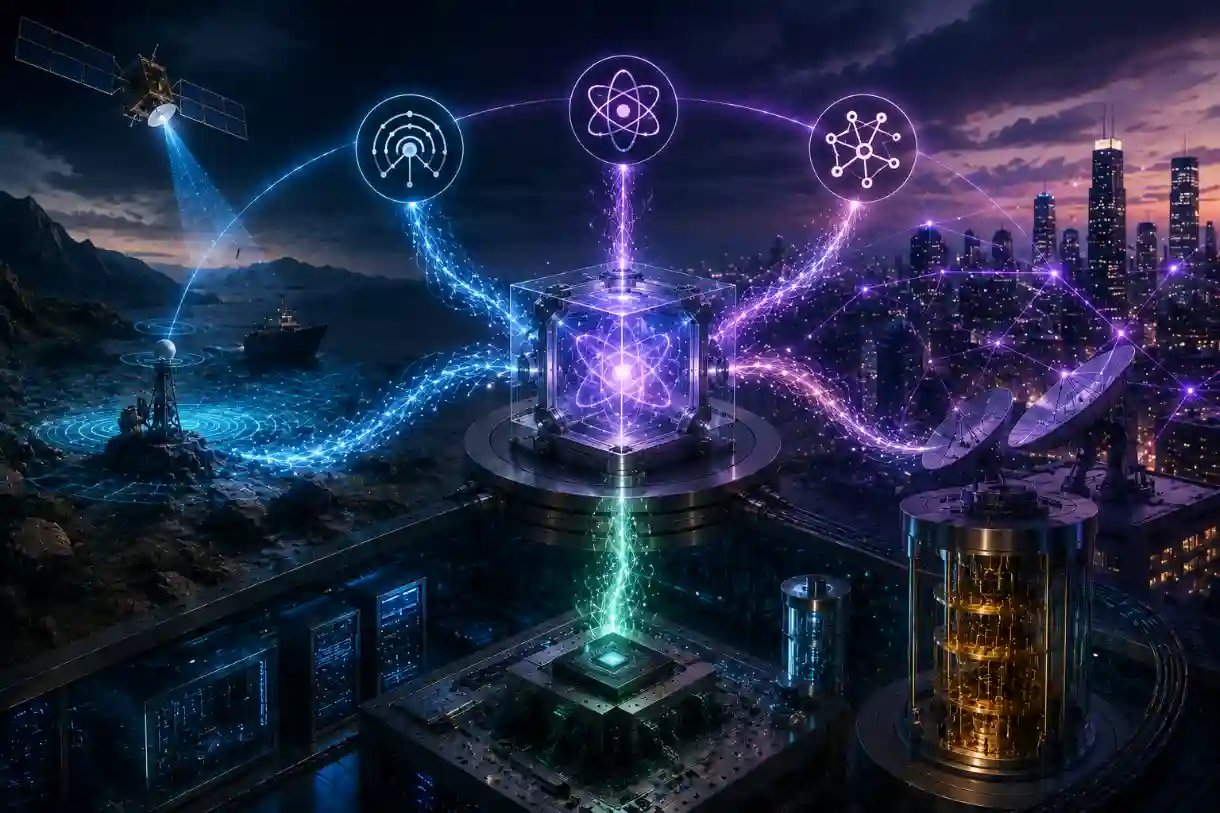
The National Science Foundation (NSF) wants quantum sensing, networking, and computing to stop working in separate boxes. For this reason, it announced Project Triad, an initiative to wire all three into one operational system and push the result toward commercial use. NSF calls it the first U.S. effort to build a fully integrated quantum environment rather than advancing each piece on its own.
What Project Triad is
According to the institution’s report on July 7, the idea is to combine the three quantum capabilities into systems that do things none of them manage alone. NSF points to navigation and secure communications for first responders and troops working where GPS is unavailable, detecting underground oil, gas and mineral deposits with less exploratory drilling, and sharper medical imaging that could feed individually tailored medicines.
The initiative also ties back to the recent executive order on quantum innovation, positioning it as part of the administration’s push to turn public research money into commercial and security advantages. As Brian Stone, who is performing the duties of the NSF director, explained:
“NSF Project Triad will unite the research enterprise to advance the administration’s vision, ensuring public investments translate into strategic advantages in quantum technology for all Americans.”
The three programs underneath it
Project Triad runs through three linked programs. The NSF National Quantum Virtual Laboratory will build the proof-of-concept integrated system for testing, and NSF plans to move several NQVL projects from design into implementation by December 2026, pending funding.
NSF X-Labs fund independent teams chasing milestone-based awards on specific problems, including the interconnects and photonics that let quantum devices pass information between each other. NSF Quantum+X works directly with companies to find use cases, with early funding tracks that could reach the energy, finance, biotechnology, and pharmaceutical sectors.
Meanwhile, NSF is drawing on its existing quantum institutes, engineering centers, and research infrastructure to feed findings into the integrated system for real-world testing. The agency frames the effort as a way to sort which quantum breakthroughs are ready to scale, drop the ones that are not, and move the rest from lab to market. Those same programs are meant to train the workforce that will build whatever Triad produces.