
Arqit Tests Quantum-Safe Encryption Over Qatar Satellite Link

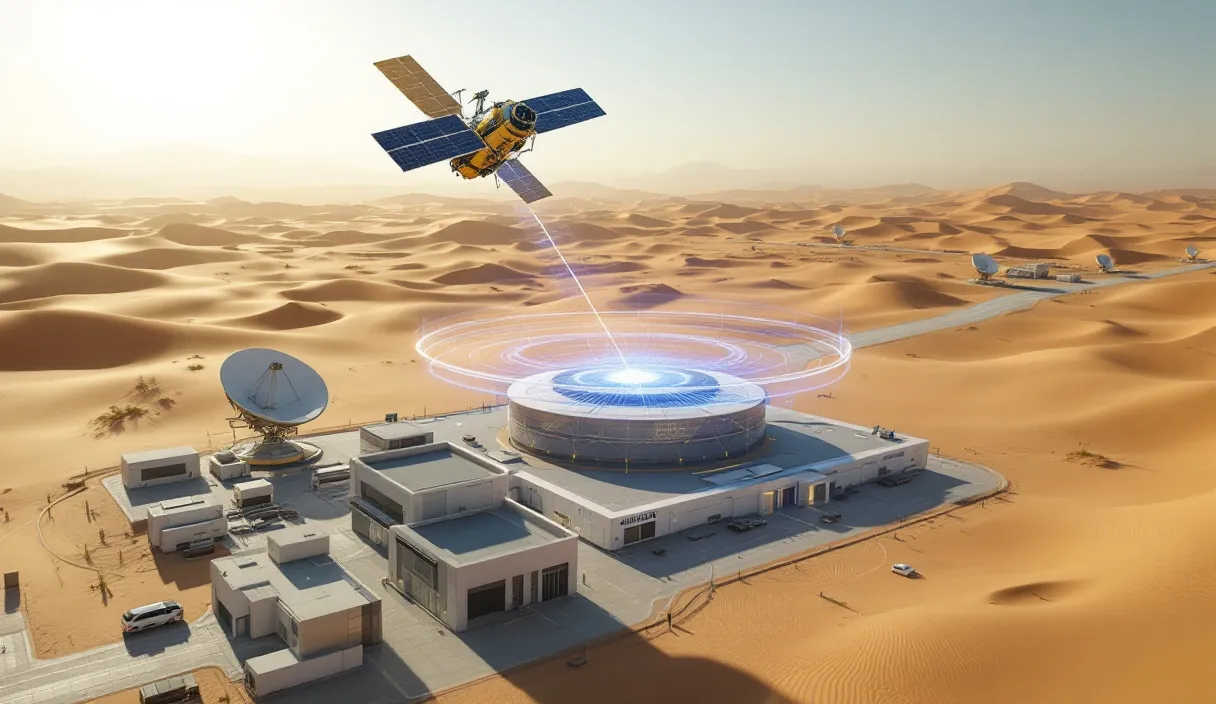
Arqit, Es’hailSat, and systems integrator AIEE announced on September 1 that they successfully conducted a live test of quantum-safe encryption over an operational satellite link in Qatar. The three companies integrated Arqit’s encryption technology into Es’hailSat’s Es’hail-1 satellite environment and its Doha teleport, and reported no disruption to existing systems. This demonstration serves as a test, and the results are provided by the companies themselves without independent verification.
The Companies’ Account of the Test
According to the September 1 press release, the test took place at Es’hailSat’s 25.5/26° East orbital position, utilizing the operator’s Tier-4 certified teleport in Doha. Es’hailSat provided the live satellite environment via Es’hail-1. AIEE managed the integration and interoperability checks across the ground and network infrastructure. Arqit contributed its encryption technology, which it describes as software-defined and built on its Symmetric Key Agreement platform.
The companies assert that quantum-safe protection can integrate into existing satellite-connected networks without requiring a complete rebuild or negatively impacting performance. Arqit CEO Andy Leaver emphasized the importance of continuity for critical infrastructure operators.
“What’s important about this project is that it proves a practical path to strengthening quantum-safe cryptographic resilience without requiring operators to rebuild existing infrastructure.”
Though this is the vendor’s perspective, the announcement details a single test on one satellite hot spot rather than a deployed service for customers. The companies refer to it as a foundation for future deployment, indicating it is still in the planning stage.
Key Information and Its Significance
Arqit offers symmetric-key encryption, and its product description aligns with this approach rather than the NIST post-quantum standards (FIPS 203, 204, and 205). Although the release labels the work as PQC, it doesn’t specify which algorithms or standards the test used. Proprietary symmetric-key schemes are not part of the NIST-vetted set, so readers would need further details to consider this standards-based protection. Though Arqit’s broader platform materials claim its tools are standards-based, this particular announcement doesn’t clarify the specific cryptography employed.
There’s no performance data to support the claim of “zero operational impact.” There’s no third-party validation, no measured throughput or latency figures, and no accompanying paper. The threat this technology addresses, a cryptographically relevant quantum computer, doesn’t yet exist. This is why operators are exploring migration paths now.
Arqit is on Nasdaq under the ticker ARQQ. The company has been providing its quantum-safe encryption for various telecom, government, and defense contracts for several years. This Qatar test adds a satellite-specific reference point to its track record but doesn’t yet demonstrate a live, protected service carrying real traffic.