
QuSecure Says QuProtect Reached TRL-7 in U.S. Army Exercise

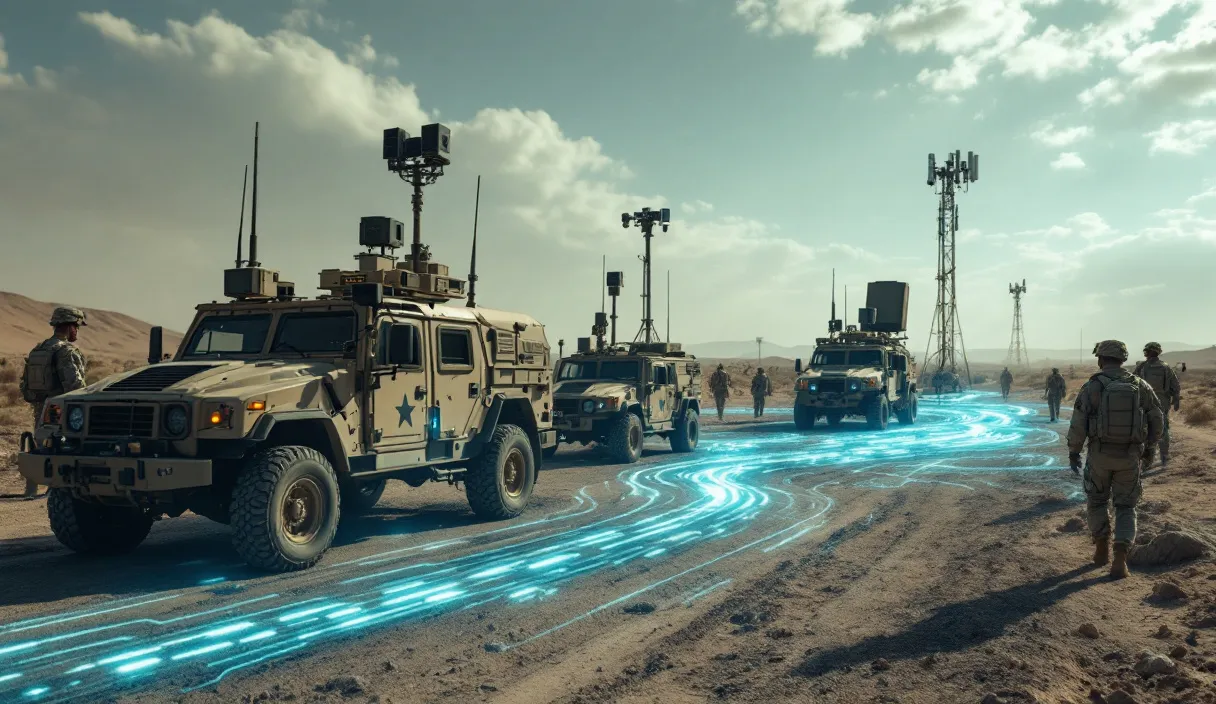
QuSecure announced that its QuProtect R3 post-quantum cryptography (PQC) product achieved Technical Readiness Level 7 (TRL-7) during Project Convergence Capstone 6 (PCC6) at Fort Irwin this summer. This indicates the system operated successfully in a relevant operational environment on U.S. Army tactical systems. The company’s September 2 announcement clarifies this was a demonstration during a training exercise, not a deployed system.
Company Report Details
During the exercise, QuProtect R3 reportedly provided quantum-resistant communications, cryptographic agility, and cryptographic discovery and inventory capabilities. PCC6 is a live Army experiment where thousands of soldiers test future concepts at the National Training Center. QuSecure’s TRL-7 claim is based on the product’s performance under these conditions.
TRL-7 signifies that a prototype has been demonstrated in an operational environment. This is a step towards fielding, preceding TRL-8 (a completed system) and TRL-9 (a system proven through repeated real-world use). QuSecure stated that this work originated from a nearly two-year Small Business Innovation Research program with Army C5ISR.
The company connects this development to Executive Order 14412, signed June 22, which it says mandates federal PQC migration by 2030-2031. QuSecure has not disclosed the specific cryptographic algorithms used by QuProtect R3. NIST has published PQC standards in FIPS 203, 204, and 205, and the efficacy of any “quantum-resistant” product hinges on its adherence to these standards versus proprietary solutions. The company’s release does not provide this information.
Interpreting the “Quantum” Framing
Joey Lupo, QuSecure’s product manager, referenced a potential “Q-day” in 2029 in the announcement.
“Besides demonstrating that tactical networks can be hardened against the quantum threat before a possible 2029 Q-day, we demonstrated improvements to the network today in terms of automation, cryptographic agility, and zero trust that will improve resilience against advanced cyber adversaries for years to come.”
The 2029 date is a projection, as no cryptographically relevant quantum computer currently exists. The immediate concern PQC addresses is “harvest-now-decrypt-later,” where adversaries store encrypted data to decrypt once a capable quantum machine becomes available. The timeline for such a machine is debated, and QuSecure’s executive, Brian Cunningham, EVP of Growth and Strategy, cited a 2030-2031 compliance window, which is later than the “Q-day” mentioned by the product manager.
Cunningham also stated that this demonstration provides other Defense components with “a ready reference deployment to follow.” This is a sales-oriented statement. The core outcome of the exercise is that a PQC product operated on Army systems in the field, and the vendor asserts TRL-7. The question of whether the Army will purchase the product, and at what scale, is beyond the scope of this announcement.