
Canada Funds a Calgary Quantum Hub for Defence Research

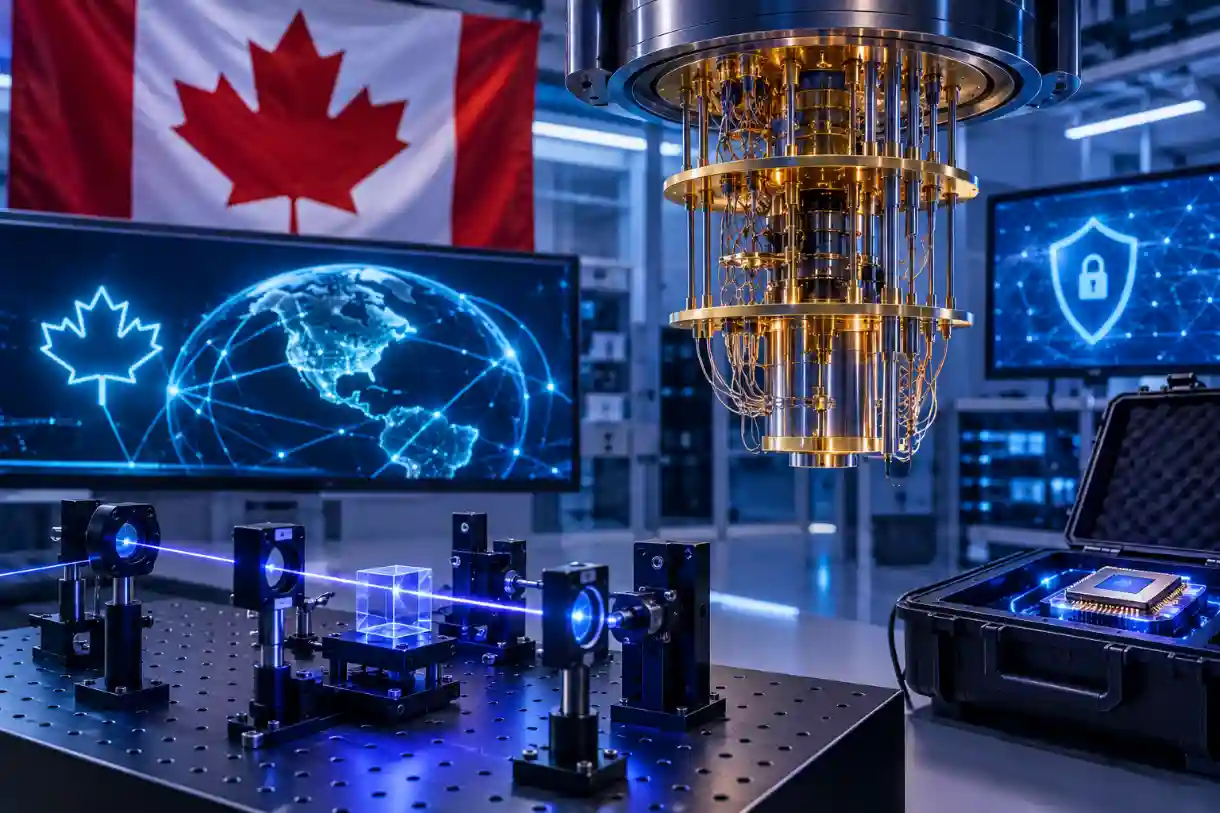
Canada has launched a quantum hub for defence in Calgary, and put $20.3 million over two years behind a University of Calgary-led consortium. Called the Quantum Defence Innovation Secure Hub, it’s a secure site where government, industry, and academia can develop and test quantum sensing and secure communications for the Canadian Armed Forces. The money buys a collaboration facility rather than a fielded capability.
What the hub is for
Specifically, the Quantum DISH sits under BOREALIS, the defense research bureau Canada established in late 2025 to move military technology out of the lab and into the field faster. According to the August 6 press release, it joins two earlier hubs, a Maritime pilot and an Uncrewed Systems one, and was the result of a competitive call for proposals.
Its work spans quantum sensing, secure communications, algorithms, and hardware assurance, and the readiest near-term target is navigation that holds up when GPS is jammed or spoofed, the same quantum-sensing problem militaries elsewhere are chasing. Ultra-precise sensors can register tiny changes in gravity or magnetic fields to fix a position without satellites, whereas quantum computing and secure communications sit further out.
Allies are treating quantum as defense infrastructure too, among them NATO’s dual-use quantum school. Defense Minister David McGuinty tied the hub to national ambition:
“Quantum will shape the next generation of defence capabilities, and Canada must be prepared to lead, not follow.”
A sovereignty play
The framing is sovereign. Ottawa lists quantum as a priority capability under its Defence Industrial Strategy, and the hub’s pitch is “Made-in-Canada” technology feeding a domestic defence industrial base. Canada has the sector to attempt it, with homegrown quantum firms like Xanadu and a deep university research base, and its move rhymes with the defence-quantum push in Washington and other governments spending to avoid leaning on foreign suppliers. Next to the billions committed elsewhere, $20.3 million is a modest entry.
What the announcement doesn’t include is a specific technology or company beyond the University of Calgary lead. This is money for a secure place to collaborate and a two-year mandate to move promising Canadian research toward mission-ready use. Whether it yields deployable quantum sensing or communications is the test that comes after the hub launches.