
Connecticut Wins NSF Quantum Engine in New $15 Million Round


The National Science Foundation has named 12 new Regional Innovation Engines, and one of them focuses on quantum. The NSF Quantum Technologies Engine, based in Connecticut and led by the University of Connecticut, is among the awardees in the program’s second cohort. Each team starts with $15 million over two years.
The award
According to the July 14 press release, the 12 Engines span 20 states and a range of fields, from grid security to critical-mineral mining to quantum. Every team is run by a coalition of universities, nonprofits, and private companies in its region. The starting grant is $15 million, but teams that hit defined milestones can eventually draw up to $160 million each from NSF over a decade. That larger figure is a ceiling tied to performance, not a guaranteed sum.
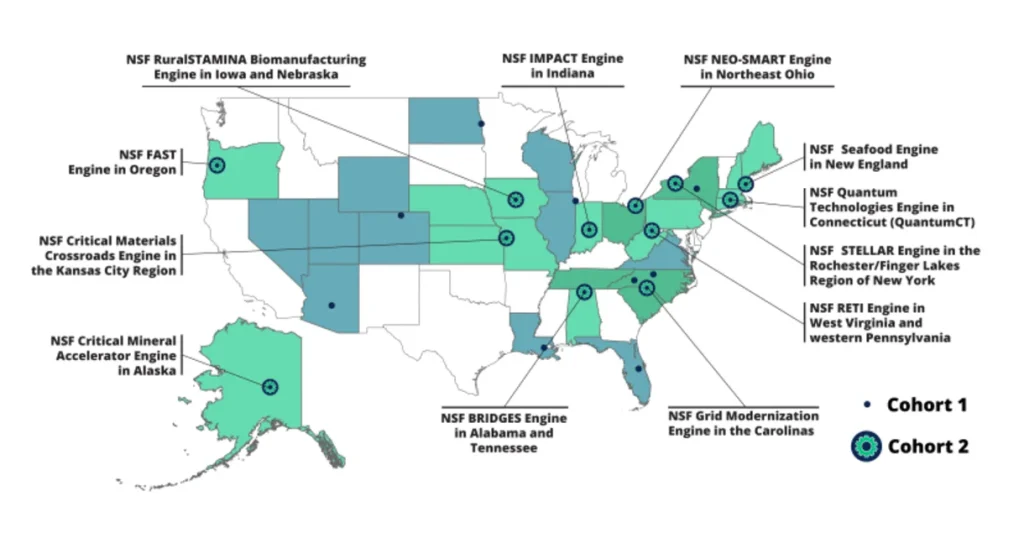
The NSF frames the Engines as a national network meant to build domestic supply chains and technology clusters as opposed to isolated regional projects. For Connecticut, the award anchors a quantum cluster around UConn, though the announcement is short on specifics.
What Connecticut’s quantum Engine still has to define
The release doesn’t say what the Connecticut quantum Engine will actually build, which companies participate, or what its technical focus is. So this is an award announcement, not a defined program, and the details will come later.
Context helps explain why the program draws attention. NSF says the first nine Engines, funded two years ago with $135 million, have since attracted more than $2 billion in matching commitments from industry, philanthropy, and state and local governments. That multiplier is the case NSF is making for the model. This new cohort lands alongside a fresh round of funding for those inaugural Engines that have shown progress.