
Europe Launches €50 Million Pilot Line for Neutral Atom Quantum Chips

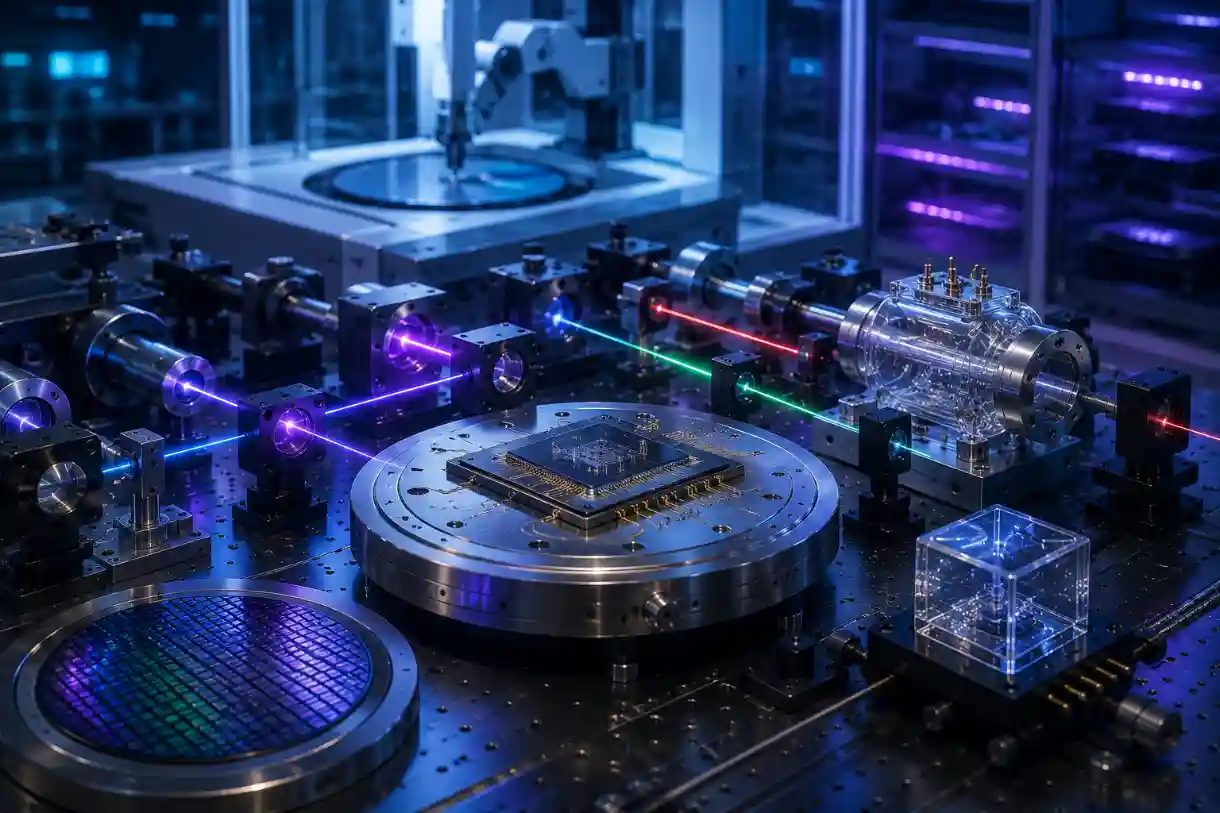
Europe has started work on a factory pipeline for the parts that go inside neutral atom quantum machines. Called Q-PLANET and coordinated by the French company Pasqal, the €50 million project pulls together 28 organizations across 11 EU member states. It kicked off on July 8 and 9 as one of six European pilot lines set up to move quantum hardware from the lab toward mass production.
What Q-PLANET will build
According to the July 13 press release, each of the six pilot lines takes a different hardware approach. Specifically, Q-PLANET is the one focused on neutral atoms, the technology Pasqal builds its computers on, where individual atoms are held and manipulated by lasers. The consortium will design, make, and test industrial-grade versions of the components these systems depend on.
Indeed, the first three-year phase targets a specific list: lasers at four wavelengths (461, 698, 795, and 1013 nanometers), atom chips for sensing and computing, and microfabricated vapor cells used in atomic clocks and field sensors. According to the press release, the plan is to push these from TRL 4 to TRL 6, a scale that measures how close a technology is to real deployment, meaning a jump from lab prototype to something proven in an operational setting.
Why a pilot line is important
Meanwhile, the bottleneck the project targets is manufacturing, not physics. Today, manufacturers largely build quantum components today one at a time, without shared processes, standards, or testing frameworks, which keeps costs high and volumes low. Q-PLANET aims to fix that by creating standardized design and assembly kits, essentially templates that let a startup build quantum components without starting from scratch.
That lowers the barrier for smaller companies, which is part of the point. The EU wants a domestic supply chain for quantum parts rather than dependence on imports, tied to its goal of industrializing quantum technology by 2030.
The launch covers a three-year phase under a six-year agreement with the European Chips Joint Undertaking. A second phase should follow, with a goal to get more users onto the developed components from the first phase.