
La Luce Cristallina Launches Strontium Titanate Wafer Platform

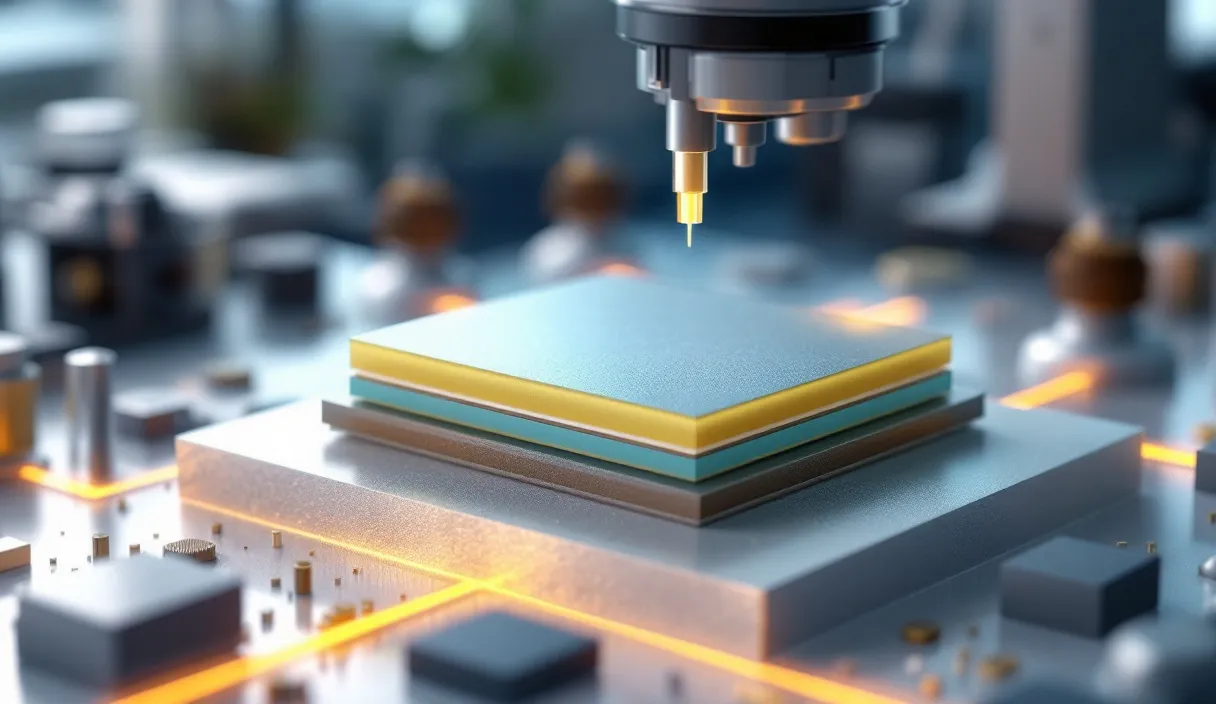
On September 9, La Luce Cristallina announced the release of a silicon-based strontium titanate on insulator wafer platform. This platform is for laboratories developing quantum and cryogenic devices. Currently, the wafers are available in a 2-inch size, with 200-millimeter versions anticipated early next year. This offering is a materials product for researchers.
What the company released
Specifically, the platform features a 0.5-micrometer strontium titanate layer situated on silicon dioxide, which the company describes as a quantum paraelectric on insulator (QP-STOI). La Luce Cristallina states that this insulating STO layer is 100 times thicker than the conventional buffer layers typically used to grow the material on silicon. According to the company, this increased thickness allows the STO to maintain its voltage-tunable dielectric properties at cryogenic temperatures.
Strontium titanate becomes highly responsive to electric fields when cooled. The company highlights this property as beneficial for parametric amplifiers used in qubit readout, as well as for tunable microwave and electro-optic components. The wafers are marketed as being compatible with CMOS and existing foundries, meaning they can be integrated into current semiconductor production lines.
CEO Alex Demkov positioned the launch as a response to researcher demand.
“Our new strontium titanate wafer provides a highly tunable materials platform for researchers developing quantum and cryogenic devices, helping to support increased market interest in emerging use cases,” Demkov stated in the release.
Context and missing information
La Luce Cristallina is a U.S. company with 1 to 10 employees. Its previous work focused on integrating barium titanate with silicon photonics. The company did not disclose pricing, yield rates, customer names, or how its wafers compare in performance to existing STO substrates. The “100-times” figure and the claims regarding cryogenic tunability are the company’s own assertions and are not supported by independent test data.
The press release linked its launch to public spending, referencing the U.S. Department of Commerce’s plan to invest over $2 billion across nine quantum companies and NIST‘s new manufacturing center. However, neither program directly provides funding to La Luce Cristallina. Cryogenic hardware remains a significant bottleneck for quantum systems, which is the market the company aims to address. This reflects broader supply-chain concerns driving initiatives such as IonQ’s acquisition of SkyWater Technology.
The wider push for materials and supply chain development in Europe was one of the topics at a September European Parliament session concerning the proposed EU Quantum Act, as reported by The Quantum Insider.