
Pasqal, USA Rare Earth Test Quantum AI for Mineral Separation

USA Rare Earth, Pasqal, and Riven Systems have partnered to explore the use of quantum machine learning for identifying improved molecules for separating rare earth elements. The three companies bring together diverse expertise: a Nasdaq-listed minerals company, a French neutral-atom quantum hardware manufacturer, and a startup specializing in automated chemistry labs. This initiative is a feasibility study, meaning it aims to test the concept without yet producing separated rare earth elements or demonstrating quantum computational superiority over classical methods.
Details of the Planned Test
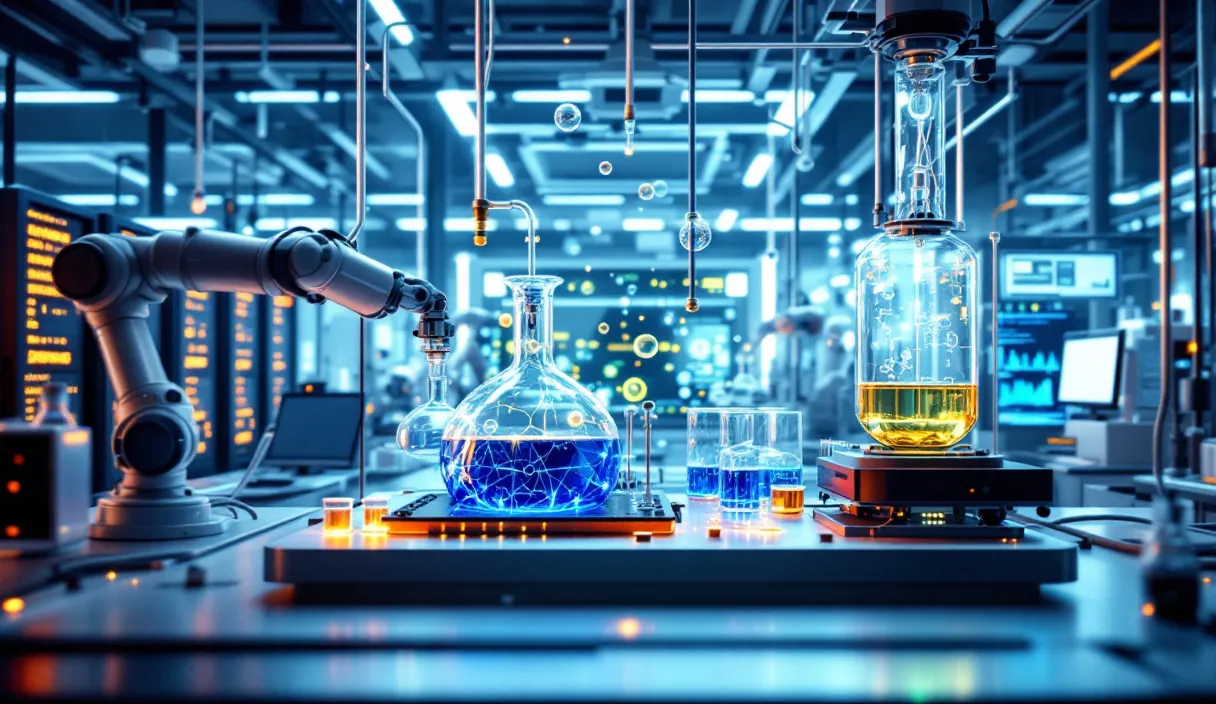
According to the September 17 press release, the work will distribute among the partners. Riven’s automated laboratory will conduct thousands of experiments to gather data on how effectively different extractant molecules bind to rare earth elements.
Pasqal will then utilize this data to train quantum machine learning models, comparing their performance against classical models trained on the same experimental results, as noted in the announcement. USA Rare Earth will contribute its processing knowledge and provide the target feedstocks, including materials from its Round Top mine in Texas, third-party mixed rare earth carbonates, and recycled magnet swarf.
Pasqal’s communications indicate that their Neutral Atom QPU will be used for the work. However, the announcement does not specify a particular machine or qubit count. Pasqal’s systems, which manipulate neutral atoms with optical tweezers, can achieve up to several hundred qubits, so the exact configuration remains undisclosed. The companies characterize this as a strategic technology partnership, without specifying whether it is a Memorandum of Understanding, a paid pilot program, or a joint research study.
What This Partnership Does Not Establish
Alex Moyes of USA Rare Earth suggests that a specially designed extractant could reduce the number of processing stages, equipment requirements, and energy consumption. These are forward-looking claims about potential benefits, not confirmed outcomes, and no independent party has validated any efficiency figures. The announcement does not mention separation purity, recovery rates, or any runtime comparisons between the quantum and classical models.
Crucially, there’s no claim of quantum advantage, which is an accurate assessment of the current state of the technology. Quantum machine learning for chemistry still heavily relies on simulators and early-stage (NISQ-era) tools.
For this reason, open-source packages like Fujitsu’s OpenQARP exist to facilitate these workflows. A benchmark derived from lab data is a significant step away from an operational flowsheet. Though the companies express ambition for the project to evolve into an end-to-end discovery pipeline feeding USA Rare Earth’s R&D facility in Colorado, this remains a future aspiration described in a press release, not a system that has been developed.