
Texas Builds the Framework for a Quantum Industry

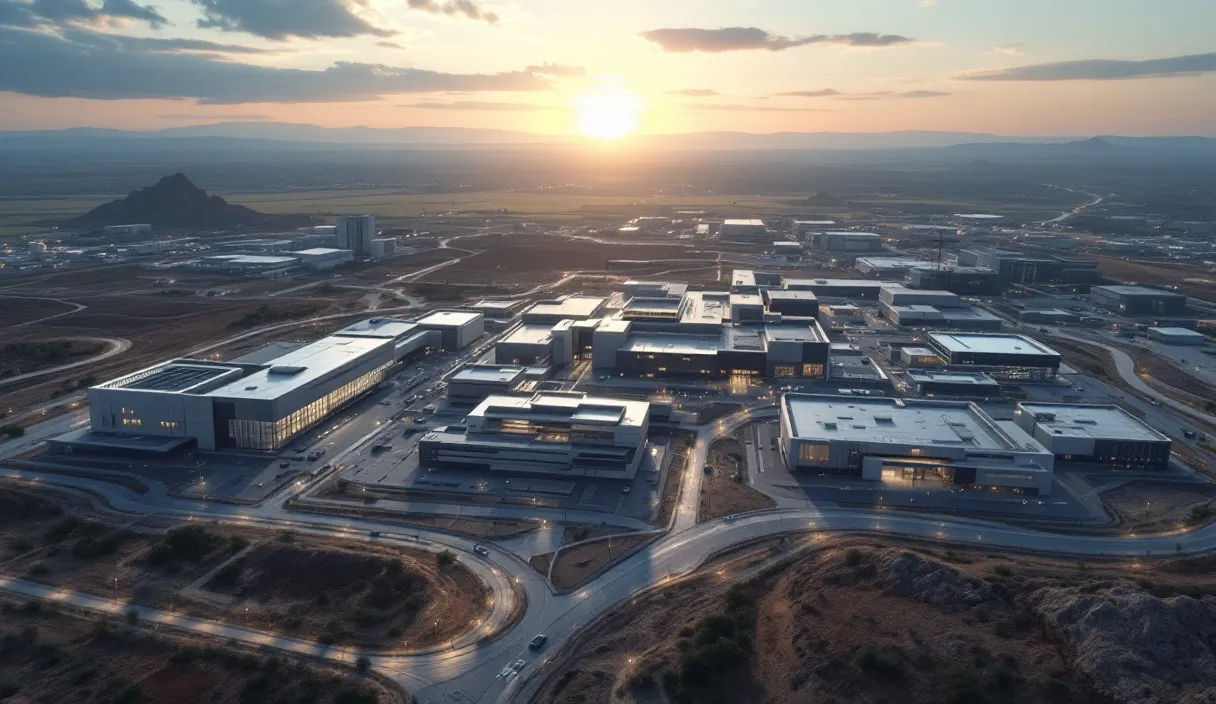
Over the past year, Texas has translated its quantum technology discussions into legislation, funding requests, and a dedicated piece of land near Austin. The state now boasts a quantum office within the Governor’s economic development division, a fully appointed advisory committee, a $38 million university funding request, and a planned campus that provides a physical address for these efforts. The success of these initiatives in producing working hardware hinges on a reporting deadline in December 2026 and the legislative session in 2027.
The Texas Quantum Initiative defined
The Texas Quantum Initiative came into being through HB 4751, effective September 1, 2025. Housed within the Governor’s Office of Economic Development and Tourism, its mandate is to coordinate the state’s quantum endeavors, develop a strategic plan for the governor, lieutenant governor, and House speaker, and submit a report to the Legislative Budget Board, as Quantum Insider reported.
The legislation emphasizes commercial infrastructure, prioritizing hardware systems and real estate. This focus explains why a chip factory and a physical campus align more directly with the law’s intent than pure research grants. Senator Tan Parker sponsored the bill in the Senate, where it passed 25 to 6 in June 2025, while Representative Giovanni Capriglione was its author.
By late July 2026, Governor Greg Abbott had appointed all six members of the advisory committee. Five appointments happened on June 1, drawing from the Texas Research Alliance, Texas Tech, UT San Antonio, NVIDIA, and Forward Edge AI. Katie Pizzolato, IBM’s vice president of quantum platform, filled the sixth seat. This diverse group of academics, a chipmaker, and a platform vendor indicates where the state expects the work to materialize.
Highlights from the UT Dallas Summit
The second Texas quantum summit took place over two days in mid-August 2026 at the University of Texas at Dallas, and registration reached capacity even before the event began. Attendees traveled from Austin, Houston, College Station, Lubbock, San Antonio, and Dallas, and additional participants flew in from out of state.
The summit’s structure encouraged active participation over passive listening. Instead of separate technical tracks, organizers assigned attendees to breakout rooms, tasked them with identifying solvable problems, and then had the most compelling ideas presented to the full assembly. The explicit goal was to foster collaborations that could attract future funding.
Vendor presence was significant, with speakers from IonQ, IBM, NVIDIA, Amazon, Microsoft, QuEra, Infleqtion, and Orca Computing. Nine universities, including A&M, Rice, SMU, and UT Austin, had representatives on the organizing committee or program. Scott Aaronson attended from UT Austin, and David Awschalom of the University of Chicago delivered the Anson L. Clark Memorial Public Lecture the evening before the summit commenced.
The first summit, hosted by Texas A&M in September 2025, brought industry and academia together. The key difference in the year between the two events was the state’s own formalized involvement, moving from a convenor (A&M) to a state office with a funded mandate and a committee.
Regional quantum specializations in Texas
Different regions in Texas have developed specialized approaches, which will reflect in the state’s strategic plan.
North Texas has concentrated on the demand side. The Texas Research Alliance has focused on building a base of corporate customers rather than forming another research consortium. Its “Quantum for the C-Suite Summit” will take place on September 9, 2026, in Dallas.
Austin has leveraged its existing semiconductor industry base. The UT Austin Texas Quantum Institute coordinates over 30 researchers and, in December 2025, secured $4.8 million from the Texas Semiconductor Innovation Fund to establish QLab, a quantum-enhanced metrology facility. Houston, San Antonio, Lubbock, and College Station each operate their own programs, and all sent representatives to the Richardson summit.
College Station has quantified its ambitions. Texas A&M’s legislative appropriations request for the 2028-2029 biennium seeks $38 million for “Quantum Spur.” This initiative proposes a first-in-Texas on-campus quantum computing system, built around Anyon Technologies superconducting processors.
Its creators envision it to include at least four 49-qubit chiplet modules within a dilution refrigerator, integrated with the university’s NVIDIA DGX SuperPOD, alongside a quantum sensor facility and statewide workforce development programs. It is crucial to note that this is a funding request, not an allocation of funds. The state has not yet appropriated these funds, nor has the hardware been built.
Understanding Occam Foundry
On August 18, 2026, Texas Quantum Partners and Samara, a Texas real estate developer, announced Occam Foundry, a quantum technology campus spanning approximately 16.5 acres in southeastern Travis County. The land has been acquired, and initial building designs are complete.
The concept behind Occam Foundry is co-location, bringing together university teams, startups, and a working quantum system on one property. This facility would be in close proximity to the prototyping and characterization resources needed to transform designs into physical hardware.
It’s important to distinguish between what has been announced and what has been built. The partners report ongoing discussions with potential anchor tenants and international research collaborators, estimating the campus will support hundreds of jobs. This job figure is a projection from involved parties.
Representative Capriglione, the lead author of the quantum bill, endorsed the campus in the announcement. His statement reflects his personal vision for the state’s strategy, and should be viewed as an endorsement from an interested party rather than an independent assessment.
This campus announcement comes as Texas absorbs much larger investments. On August 6, 2026, Tesla and SpaceX announced an investment of $16.8 billion to begin constructing Terafab, an advanced chip factory near Houston. In comparison to $16.8 billion, a 16.5-acre quantum campus is a relatively modest endeavor. However, it provides a crucial physical location that the state’s quantum strategy previously lacked.
Expanding scope of policy groups
Industry associations are widening their focus. The Texas Blockchain Council, led by Capriglione since January 2026, has rebranded as the Digital Infrastructure Network.
The group now represents members working across blockchain, digital assets, and advanced computing, and its policy agenda includes quantum computing alongside AI, cybersecurity, and the state adoption of newer technologies. Its Technology, Innovation and Energy Forum took place in Austin on August 21.
This rebrand formalizes a shift already evident in the group’s communications. A blockchain lobby’s inclusion of quantum computing signals where policy attention and funding discussions are heading within the state.
The upcoming test for Texas’s quantum plan
The initiative is required to submit an annual strategic plan to the state’s top three officials, along with a biennial report to the Legislative Budget Board by December 1 this year. This report will be the first public account of the initiative’s progress since HB 4751 took effect. Until its release, current efforts primarily involve coordination, requests, and conceptual designs.
Before the report, the conversation will shift to Dallas on September 9 for the Texas Research Alliance’s C-Suite summit. The projects conceptualized in the UT Dallas breakout rooms have until the 2027 legislative session to become specific funding proposals. For a state program, this represents a tight deadline.
Currently, Texas’s quantum infrastructure is largely in its foundational stages. A law, an office, a committee, a funding request, and a land parcel are in place. However, the 49-qubit modules are not yet installed, the $38 million has not been appropriated, and Occam Foundry’s anchor tenants remain subjects of discussion. The December report and next year’s legislative session will reveal whether these announcements translate into concrete hardware and appropriations, or if they remain on the drawing board for a longer period.