
Xanadu, Mitsubishi Expand Quantum EUV Lithography Project

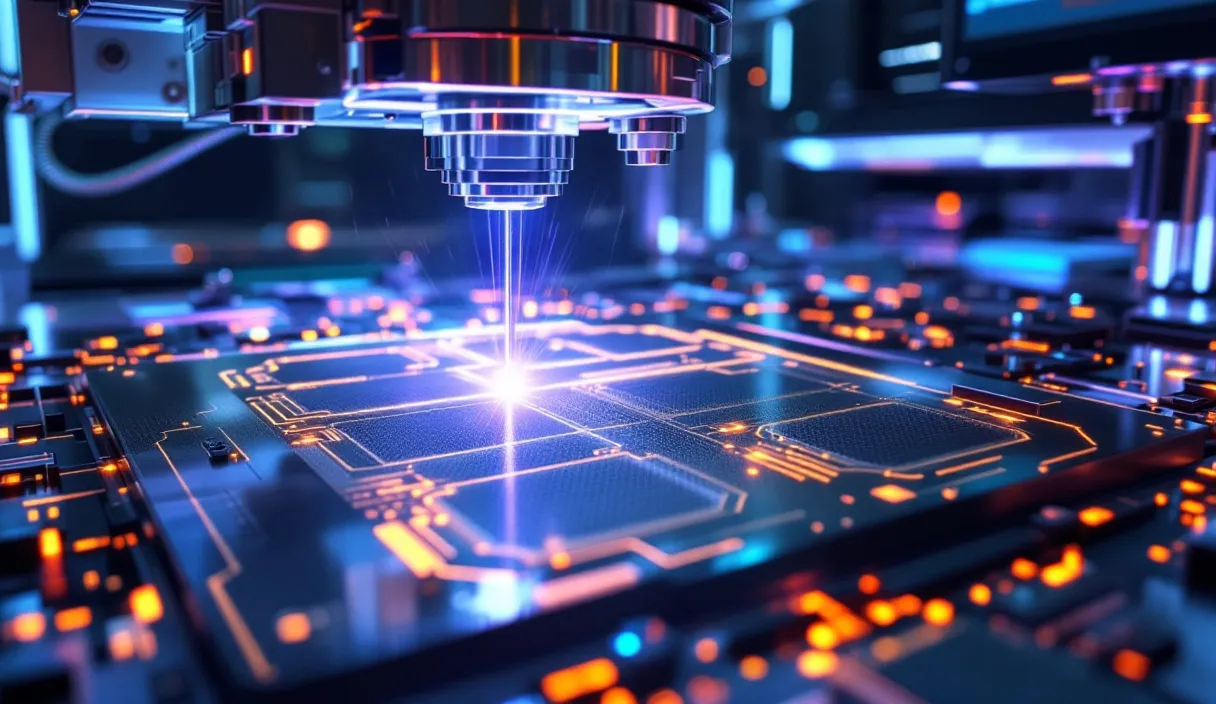
Xanadu and Mitsubishi Chemical have announced the second phase of their joint project to simulate a portion of the EUV lithography process using quantum computers. Their developing workflow is designed for future fault-tolerant quantum computers (FTQC). This collaboration is an extension of their previous research, supported by government innovation programs, and doesn’t represent a chip breakthrough or a commercial product.
Project details
According to the August 25 press release, the companies are investigating radiation-induced blur in EUV lithography, a critical process for etching fine patterns onto advanced chips. Mitsubishi Chemical, part of the larger Mitsubishi group, manufactures materials such as photoresists used in this step. In the initial phase, they demonstrated that quantum algorithms could model the optical properties of these photoresists.
In this second phase, parameters from Xanadu’s quantum simulations will be integrated into Mitsubishi Chemical’s existing multi-scale models to predict blur. Xanadu aims to develop a production-ready pipeline that facilitates the identification of materials capable of reducing blurring. This pipeline specifically focuses on future fault-tolerant quantum computers. Xanadu plans to provide a demonstration and a roadmap, which indicates that the current status involves a plan and prior simulation work.
Funding and undisclosed information
The project receives funding from two government programs: Canada’s National Research Council’s Industrial Research Assistance Program (NRC IRAP) and Japan’s Strategic Innovation Promotion Program (SIP), with the relevant project led by AIST and its G-QuAT center. Xanadu has also confirmed advisory services and over $800,000 in general R&D support from NRC IRAP across multiple projects over time, distinct from a single grant for this phase.
The announcement doesn’t specify the funding amount for this phase, its duration, or the performance targets for success. It also omits details regarding the number of qubits required or a timeline for when a fault-tolerant machine might execute the workflow.
Dr. Qi Gao, Senior Chief Scientist at Mitsubishi Chemical, commented on their previous collaboration:
“This partnership expands on Mitsubishi’s previously successful collaboration with Xanadu, where we demonstrated the utility of quantum computing in simulating EUV resist materials for semiconductor manufacturing.”
Xanadu is a Canadian photonic quantum computing company. The project’s framing, including CEO Christian Weedbrook’s statement about “eliminating a critical manufacturing bottleneck,” originates from the vendor.