
Hitachi, Intel, and AIST Launch Silicon Quantum Manufacturing Project

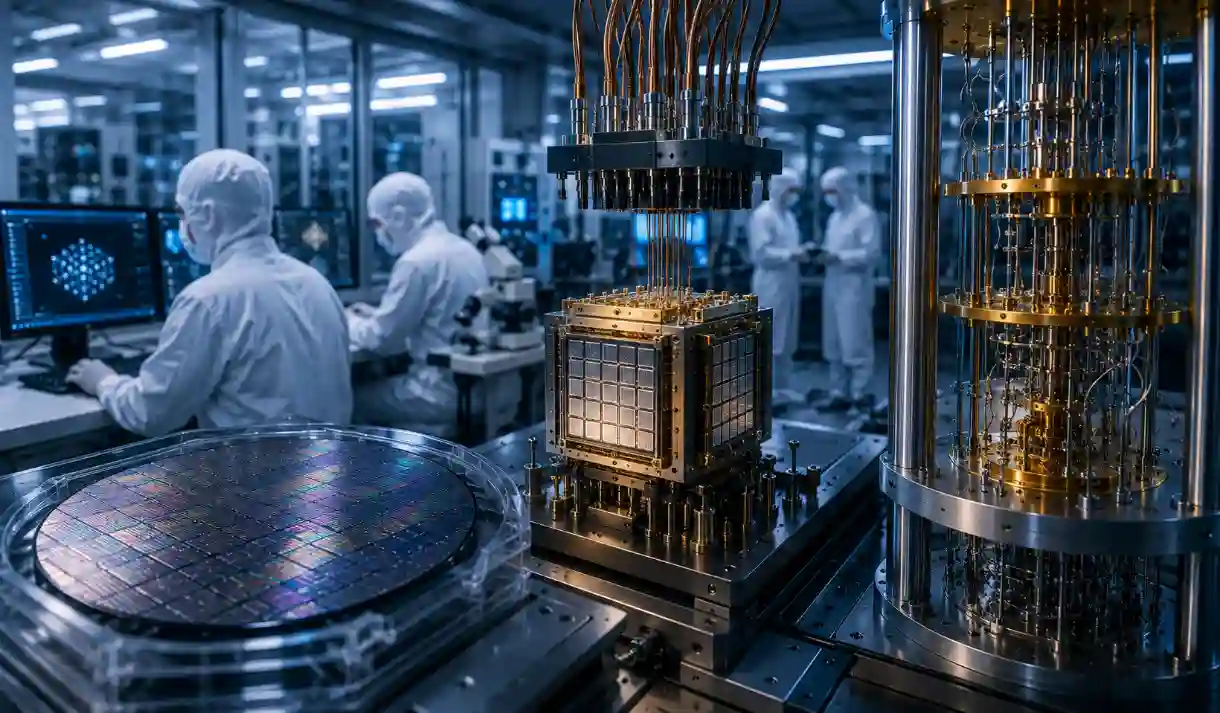
Hitachi, Intel’s Japan arm, and the national research institute AIST have started a government-backed project to make silicon quantum computers manufacturable at industrial scale. Japan’s NEDO agency picked Hitachi to lead the effort, which runs through March 2029 and expands a Hitachi-Intel collaboration announced in June. The aim is an engineering base for producing quantum processors, rather than a single showcase machine.
Why Japan is betting on silicon quantum chips
According to Hitachi’s July 22 press release, the bet is on silicon because these qubits can be made with processes close to those the chip industry already uses, which plays to Japan’s semiconductor strength.
The project splits into four parts. Hitachi and Intel will design industrial-grade chips holding at least 100 qubits, using Intel’s manufacturing to improve qubit stability. They’ll build a process design kit, a package of manufacturing rules that lets engineers design chips for real production lines. They’ll develop three-dimensional integration for systems growing toward 1,000 qubits. And they’ll open cloud access through AIST’s G-QuAT center so outside researchers can run experiments remotely.
The wiring piece is the one worth watching. Control lines have to reach every qubit at cryogenic temperature, and that routing turns into a serious bottleneck as qubit counts climb. Dense 3D stacking is the proposed fix.
What the project’s roadmap promises
The roadmap is a schedule of goals, so read the dates that way. Hitachi plans an initial cloud service in fiscal 2027. A 100-qubit prototype running error-correcting codes is targeted for fiscal 2028, and a 1,000-qubit prototype for fiscal 2030.
Keep the scale in perspective. A useful, fault-tolerant machine is expected to need on the order of a million qubits, so 1,000 is a waypoint on a much longer road. The work builds on earlier Hitachi research, including Japan’s Moonshot program and ties with RIKEN and imec, and the executive quotes from the three partners frame quantum as future industrial infrastructure.