
Jane Goodall Institute Uses Quantum Computing to Study Chimp Warfare

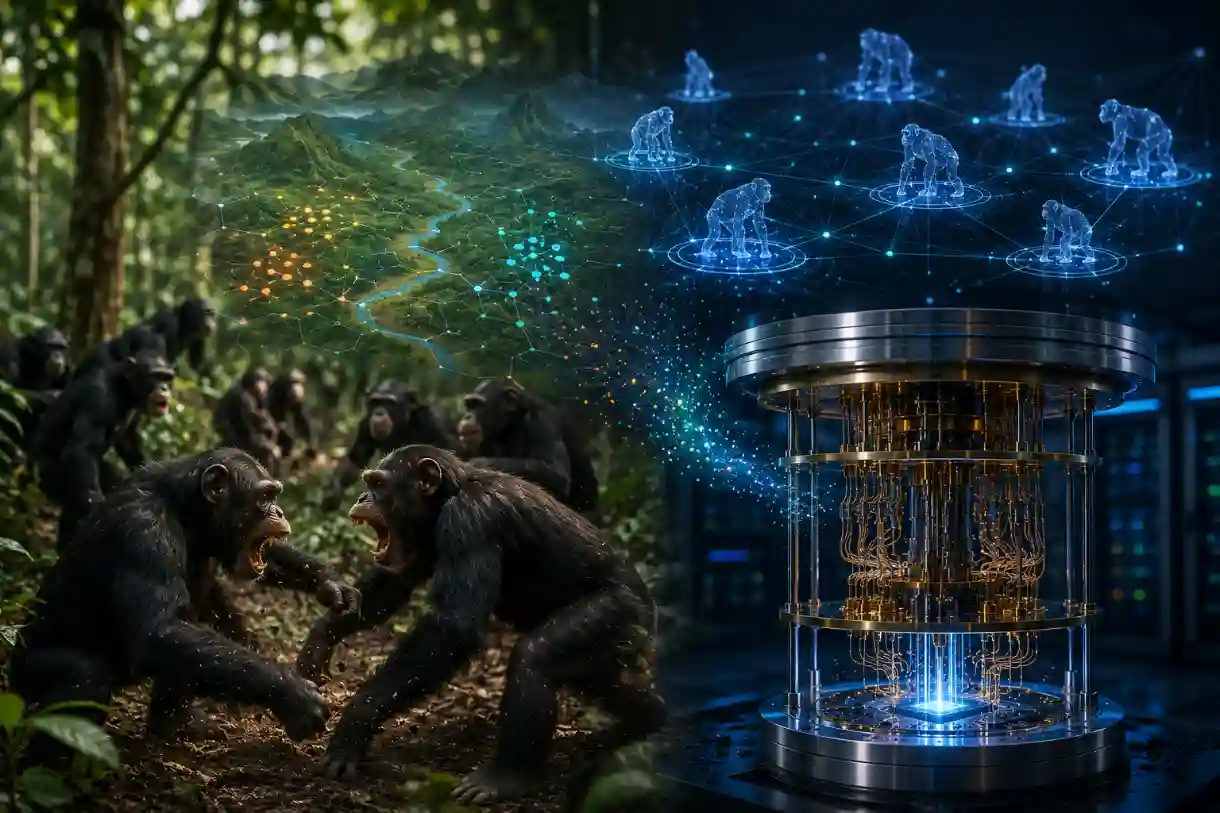
The Jane Goodall Institute USA has teamed up with a company called FormationQ to point quantum computing at a long-running puzzle in animal behavior: why chimpanzees wage lethal war on neighboring groups while bonobos, an equally close human relative, tend to get along. The two-year project uses IonQ’s trapped-ion quantum computers alongside more than six decades of the institute’s field data. It launched on World Chimpanzee Day, the 66th anniversary of Goodall’s first day studying wild chimps at Gombe in Tanzania.
The question
Chimpanzees and bonobos are humanity’s two closest living relatives, yet they behave very differently toward outsiders. Goodall documented organized, deadly conflict between chimpanzee groups in the 1970s. Bonobos, by contrast, often socialize peacefully across communities.
According to the July 14 press release, researchers suspect the answer is ecological: how food is spread across a landscape, how large a range each species has to cover, and the decisions individuals make about whether to travel alone or in a group. Field observation captures the behavior. The hard part is untangling how many of those variables interact at once. To test it, the team uses B3GET, an agent-based model in which virtual primates forage, reproduce, and interact across simulated landscapes under conditions the researchers can adjust.
Where quantum comes in
The quantum piece is exploratory, not a finished result. The researchers will test whether hybrid quantum-classical computing can search that tangle of variables more effectively and better calibrate the large behavioral models, work the partners describe as a first attempt to apply quantum-enhanced computation to this corner of ecology. Whether it beats standard classical methods is one of the questions the project is meant to answer. The team also hopes the models can help identify and protect critical chimpanzee habitats.
For the institute, the launch carries a personal weight. Goodall died in October 2025 at 91, and project lead Lilian Pintea called it one of the last programs he and Goodall worked on together.