
NASA Awards Infleqtion $20M for Quantum Gravity Sensor

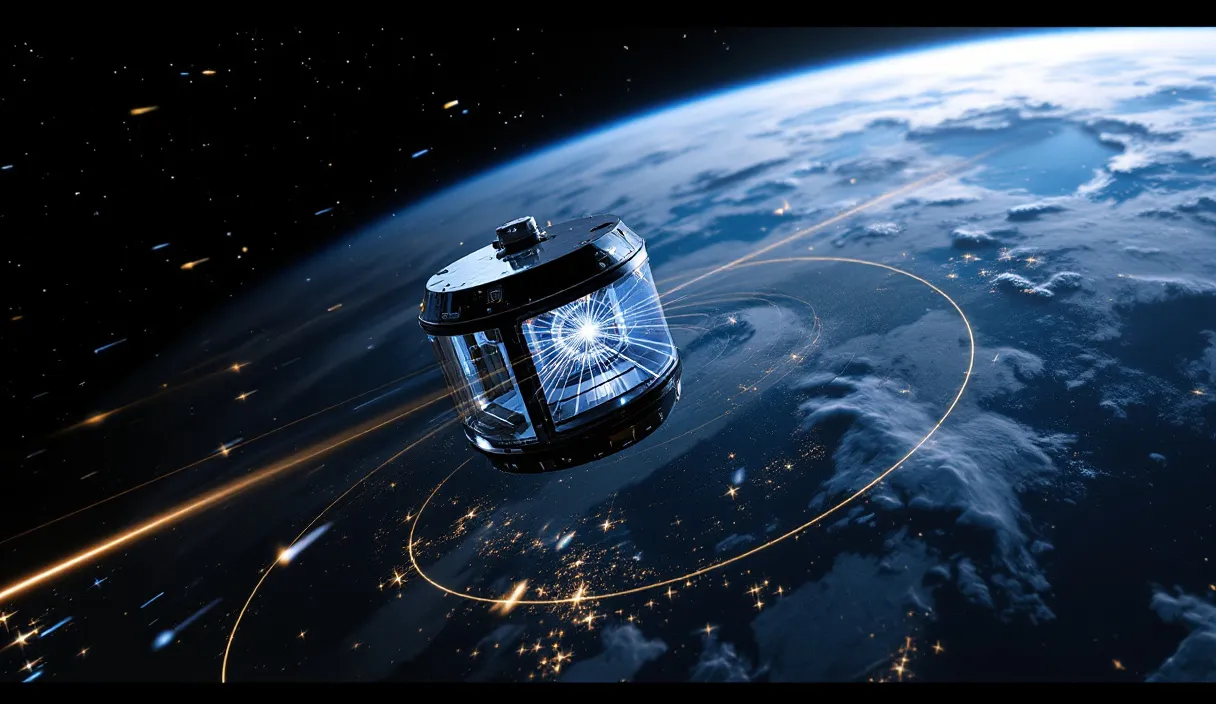
NASA has awarded Infleqtion a $20 million follow-on contract to continue development of the Quantum Gravity Gradiometer Pathfinder (QGGPf). This sensor is designed for deployment on a low-Earth orbit spacecraft in 2030. This latest award brings NASA’s total investment in the program to $40 million and will fund hardware development and ground testing through 2027. The current focus is on building and testing an engineering unit, with the launch still four years away.
Contract details
According to the August 27 press release, the contract mandates Infleqtion to design, refine, and integrate the sensor’s atomic physics package, referred to by the company as the “quantum core.” This package comprises vacuum, laser, and control subsystems. It employs ultracold rubidium atoms, chilled to pico-Kelvin temperatures, to directly measure gravity gradients. Infleqtion will initially construct a sensor head and an electronics development unit, which will then undergo testing at the Einstein Elevator, a drop tower microgravity facility located in Hannover, Germany.
This represents the tangible output of the contract. The QGGPf program is a technology pathfinder, meaning its primary goal is to mitigate risks for subsequent science-grade instruments rather than to produce immediate finished measurements. NASA’s Jet Propulsion Laboratory is leading the mission, with Infleqtion providing the necessary hardware.
Infleqtion describes itself as “a global leader in quantum computing and quantum sensing powered by neutral-atom technology.” This is the company’s own self-characterization. The press release also states that QGGPf is a mission “designed to fly the world’s first space-based quantum gravity sensor,” a claim referencing future intent, as the launch has not yet occurred.
Program context
The QGGPf builds upon previous work conducted by JPL and Infleqtion for the Cold Atom Lab aboard the International Space Station, as well as NASA’s earlier GRACE and GRACE-FO gravity-mapping missions. Those missions have successfully flown, whereas this sensor has not yet.
CEO Matt Kinsella linked the award to the progress already achieved:
“This follow-on award reflects the progress our team has made and marks an important step toward the mission’s next phase. (…) The path from quantum science to a system that can fly in space takes years of engineering, testing, and collaboration.”
Chief Science Officer Dana Anderson characterized the current work as applied rather than fundamental research, noting that the team is “no longer testing the quantum technology itself, but ways we can use it in the space environment.”
The project’s timeline is public. NASA and Infleqtion aim to complete instrument hardware development over the next three years, followed by a flight demonstration. Work under this current phase will continue through 2027, with the launch targeted for 2030. The question of whether the sensor will provide useful gravity data from orbit remains open until its deployment. Ultimately, these gravity readings could be used to monitor shifts in water, ice, and underground resources.