
Quantinuum and Rolls-Royce Team Up on Quantum Gas Turbine Design

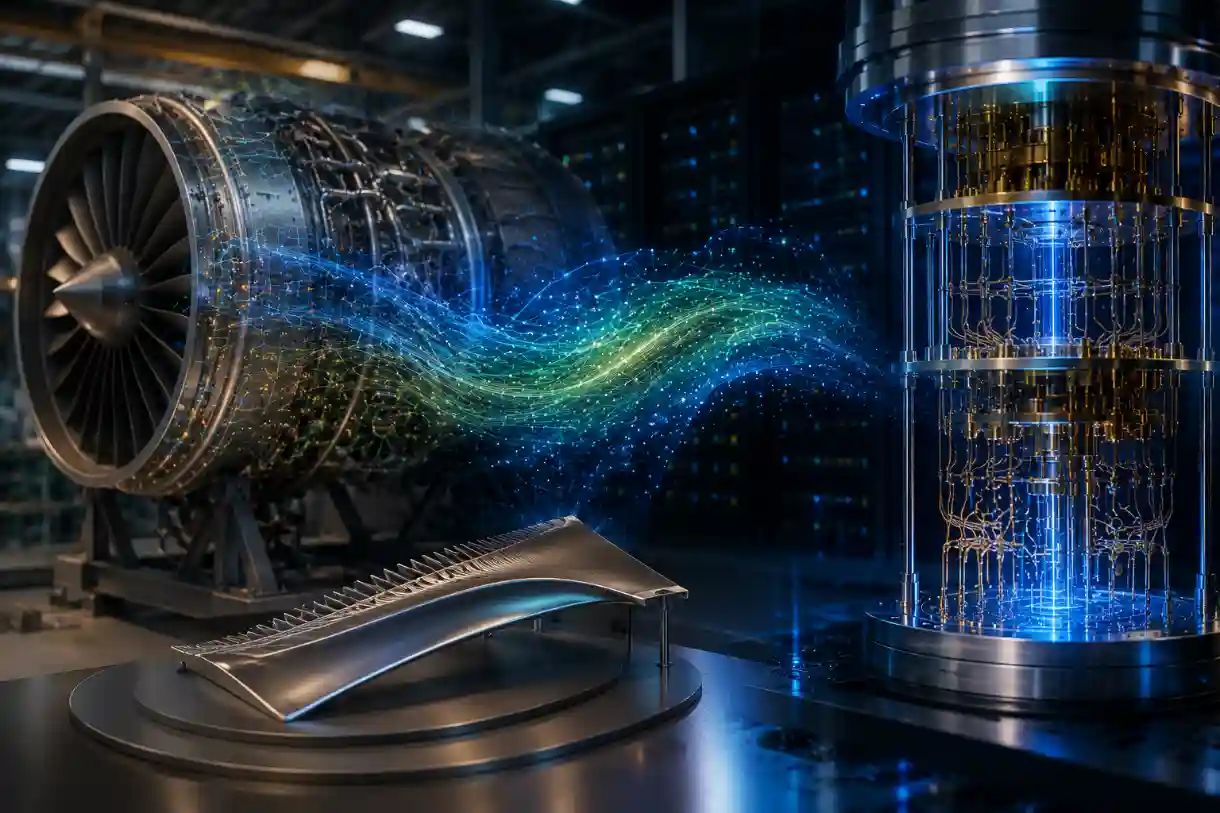
Quantinuum, Rolls-Royce, Riverlane, and the University of Edinburgh’s supercomputing center have signed an agreement to test whether quantum computing can help design gas turbines. The target is fluid dynamics, the simulation of how air and gas flow through an engine, which eats enormous amounts of computing power as the models get more detailed. The partners describe it as a multi-year effort to explore the problem, not a solution to it.
Who does what
Per a July 14 press release, each partner brings one piece. Quantinuum provides its trapped-ion hardware, including its Helios system, and software. Rolls-Royce supplies the real design problems and engineering knowledge. Riverlane contributes quantum error correction and algorithm work, and EPCC, the UK’s national supercomputing center, handles the high-performance computing and the job of stitching quantum and classical systems together.
The plan is to run small computational building blocks of industrially useful algorithms on Helios and study how they might scale on Quantinuum’s planned future machines, called Sol and Apollo. Rolls-Royce, Riverlane, and EPCC have worked together for years on this using classical emulators, and this deal moves that work onto actual quantum hardware for the first time.
What to keep in perspective
This is an agreement to explore, and the technology it depends on does not fully exist yet. Useful fluid-dynamics simulation would need fault-tolerant machines far beyond today’s, which is why Rolls-Royce’s Leigh Lapworth framed the timing as having to start now to be ready later. Nothing here changes how a turbine is designed today.
The idea is a hybrid one, with quantum processors handling the narrow parts where they help and supercomputers doing the rest, rather than replacing classical computing outright. It also feeds the UK’s stated goal of building quantum computers capable of a trillion error-free operations, its “teraQuOp” target.
Quantinuum calls Helios the most accurate commercial quantum computer, a claim it bases on a specific gate-fidelity measurement rather than an independent ranking, so it is worth reading as the company’s own benchmark.