
Quantum Computing Runs on Helium-3, and Most of It Comes From Old Weapons Stockpiles

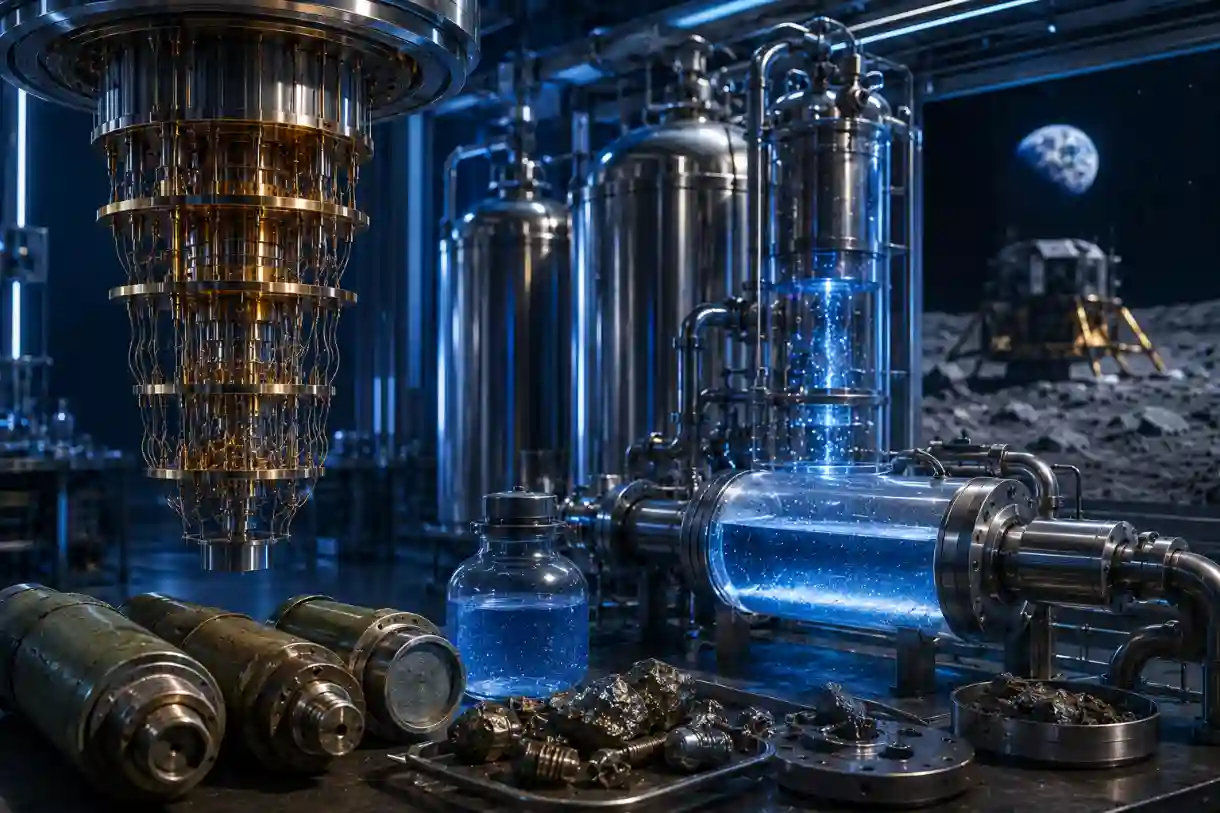
Here’s a supply chain nobody puts on a slide. Superconducting quantum computers have to be chilled to a hair above absolute zero, and the machines that do it, dilution refrigerators, run on helium-3. Helium-3 is among the rarest commercially used materials on Earth. So where does the world get it? Mostly from tritium, a radioactive form of hydrogen that decays into helium-3 over time, sitting in stockpiles that are largely a legacy of nuclear weapons programs.
Yes, you read that right. A chunk of the quantum industry is running on Cold War inventory slowly turning into something useful. Those stockpiles are finite, because making fresh tritium is brutally expensive and nobody is doing it to supply refrigerators.
A Seattle company called Interlune says it can get more, and the number attached to its plan is the most illuminating thing in the story.
Why quantum computers depend on helium-3
Every liter of helium on Earth carries trace amounts of helium-3. Not a small amount. Trace. According to the July 20 press release, Interlune’s Cold Capture system uses cryogenic distillation to pull that fraction out, and the company says it has demonstrated 99% purity from ordinary Grade A helium.
Now the scale. The U.S. processed around 81 billion liters of helium in 2025. If Cold Capture were installed across all those plants, Interlune estimates the yield at about 2.5 kilograms of helium-3 a year, which would just about triple domestic production.
Eighty-one billion liters in, two and a half kilograms out. Triple the national supply. Sit with that, because it explains the problem better than any adjective could.
You can’t just find more
There’s a tempting assumption that newly discovered helium fields could fix this. They can’t, and Interlune is refreshingly direct about why. Helium-3 is trace-level in all terrestrial helium, everywhere, whatever the field. Finding more helium doesn’t get you meaningfully more helium-3.
Separation is the nasty part, because helium-3 and ordinary helium are almost chemically identical. Chemistry won’t pull them apart. Cold Capture exploits subtle physical differences between the isotopes at temperatures near absolute zero, which makes for a satisfying loop: you need extreme cold to produce the stuff that lets you make extreme cold.
The commercially clever bit is that it bolts onto existing liquefaction plants. The helium is already being processed. Right now the helium-3 just goes out with it.
Can Interlune solve the helium-3 shortage?
These are Interlune’s own figures, unverified, and the tripling depends on deployment everywhere, which has not happened. The company holds nearly $500 million in purchase agreements, mostly from refrigeration makers Maybell Quantum and Bluefors, against $23 million in venture funding. That is a lot of promised supply from a company still scaling up.
And yes, the longer-term plan involves mining helium-3 from lunar soil. Genuine ambition, very long runway, not this year’s story.
This year’s story is smaller and stranger: an industry chasing a computing revolution while quietly depending on a few kilograms of gas.