
Quantum Elastic Weight Consolidation Solves The Problem Where Teaching an AI Something New Makes It Forget the Old Thing

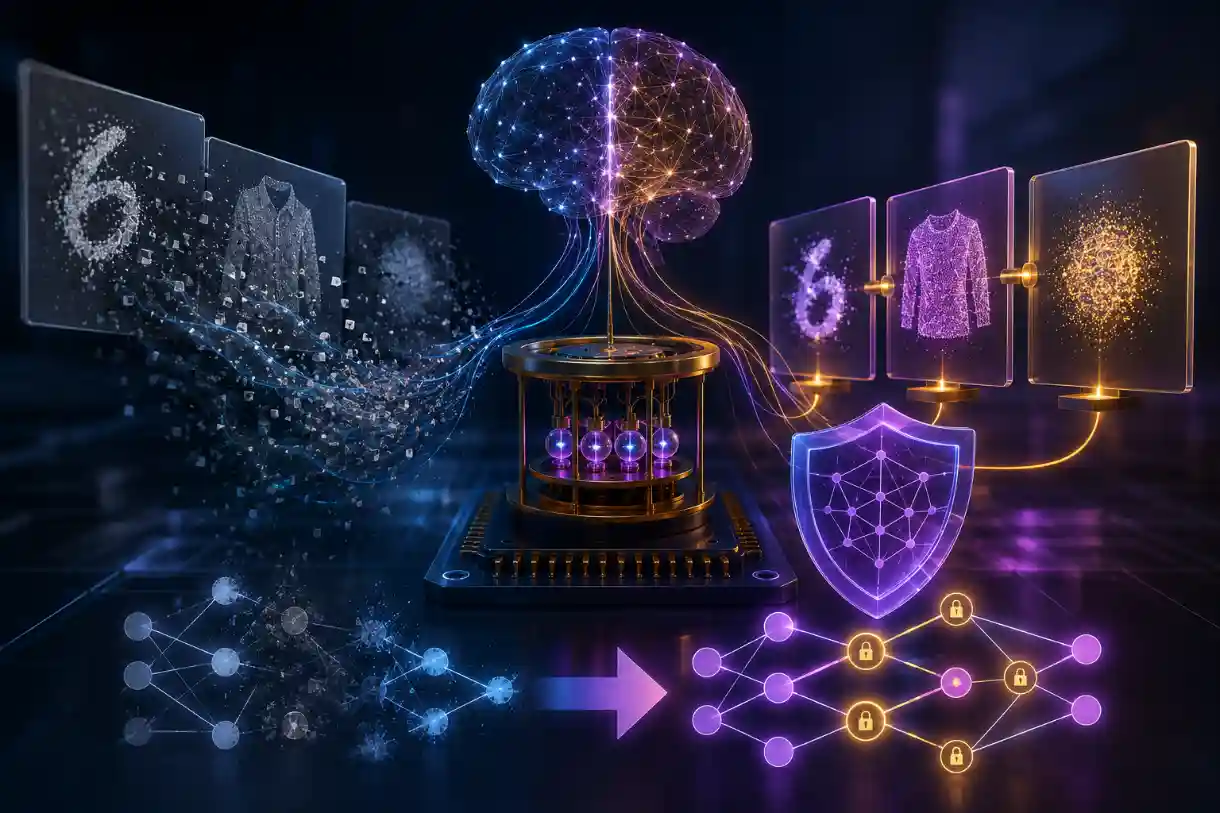
Here’s a failure mode that will feel uncomfortably familiar. You cram for one exam, ace it, then cram for the next one and discover the first subject has evaporated from your head. Artificial neural networks do this too, and they do it badly. Teach a model a new task and the adjustments it makes to learn it tend to paint over the parameters that held the old task. Researchers call it catastrophic forgetting, which is a dramatic name for a genuinely annoying problem.
Quantum machine learning has the same disease. A new preprint from a team across several Taiwanese institutions and KAIST proposes a cure, or at least a promising treatment, and the idea is elegant enough to walk through.
How Quantum Elastic Weight Consolidation works
The trick, called Quantum Elastic Weight Consolidation, starts from a sensible observation: not every knob in a quantum circuit is equally important to what the model already knows. So figure out which knobs are load-bearing, hold those still during new training, and let the unimportant ones move freely to learn the next thing. Stability for the old, plasticity for the new.
The interesting part is how it decides what’s load-bearing. An earlier approach used classical Fisher information, which depends on how you measure the quantum state. That’s a weakness, because different measurement choices hand you different answers about the same parameter. This new method uses Quantum Fisher Information instead, which reads the geometry of the quantum state itself, independent of how you later measure it. In other words, it asks which knobs most change the actual state, not which knobs most change what your particular detector happens to see.
Why is that distinction important?
Because it ties “what to protect” to the physics rather than to a measurement setup, and in simulations it held up better under noise. As they added fake hardware errors, the classical measure degraded because the measurement statistics fell apart, whereas the quantum-geometry measure stayed more stable. When the team ran a model through three very different tasks, handwritten digits, then clothing images, then quantum phases, the new method reduced the forgetting that wrecked the unprotected baseline.
Why the results should be treated cautiously
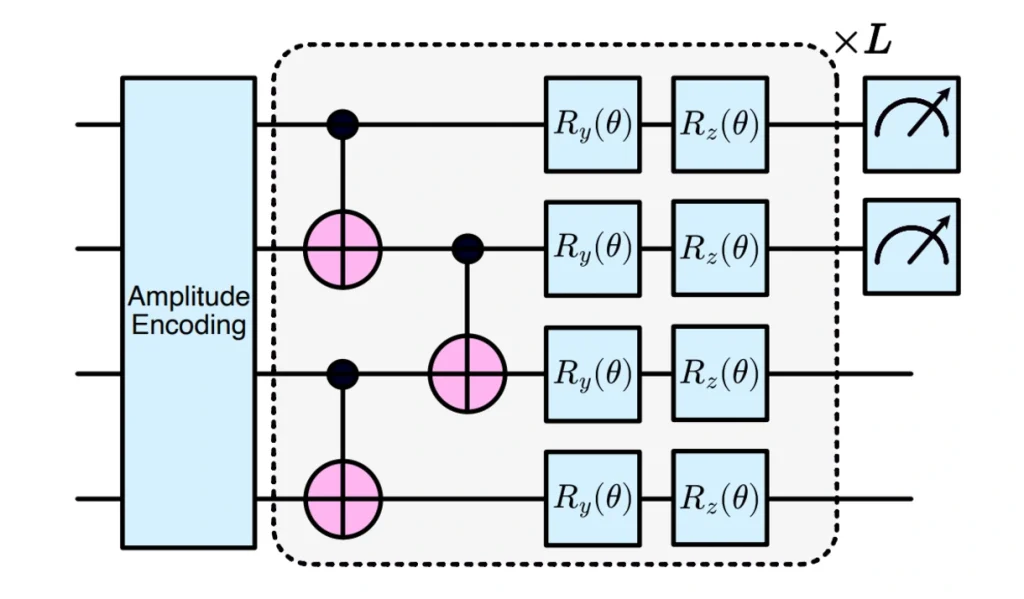
Do note that this is a preprint, not peer-reviewed, and none of it touched true quantum hardware. Everything ran in simulation on tiny four-qubit circuits, on toy benchmarks like MNIST. To make the math tractable they used only part of the Fisher matrix and ignored correlations between parameters, which they admit throws away information. And the noise result is suggestive, not a demonstrated hardware win.
So nobody built a quantum AI that remembers. What they built is a nice argument for where to look. The geometry, it turns out, might know what’s worth keeping.