
QuEra Uses Claude to Automate Quantum Laser Recovery

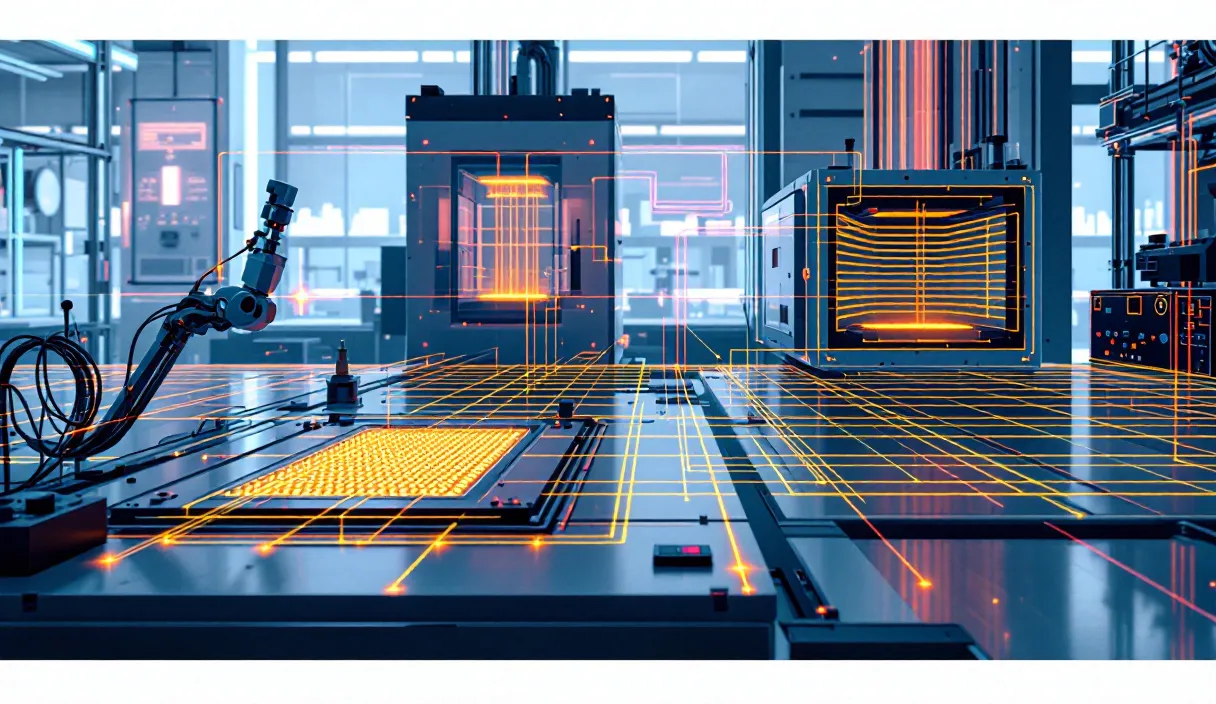
QuEra Computing announced on August 28 that an Anthropic Claude agent developed a control program capable of restoring one of its laser systems in mere seconds. In 700 timed trials covering seven types of faults, the resulting controller successfully recovered the system 695 times, according to QuEra’s press release. This pilot project focused on a single subsystem and doesn’t mean the quantum computer is self-repairing, a point QuEra explicitly stated.
QuEra’s Findings
Indeed, QuEra’s neutral-atom quantum computers rely on precisely controlled lasers to trap and manipulate atoms that function as qubits. These lasers can drift, and historically, restoring the laser lock required on-call specialists. The Boston-based company tasked Claude with solving this recovery problem using the Model Hardware Standard, a research-preview framework from Anthropic and the Howard Hughes Medical Institute’s Janelia Research Campus. This framework enables AI agents to operate lab equipment within predefined safety parameters.
The Claude agent conducted experiments on a dedicated laser testbed, including overnight runs, and analyzed hundreds of failure scenarios before generating a conventional program. Claude did not maintain control during operation; instead, it produced software that engineers could review. This program now independently manages the recovery process, QuEra reported.
QuEra stated that most faults cleared in under six seconds, with the most challenging ones taking 10 to 14 seconds. A human specialist would typically require five to 10 minutes for comparable issues, the company noted. The team attributed the five failed trials to conditions within the apparatus itself, not the controller, and QuEra confirmed the controller never falsely reported a successful recovery.
Identified Limitations
The testbed was situated in an active lab with regular foot traffic, and QuEra reported that the controller successfully recovered from every naturally occurring disruption during the pilot. The agent also fine-tuned the laser lock, reducing residual noise by a factor of five. QuEra subsequently applied this method to a second laser wavelength in an unattended overnight run.
QuEra clearly outlined the limitations of this achievement: one subsystem doesn’t equate to an autonomous machine. Quantum systems comprise numerous other components that require calibration and repair. The company didn’t provide test results for applying the method to other parts of the system, only expressing its expectation that it could be:
“The pilot involved one subsystem and does not demonstrate autonomous maintenance of an entire quantum computer.”
QuEra has collaborated with Amazon Braket, where its 256-qubit Aquila system operates, and has partnerships with Hewlett Packard Enterprise and NVIDIA. Its Libra system on Braket is slated for 2028. The Model Hardware Standard is currently available as a limited preview by application.