
Scientists Just Learned Why Cells Don’t Tear Themselves Apart

Scientists have finally figured out how one of biology’s oldest engineering mysteries truly works. Researchers at the University of California, San Francisco discovered that the tiny structure pulling chromosomes apart during cell division doesn’t weaken under stress, but it repairs itself and gets stronger, a finding published in Current Biology. The discovery could reshape how scientists think about living materials and even inspire tougher human-made structures.
Your cells invented self-healing before humans made it cool
What if snapping something actually made it harder to break the next time? That’s basically what your cells have been doing this whole time, and what researchers focused on. Every time one cell splits into two, it relies on a microscopic framework called the mitotic spindle, a bundle of protein fibers that grabs and lines up chromosomes, then yanks identical DNA copies toward opposite sides of the cell.
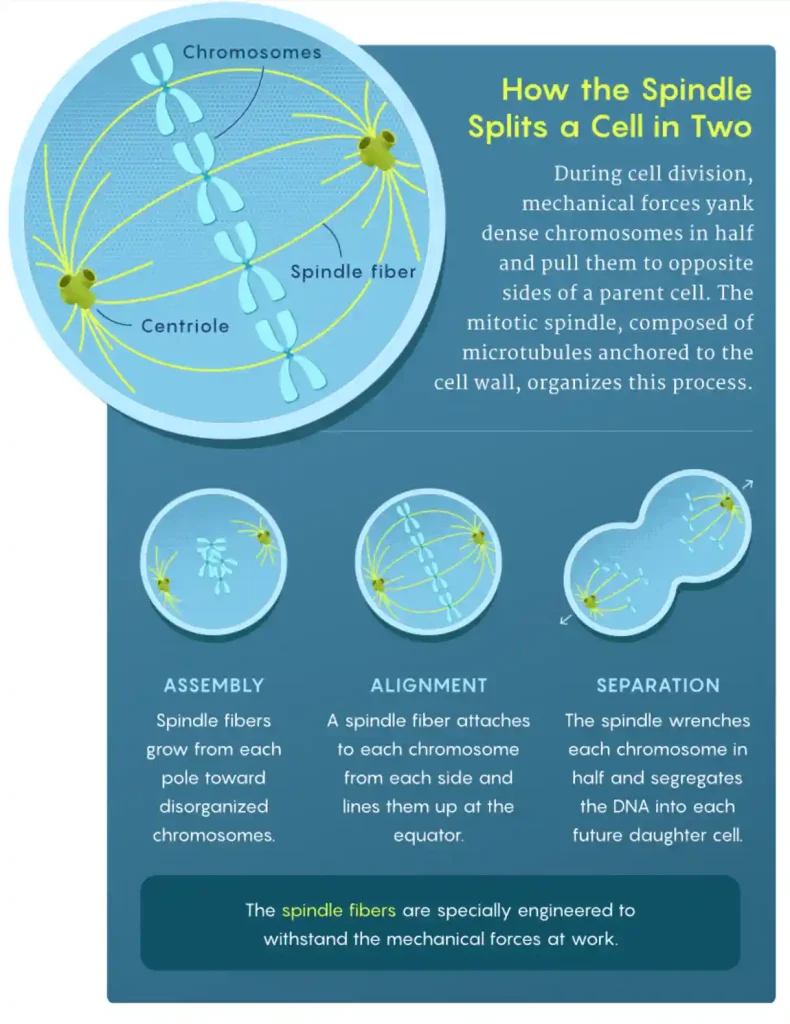
It’s basically the world’s tiniest tug-of-war tournament, except losing means your genetic blueprint falls apart. The weird part? Nobody really knew how this thing survived its own job.
The spindle spends its entire existence pulling with surprising force. Naturally, physics says that should end badly. Stretch enough materials, and they crack. Stretch them again, and they crack even more. Your favorite phone charger cable knows this story all too well.
So researchers did something delightfully unhinged. They poked living mammalian cells with incredibly precise microneedles (yes, they literally call it “cell torture”) to see what would happen.
The tiny Lego trick nobody saw coming
Instead of unraveling, the spindle fought back.
The team discovered that pulling on these microscopic fibers kicks off what you could call an internal repair patch. Think of a Lego tower losing a few loose bricks under pressure as sturdier bricks immediately slide into the gaps. That’s surprisingly close to what’s happening inside the spindle’s microtubules.
Why? Because force appears to trigger reinforcement instead of collapse.
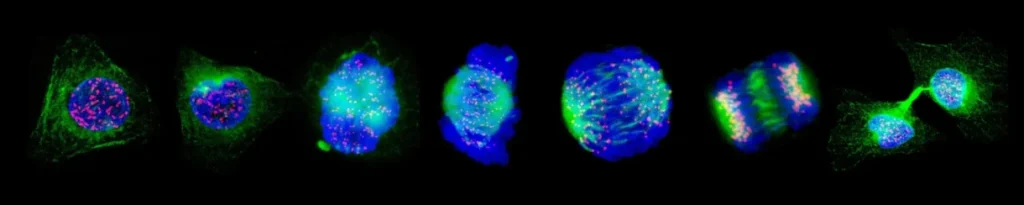
The researchers confirmed the effect by tagging a protein called EB1, which glows where stabilized microtubules form. Every time they stressed the spindle, the repair signal appeared exactly where the force landed. Cut the fibers without stretching them first, and they fell apart. Stretch them first, then cut them, and they stayed intact.
That’s the plot twist. Biology doesn’t always treat stress like damage. Sometimes it treats it like a construction order. After billions of years of trial and error, your cells have quietly been solving mechanical problems that engineers are only beginning to ask.