
U.S. Energy Department Unveils Bold 2028 Quantum Computing Plan

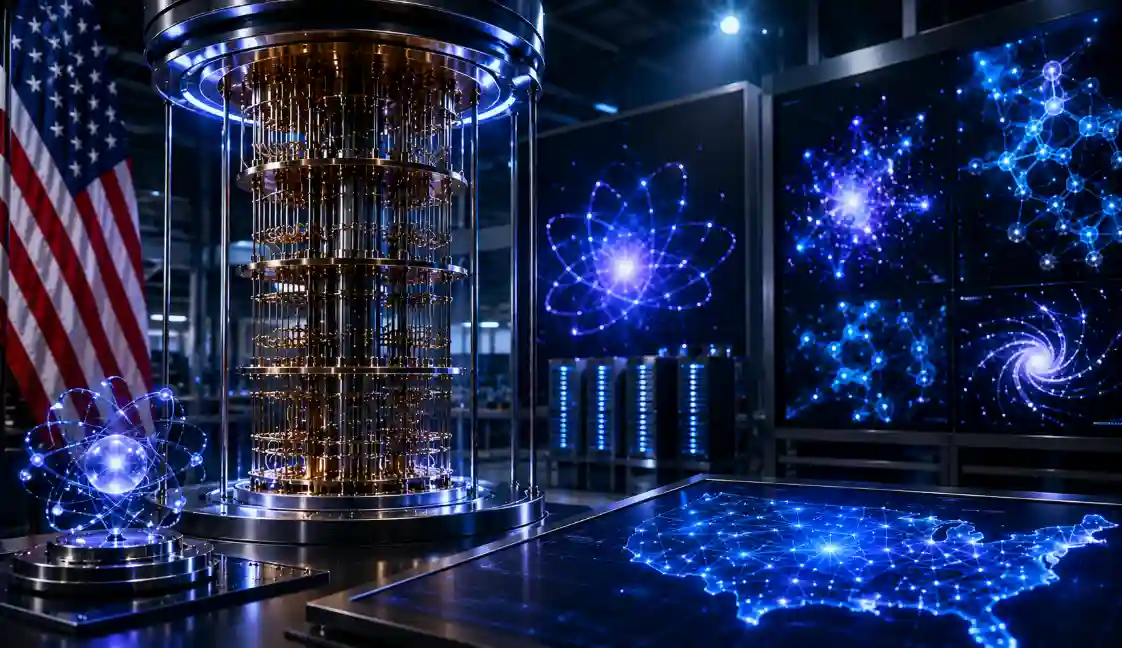
The U.S. Department of Energy (DOE) has unveiled Quantum Genesis, an ambitious initiative to develop and deploy what it hopes will become the world’s first scientifically relevant fault-tolerant quantum computer by 2028. The program forms part of the more extensive Genesis Mission and follows President Donald Trump’s executive order aimed at accelerating American leadership in quantum technologies. The initiative also seeks to strengthen U.S. competitiveness in quantum research, national security and scientific discovery.
DOE targets practical fault-tolerant quantum computing
According to the DOE’s announcement on June 23, Quantum Genesis aims to create quantum computers capable of tackling research problems beyond the reach of today’s classical supercomputers.
The initiative aligns with the White House’s newly established Quantum Computer for Application Development and Discovery Science (QC-ADDS) effort and builds on recent community feedback gathered through a federal Request for Information on scientifically relevant fault-tolerant quantum systems.
White House Office of Science and Technology Policy Director Michael Kratsios said the initiative is the first step toward delivering on President Trump’s goal of developing a quantum computer powerful enough for advanced scientific research. As he explained:
“This effort will strengthen U.S. competitiveness, drive breakthroughs that classical systems cannot achieve, and ensure America remains at the forefront of one of the most consequential technologies of our time.”
Energy Secretary Chris Wright added that the effort will combine the expertise of national laboratories, universities and private-sector companies to accelerate scientific breakthroughs and help the United States lead the emerging quantum era. In his words:
“Through Quantum Genesis, we are bringing together America’s National Laboratories, universities, and private sector innovators to develop and deploy the world’s first scientifically relevant fault-tolerant quantum computing capability. America led the last computing revolution, and we intend to lead the quantum age as well.”
Competition, supercomputing facility and quantum research
Specifically, Quantum Genesis will revolve around three major programs.
The first is the DOE Q Competition, which challenges participants to demonstrate fault-tolerant quantum systems by 2028 featuring hundreds of logical qubits. These systems will target research in chemistry, materials science, plasma physics and high-energy physics, and work closely with DOE national laboratories and National Quantum Information Science Research Centers.
Meanwhile, the second pillar is the creation of the National Quantum Supercomputing User Facility, which will provide researchers with access to advanced quantum computers across multiple hardware platforms. The facility will integrate quantum computing with high-performance computing, artificial intelligence, and DOE networking infrastructure to form a unified research ecosystem.
Finally, the third component focuses on targeted quantum computing research and development, bringing together universities, national laboratories, and industry to identify high-impact scientific applications that can guide future quantum hardware development.
The DOE said Quantum Genesis expands upon years of federal investment in quantum information science, which includes research centers established under the National Quantum Initiative Act of 2018, and represents the latest addition to the Genesis Mission’s wider effort to accelerate U.S. scientific innovation.