
World’s Largest Camera Starts Mapping the Changing Sky


The Vera C. Rubin Observatory in Chile has begun sending back data from the largest digital camera ever built, and astronomers say the early results already match what they hoped for. In its first year, the observatory is expected to find 1 million undiscovered asteroids, about as many as humans have logged in the past two centuries. Scientists describe it as the start of a new stretch of big-data astronomy.
What Rubin is finding
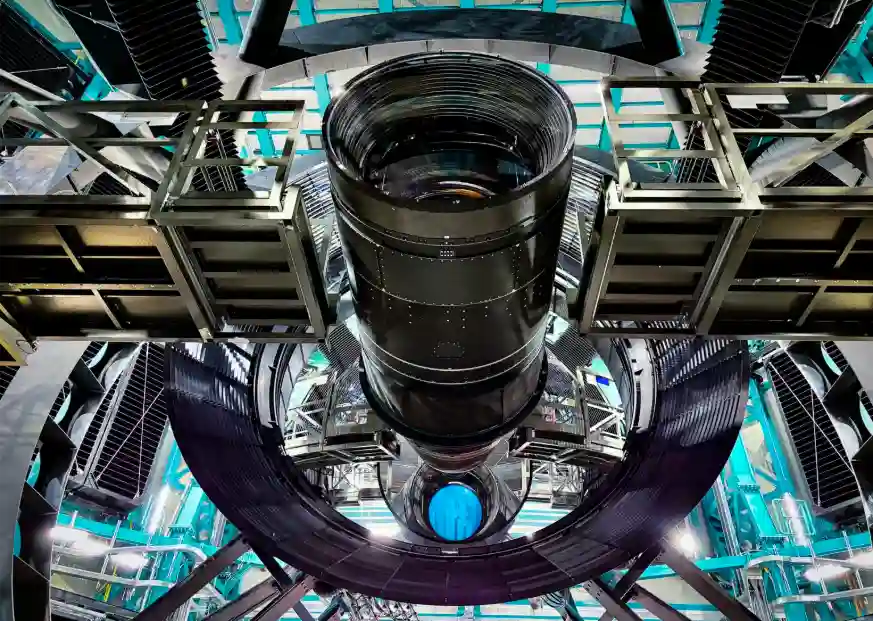
According to a Quanta Magazine report, Rubin sits on Cerro Pachón, a mountain in the Atacama Desert reached by a 35-kilometer drive up winding roads. Its telescope uses three mirrors, the largest measuring 8.4 meters across, paired with a car-size camera holding 3.2 billion pixels. Every few nights for a decade, it will photograph the entire southern sky. The result will be the world’s largest time-lapse movie of space.
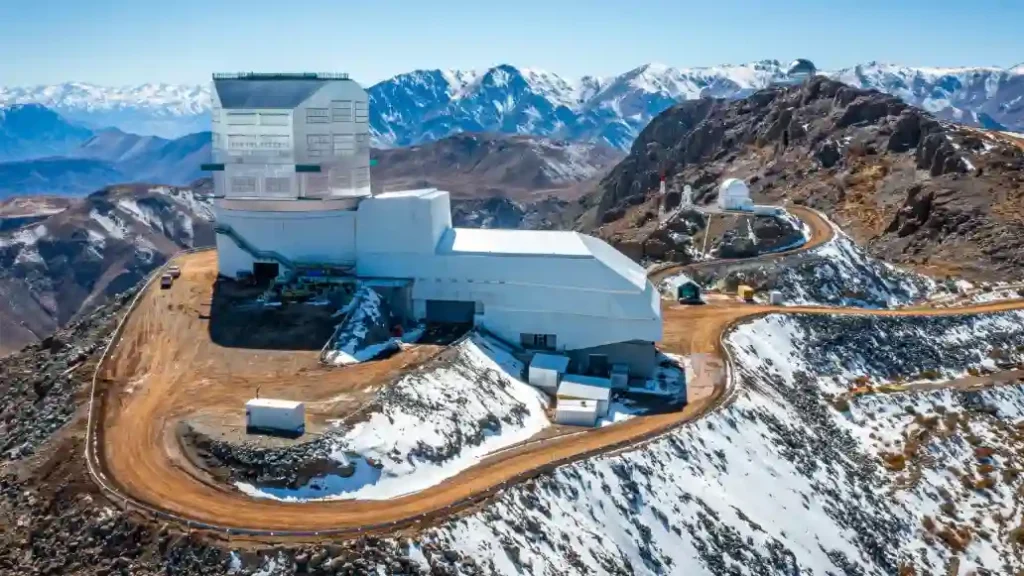
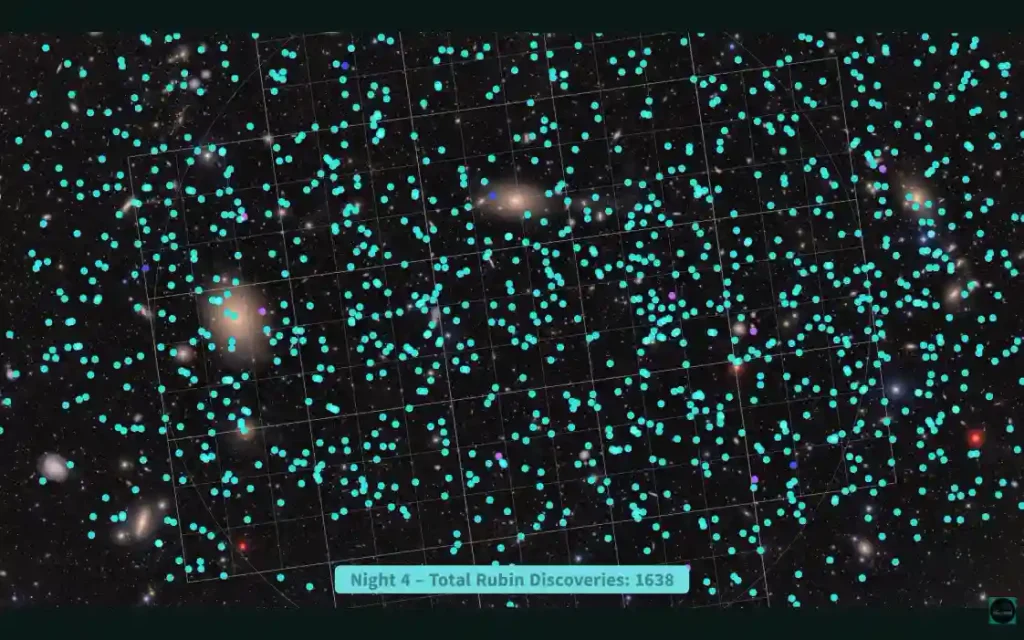
The observatory released its first-light images in June 2025, capturing 1,500 new asteroids. In January, researchers reported that 19 of them were spinning unusually fast. The quickest, an asteroid called 2025 MN45, is almost twice the height of the Empire State Building and completes a full rotation every 1.88 minutes. As Dmitrii Vavilov of the University of Washington, a co-author on the discovery paper, said:
“We didn’t expect we would find something faster than 10 minutes.”
Rubin has also caught a rare visitor from beyond our solar system. Astronomers announced the interstellar comet 3I/ATLAS on July 1, 2025, then found that Rubin had recorded it 10 days earlier. Only three such objects have ever been observed.
Afirehose of data
Once the full survey starts this summer, Rubin is expected to produce 7 million alerts and 20 terabytes of data every night. An automated system pings scientists whenever something in the sky appears, vanishes, or moves. During a test on February 24, 2026, the system sent 800,000 alerts in one night. As Stephen Smartt of the University of Oxford explained:
“Everything that changed, appeared, or disappeared was cataloged and triggered an alert.”
That volume should reshape how researchers study exploding stars. In the late 1990s, two teams used fewer than 100 Type Ia supernovas to discover that the universe’s expansion is speeding up, driven by dark energy. Rubin is expected to find 250,000 such supernovas a year. Scientists hope the data can help settle the Hubble tension, a puzzle about how fast the universe is expanding.
The observatory was first imagined in the mid-1990s as the Dark Matter Telescope. Now it’s real. “It almost doesn’t feel real that we’re actually getting data from Rubin,” said Matt Nicholl of Queen’s University Belfast.