
Diraq to Install Eight-Qubit Machine in Sydney Data Center

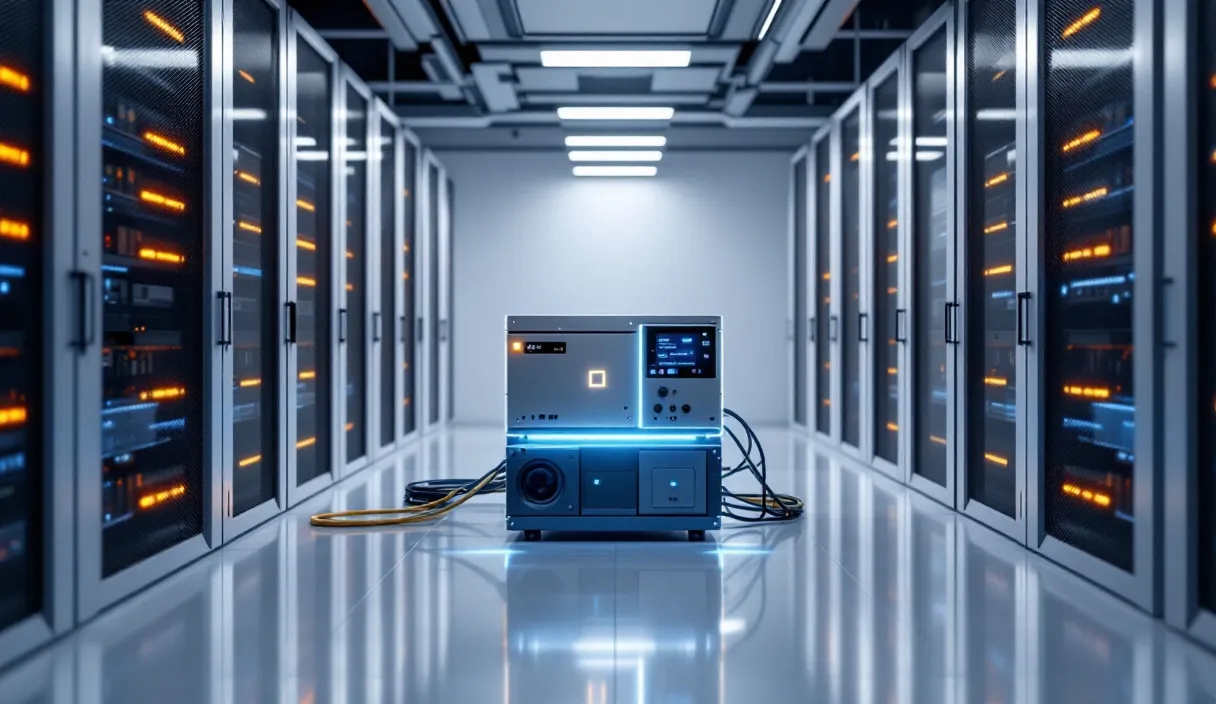
Diraq and Equinix have announced plans to install a Diraq silicon spin quantum computer at an Equinix data center in Sydney by October 2026. This eight-qubit machine, which consumes less than 20 kilowatts, would be the first silicon spin system housed in a shared commercial data center, according to the companies.
Details of the Announcement
A press release from August 31 describes an eight-qubit silicon chip, complete with its cryogenic cooling and control electronics, integrated into a self-contained unit. Diraq states that the entire system will fit into a standard rack alongside conventional servers, requiring minimal integration. The installation is slated for October 2026. Once operational, the companies intend to test the system’s connectivity with classical CPUs and GPUs, subsequently opening demonstrations to potential partners and customers.
An eight-qubit machine is not capable of performing useful computation or running algorithms of commercial value, a fact acknowledged by both companies in their announcement. The primary objective is to demonstrate the system’s packaging and prove that a spin-qubit system can function within a live data center environment.
Diraq utilizes CMOS methods, derived from standard semiconductor foundries, to construct its qubits. The company asserts that this approach provides a manufacturing pathway that other qubit types lack. According to the release, scaling to a higher number of qubits would only necessitate a chip swap, without altering the surrounding hardware. This claim, however, pertains to a chip that Diraq has yet to develop.
Claims and Obstacles
Diraq founder and CEO Andrew Dzurak used this deployment to project capabilities far beyond eight qubits, mentioning scaling “to millions of qubits” and achieving “utility scale,” where a quantum computer generates more value than its operating cost. These remain company projections, not proven results. The announcement doesn’t include any accompanying papers or independent benchmarks, nor does the release provide error rates, gate fidelities, or performance figures for the eight-qubit chip.
Jarrod Nink, Equinix Australia managing director, emphasized the collaboration’s aim to demonstrate the viability of quantum systems within enterprise infrastructure:
“Quantum computing’s future depends not only on breakthroughs in hardware, but on proving how these systems can operate within the digital infrastructure enterprises rely on every day.”
Both parties also link this effort to Australia’s stated ambition of becoming a quantum hub. Equinix publicly trades on Nasdaq under the ticker EQIX. For now, what exists is a plan, a timeline, and a small machine awaiting installation.