
Surfshark Adds Post-Quantum Authentication to WireGuard VPN

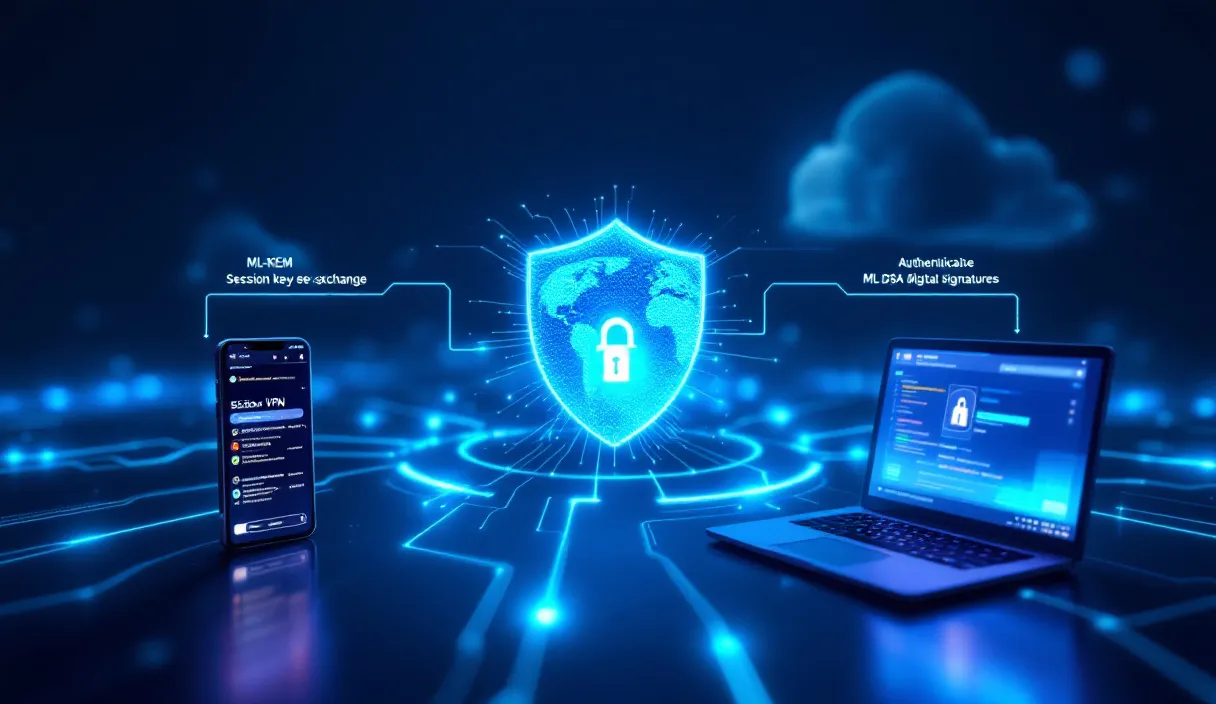
Surfshark has announced the integration of ML-DSA certificate authentication into its WireGuard VPN, which completes what the company describes as a full post-quantum implementation. This new feature, which joins the ML-KEM encryption and key exchange rolled out earlier this year, is currently live on iOS and macOS. Surfshark asserts it is the first VPN to achieve quantum-resistant protection for all three components of a WireGuard tunnel, a claim largely based on its authentication solution, which much of the industry has yet to adopt.
Surfshark’s New Addition Explained
The company states that its VPN tunnel now offers protection across encryption, key exchange, and server authentication. Though ML-KEM handles the first two, ML-DSA, the newly implemented component, signs the certificates that verify the server you are connecting to, as detailed in Surfshark’s announcement.
Key details provided by Surfshark:
- ML-DSA certificate authentication has been added to WireGuard, complementing the existing ML-KEM encryption and key exchange.
- The feature is available now on iOS and macOS, with plans for more platforms.
- It is built upon Dausos, Surfshark’s proprietary protocol, which launched with post-quantum security capabilities.
Karolis Kaciulis, a leading system engineer, highlighted authentication as a step often overlooked by providers. As he explained:
“Without post-quantum authentication, a quantum computer could simply perform a session takeover, impersonating the server at the very moment you connect.”
Surfshark’s research indicates that among 15 analyzed services, only 8 deployed ML-KEM, and only two, Google Cloud KMS and AWS KMS, offered ML-DSA, and then only as an optional signing feature.
ML-DSA: Its Role and Limitations
ML-DSA is NIST’s digital signature standard (FIPS 204), designed to withstand forgery by future quantum computers. This addresses a different challenge than key exchange. Though ML-KEM safeguards the keys used to encrypt your traffic, ML-DSA verifies the server’s identity. These distinct protections are why Surfshark considers authentication a separate and crucial milestone.
This implementation covers digital signatures and key exchange, not quantum key distribution or quantum random number generation, which are different technologies not claimed by the company here. For an example of how other sectors approach quantum exposure, refer to BitGo’s quantum-risk management efforts for Bitcoin wallets.
The provided sources do not specify which ML-DSA parameter set Surfshark utilizes, whether it is hybridized with classical signatures, or how it integrates into WireGuard’s Noise handshake. Furthermore, the company’s release does not include an independent audit, code review, or handshake latency figures. Therefore, Surfshark’s claim of being the first to offer full post-quantum WireGuard has not yet been verified by external researchers.
For further information on post-quantum cryptography and VPN security, consult ongoing QNews coverage of PQC standards and deployment.