
A Cuban Team Is Building an Open Front Door to Quantum Software

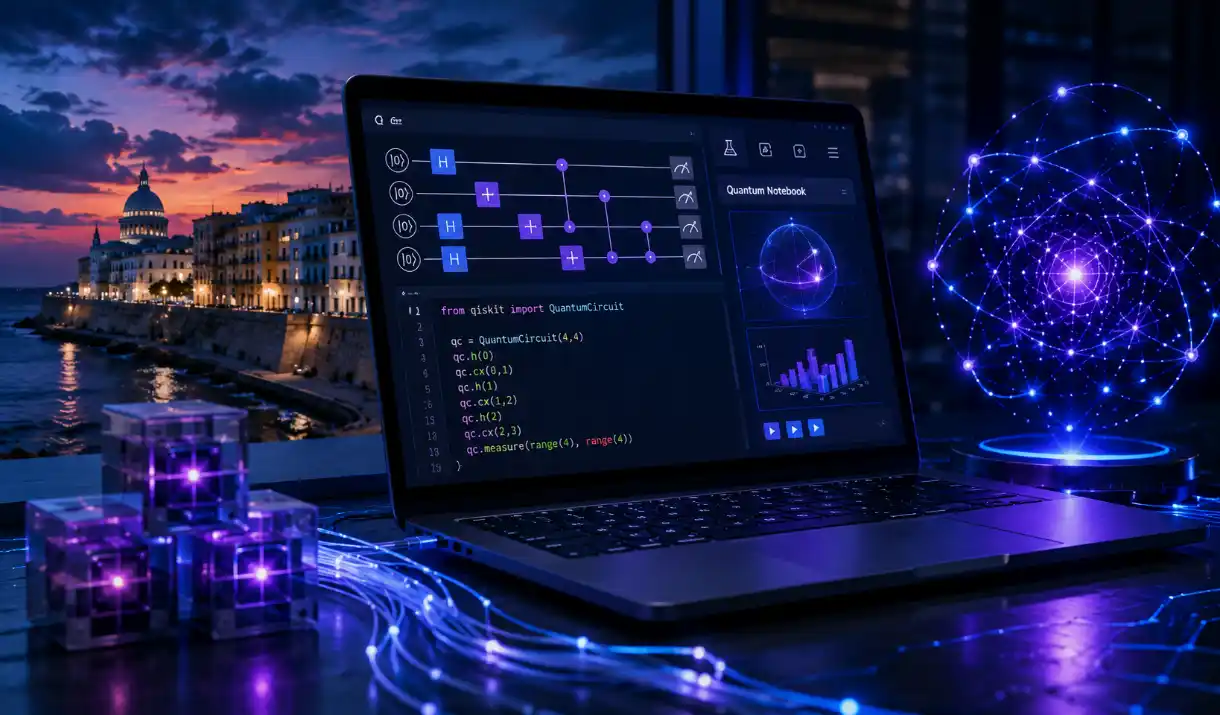
A small team in Cuba is building an open, browser-based platform designed to make quantum software easier to use, and one of the most interesting things about it is where it comes from. Quantum Computing Open Lab, or QCOL, wants to give users a single place to design and run quantum circuits without installing a patchwork of vendor-specific toolkits or learning several programming frameworks first. It is still an early-stage project, with a working prototype and ambitions that reach far beyond it, emerging from a country well outside the quantum industry’s best-funded hubs.
What QCOL has built
The prototype is genuine, if modest. According to the August 11 press release, QCOL combines a visual circuit composer with a code editor, with changes in one reflected in the other. It also includes a “Quantum Notebook” that blends educational material with a space for hands-on experimentation.
The general idea is to build a software layer above the field’s many hardware platforms and development frameworks, allowing users to work from a common environment rather than starting over with a different toolchain for each provider. Founder Franci Laffita Camargo framed the motivation less as a technical breakthrough than as a question of access:
“We don’t know who will have the next great idea, but we want that person, wherever they are, whatever resources they have, to be able to try.”
Big vision, early days
The ambition extends well beyond what the prototype can currently do. QCOL’s team compares its long-term goal to the role operating systems such as Windows and Android played in classical computing: a common layer between users and otherwise fragmented hardware. Its plans include “Quantum Apps” and AI-assisted tools aimed at people who cannot write quantum code, placing QCOL within a wider effort to lower the barrier to entering quantum computing.
The analogy is compelling, but it also shows how difficult the problem is. Quantum computing remains divided across different hardware architectures, programming models and vendor ecosystems, and no company has yet produced anything close to a universal software layer spanning them all. The press release itself acknowledges that it is too early to know whether such a layer will ultimately emerge.
For now, QCOL has a public prototype, a team developing a nuclear-physics application through QWorld’s QIntern program, and plans to incorporate in the United States as it looks to raise capital and issue shares. That puts it much closer to an experimental platform with a roadmap than to the quantum equivalent of an operating system.
What makes QCOL worth watching, then, is not that it has solved quantum software fragmentation. It is that it is tackling the accessibility problem from outside the industry’s usual centers of money and research. Efforts such as student hackathons in Vietnam and cloud-access programs in Thailand show how quantum computing is beginning to spread beyond a handful of established hubs.
QCOL belongs to that wider movement. Its technology is still at the beginning, and its larger vision remains unproven, but a quantum platform being built in Cuba to make the field more accessible is itself a sign of how far the ecosystem is starting to reach.