
How to Break Into Quantum Without a PhD

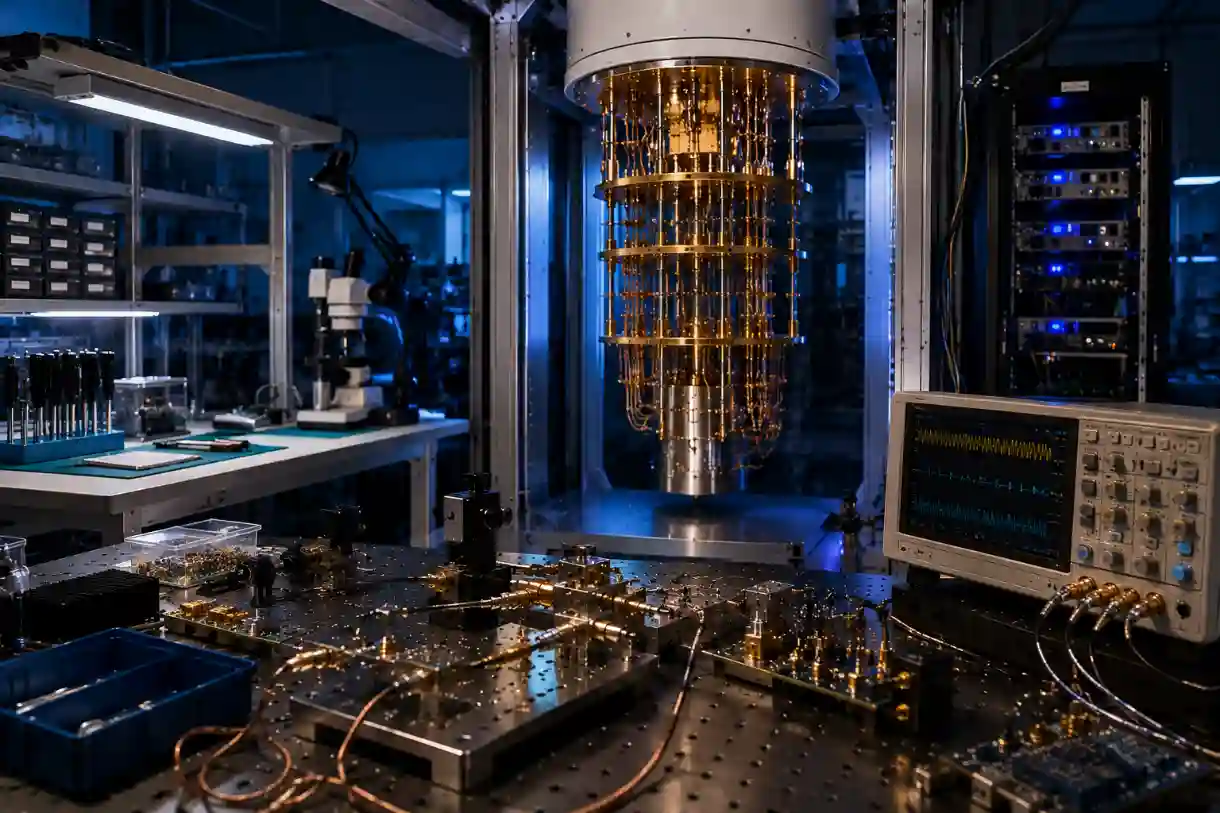
The quantum industry has a hiring problem, and it isn’t only about finding more physicists with doctorates. Companies building quantum computers need people who can wire up a cryostat and keep a finicky machine running day to day. Those jobs lean on hands-on hardware experience, and the usual academic track hasn’t produced enough of it. A master’s program at the University of Oregon is one attempt to change that.
Why the quantum industry needs more than PhDs
Quantum computing, sensing, and communications are moving out of pure research and into products, and scaling that up takes a workforce, more than a handful of principal investigators. Someone has to run the experiments, maintain the systems, troubleshoot the equipment, and handle the everyday lab work. Plenty of those roles need experience with quantum hardware without needing a doctorate to go with it.
The traditional route left those skills locked behind the PhD. Cryogenic equipment and superconducting devices were things you touched only after years on a research program, which limited both the number and the range of people entering the field. Companies and governments have been widening the funnel from several directions, through engineer-training partnerships like Xanadu’s with Lockheed Martin and industry skilling programs that fold vendor tools into certifications. A hands-on master’s track is another.
What a hands-on program looks like
According to the August 4 report, the University of Oregon’s Quantum and Nanotechnology track, part of its Applied Physics master’s, is built around six project-based lab courses. Students work with the hardware they’ll meet on the job. RF circuits and transmission lines, optical systems, nanofabrication tools, and cryogenics at the center. The track’s lead, research assistant professor Nik Zhelev, frames the whole thing as a different on-ramp:
“The usual route to working in the quantum industry is via a PhD. Our aim with this program is to provide an alternative route that focuses on hands-on experimental and practical skills.”
The anchor is a Bluefors dilution refrigerator, the first on the Oregon campus. These machines chill devices below 10 millikelvin, a hair above absolute zero and hundreds of times colder than deep space, the quiet environment superconducting qubits need to hold their quantum state. Getting comfortable with that hardware, opening the shields and running a cooldown yourself, is the point. It’s the same cryogenic layer that companies like Maybell are racing to supply as the industry grows, and the same physics that makes qubit materials so temperamental in the first place, which is what Zhelev’s own lab studies.
Can a hands-on master’s lead to a quantum career?
The track is small, and the evidence so far is a small sample. It soft-launched in 2024 with four students, grew to ten the next year, and expects about eleven this fall. By Zhelev’s account, all four of the first cohort landed well. One interned at the Air Force Research Laboratory and stayed on, presenting original research within months. Another went to Rigetti Computing and works there full time as a cryogenic and RF engineer. A third brought a nanofabrication process in-house during an internship in Okinawa, and the fourth is heading into a PhD after helping build out Zhelev’s lab.
Later cohorts have fanned out to internships at Bluefors, Pacific Northwest National Laboratory, France’s CEA, and National Taiwan University, among others. These are the program’s own reported outcomes, and the numbers are still in the single and low double digits, so it reads as an encouraging start more than a proven pipeline. The program also has a promotional side, since Bluefors supplies the hardware and employs one of the graduates.
The takeaway for a would-be quantum technician
If you’re weighing a way in, the useful signal is what these roles reward, comfort with the equipment and the measurements, plus enough range to move between qubit types. Zhelev argues for breadth on purpose, exposing students to different qubit modalities rather than betting on one, because the common ground between them is where transferable skill lives.
That matches how the wider pipeline is forming, with K-12 quantum programs at one end and graduate tracks like this further along. A doctorate still counts for research careers. But the people who keep quantum machines running are increasingly coming through shorter, hands-on routes, and there are more of those routes every year.