
Berkeley and QuantrolOx Partner on Industrializing Quantum Computing

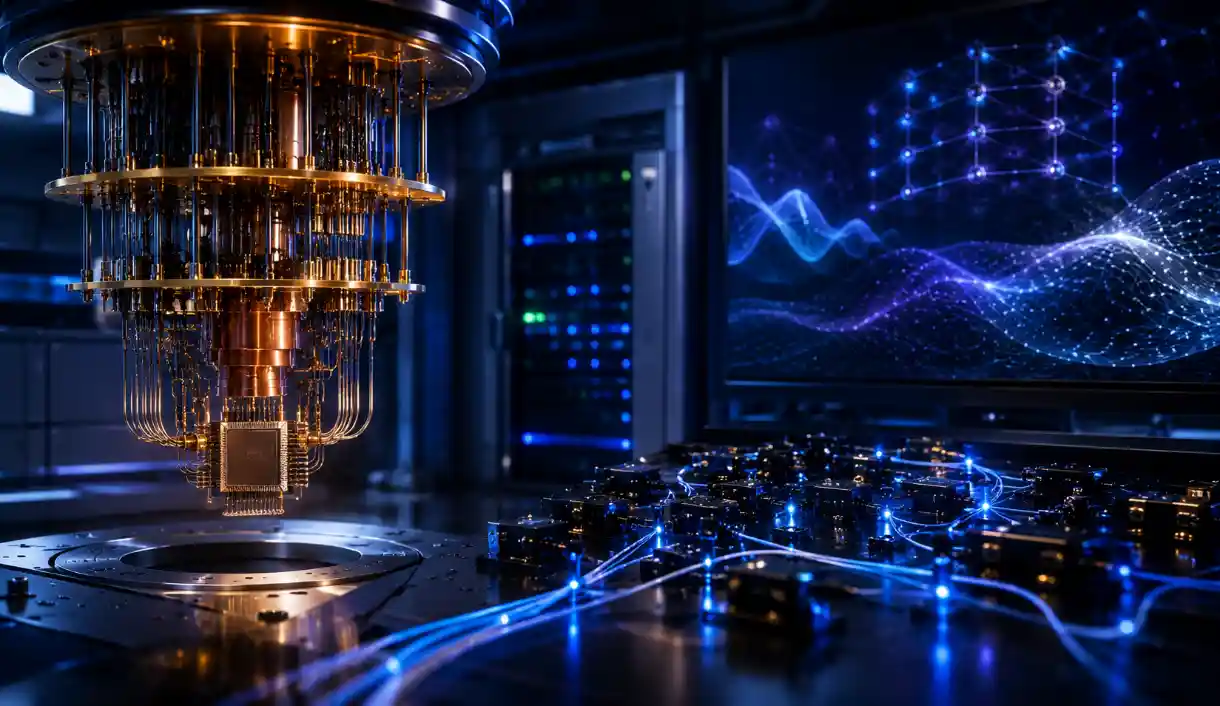
UC Berkeley and QuantrolOx have signed a five-year agreement to make quantum computers less of an artisanal craft. The plan pairs Berkeley’s superconducting hardware with QuantrolOx’s machine-learning software for tuning and controlling qubits, aimed at automating the hand-work that keeps quantum machines small. It’s a memorandum of understanding, so the commitment is a framework more than a deliverable.
Why automate calibration
Today’s quantum processors are largely hand-built and hand-tuned. Getting a qubit to behave means a skilled physicist calibrating it, then recalibrating as it drifts against the stray fields that break quantum chips, and that manual process doesn’t stretch to the thousands or millions of qubits a useful machine would need.
According to a July 27 press release, QuantrolOx sells software that automates the tuning and control of qubits, built to be hardware-agnostic, and Berkeley’s group under Irfan Siddiqi offers a white-box superconducting testbed to develop it on. QuantrolOx CEO Vishal Chatrath framed the goal bluntly:
“Quantum computing will not scale on laboratory heroics alone. Industrialisation requires common tools, automated workflows, shared data architectures, and a skilled workforce.”
The bottleneck is a serious one. Control overhead is among the walls the neutral-atom field keeps flagging as machines scale, and pushing AI into the calibration loop, the way AI-based decoders do for error correction, is where QuantrolOx is placing its bet.
Still just a framework
The agreement is non-binding, effective July 7 and running five years, with any actual research or commercial work to be set through separate deals later. The pairing is the substance: a serious superconducting group and a calibration-software company with a shared interest in the unglamorous plumbing of scale.
It also leans on people. Both sides list training experimentalists and hardware engineers at scale as a goal, an echo of the wider scramble to build quantum talent visible in efforts like Xanadu’s engineer training. And the target, superconducting hardware reliable enough to run on autopilot, is the same reliability problem behind gains in error correction. Whether the MOU becomes more than a shared building depends on the separate agreements that follow it.