
DARPA Targets Manufacturing to Move Quantum Beyond the Lab

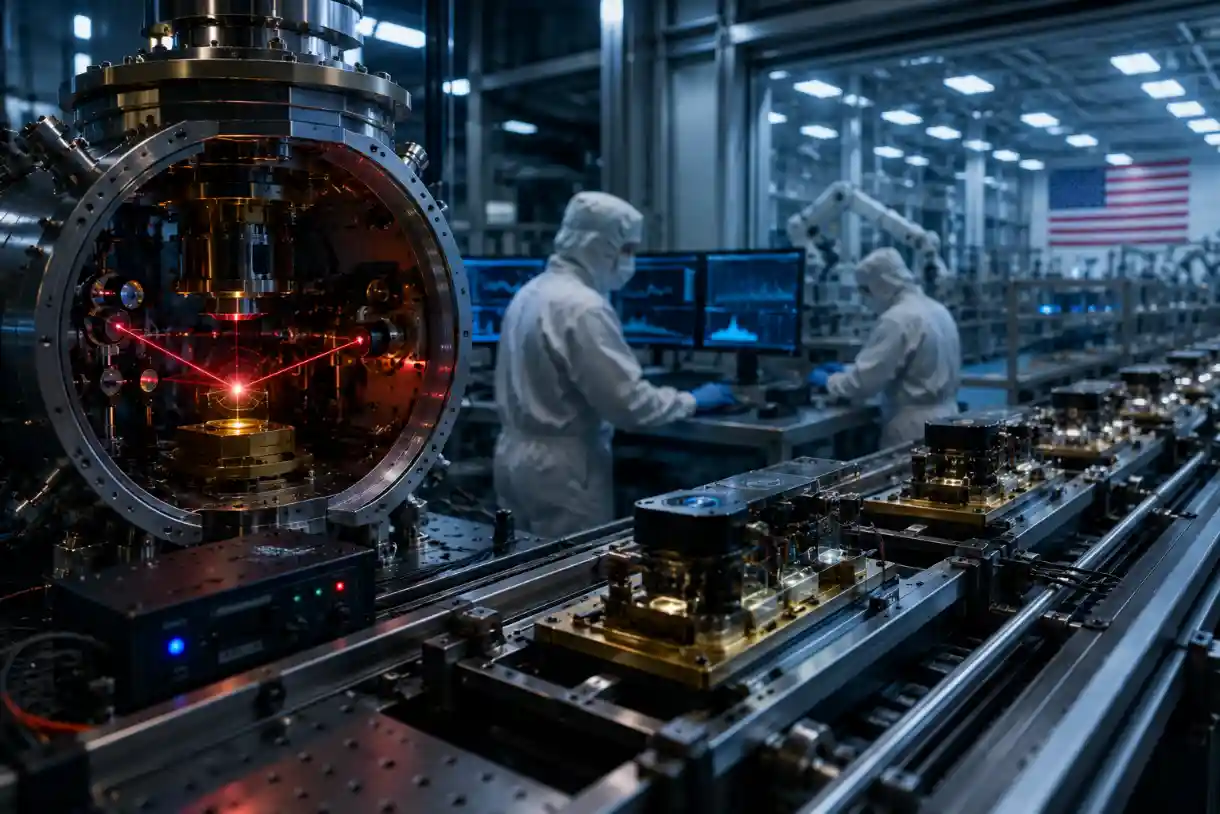
DARPA has launched a program to mass-produce optical clocks, the quantum timing devices it wants ruggedized enough to leave the laboratory. Called It’s About Time, the effort hands IonQ’s Vector Atomic subsidiary a contract to build a pilot manufacturing pipeline, with a facility due by mid-2027. The agency’s bet is that quantum’s next frontier lies in manufacturing and not in physics.
Where quantum keeps stalling
Optical clocks keep time using the frequency of light, not microwaves, and they rank among the most accurate instruments ever built. Per the August 6 report, DARPA sees them as a proving ground because the science is mature and the engineering is punishing.
Most quantum devices are still hand-assembled in small batches by specialist teams, with little standard practice for testing or calibration, the kind of hardware-engineering problem that decides whether a lab result ever ships. Mukund Vengalattore, the DARPA program manager, said the field’s usual division of labor is the thing holding it back:
“In the quantum domain, the conventional wisdom, that physicists demonstrate the art of the possible in a highly controlled laboratory environment and then engineers go on to build the eventual system, is fundamentally flawed.”
It’s About Time builds on two earlier DARPA efforts. The Robust Optical Clock Network, or ROCkN, spent about five years shrinking optical clocks and moving them from breadboard demos to field-tested prototypes.
A companion program, OASIC, worked the unglamorous side of commercialization, the packaging and calibration methods that mass production needs. That turn toward manufacturability tracks a wider industry shift from demonstrations toward products that can actually be sold, the same pull that keeps bringing quantum hardware to Washington.
The defense case, and IonQ’s role
The pitch is heavily military. DARPA wants clocks that hold picosecond-level timing without GPS, giving platforms a synchronization source in cases of jammed or missing satellite signals.
Vengalattore framed the payoff in terms of “warfighters” and the Department of War, the Pentagon’s now-authorized secondary name, and said the manufacturing approach could later extend to quantum radio-frequency sensors and infrared imaging.
For IonQ, the award deepens a run of hardware and manufacturing moves. It bought Vector Atomic, a quantum-sensing and timing specialist, in October 2025, part of the same acquisitive stretch that added the chip foundry SkyWater and pushed the company further into national-security work.
Under the contract, IonQ and Vector Atomic are to stand up the clock pipeline by mid-2027, with production units expected about a year after the plant opens. Those dates are targets, and DARPA hasn’t disclosed the contract’s value.