
QuNorth Completes Copenhagen Facility for MAGNE Quantum Computer

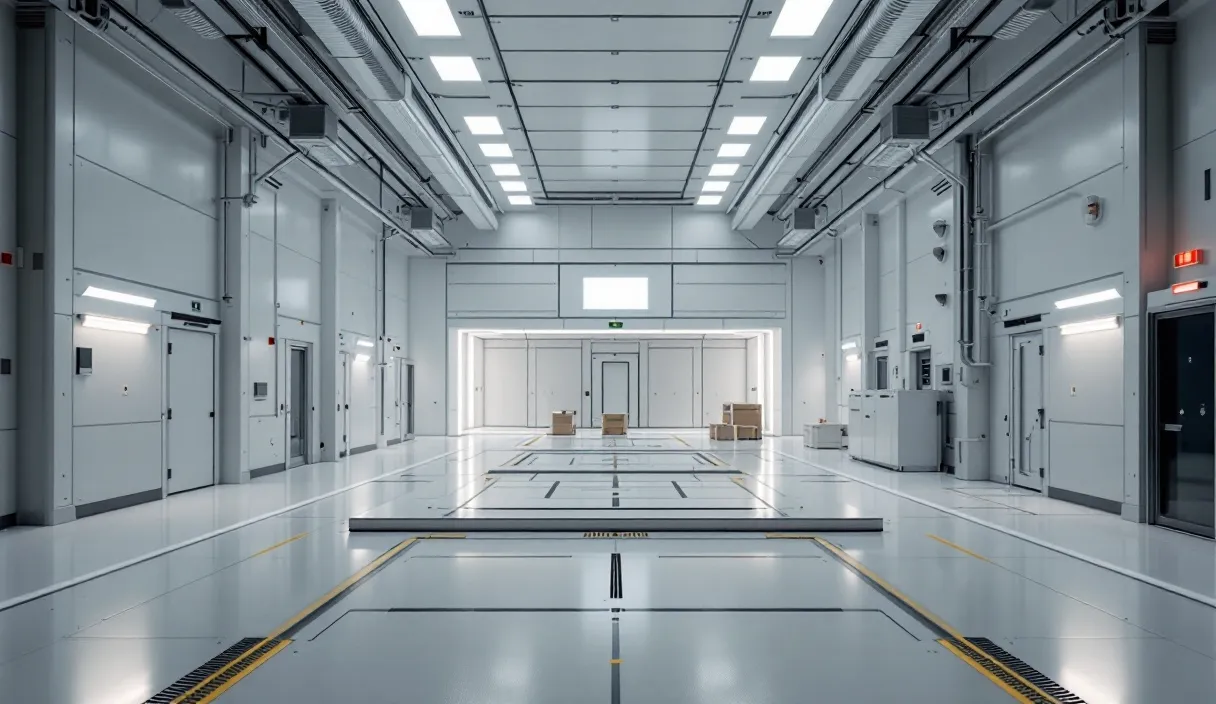
QuNorth announced the completion of its Copenhagen facility, purpose-built to house the MAGNE quantum computer, paving the way for its installation. Though the building is finished, the computer itself is not yet operational. QuNorth anticipates MAGNE will be fully operational by spring 2027, which means the impactful phase of this project is still over a year and a half away.
The Accomplishments
According to the September 2 press release, engineering firm Ramboll completed the specialized rooms and technical systems designed for MAGNE. Specifically, this includes a computer room, a server room, and an airlock, along with essential infrastructure like ventilation, power, cooling, and fire suppression. Indeed, QuNorth detailed the 80 square meters of specialized facilities, which feature an ISO 7 clean room with HEPA filtration, VC-B level vibration reduction, and shielding against magnetic interference and static electricity. Meanwhile, Schmidt Hammer Lassen is the architect for the project.
This milestone marks the completion of the physical structure, not the quantum machine itself. No qubits have been installed, and QuNorth hasn’t yet disclosed a qubit count, benchmark, or any performance metrics for MAGNE. The company describes MAGNE as one of the world’s most powerful commercial quantum computers, a self-assessment that currently lacks empirical validation.
Hans Kragh, Senior Chief Project Manager at Ramboll, highlighted the stringent requirements:
“Quantum computers place extraordinary demands on their surroundings. The facility itself must function as a precision environment where vibration, dust, magnetic fields, static electricity, temperature and humidity are carefully controlled.”
The Team and Future Steps
Denmark’s export and investment fund EIFO and the Novo Nordisk Foundation are the founders of QuNorth, and they have collectively invested €80 million in the initiative. MAGNE is the result of collaboration with Microsoft and Atom Computing, a company specializing in neutral-atom quantum hardware. QuNorth hasn’t provided a breakdown of allocating the €80 million investment among the building, hardware, and operational costs.
The stated goal is to provide Nordic researchers, companies, and start-ups with access to quantum computing capabilities, with QuNorth identifying life science, chemistry, materials science, and the green transition as key application areas. These are future aspirations for 2027 and beyond, not current achievements of MAGNE. QuNorth CEO Ebba Carbonnier noted that the facility’s purpose is to make the technology accessible, a fitting description for a building’s role.
The projected 2027 operational date is an estimate. Installation and system integration are still pending, and no independent performance data is available to date. Currently, the only confirmed fact is that a facility in Copenhagen is ready for a computer that has yet to arrive.