
Israel Plans a Quantum Center to Integrate Components

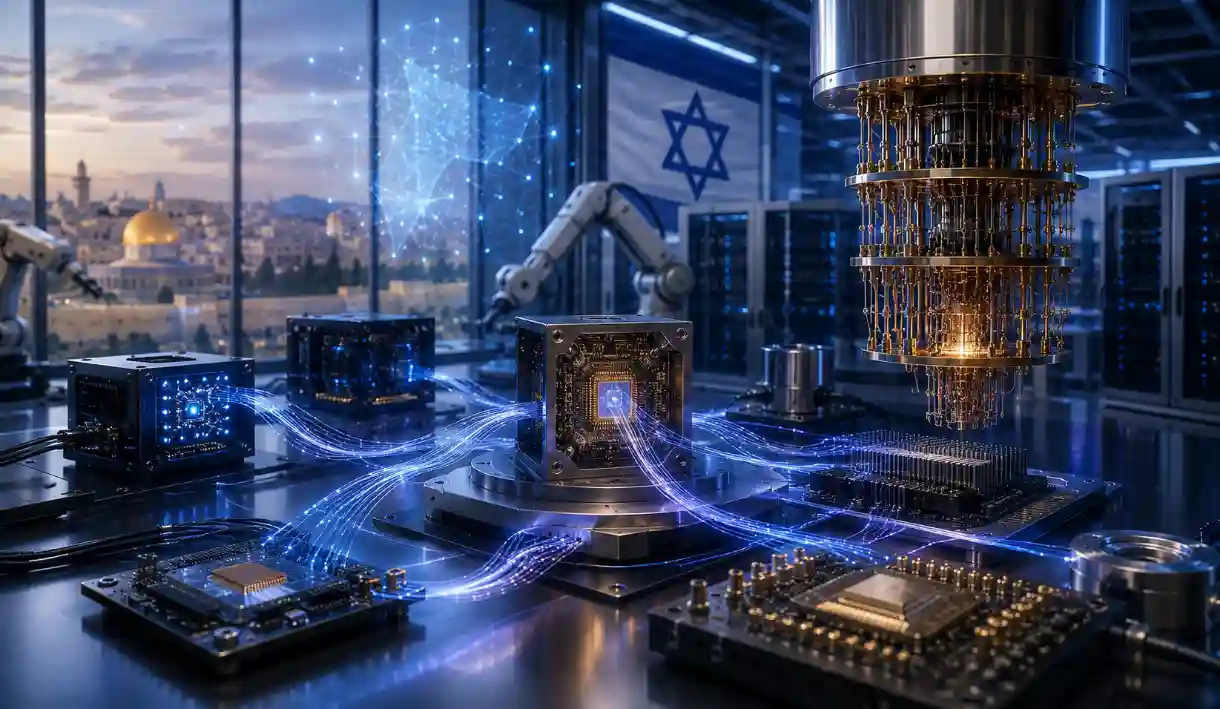
Israel’s innovation agency is planning a national quantum R&D center built around a specific choice, to integrate and benchmark other companies’ components rather than build a quantum computer of its own. The Israel Innovation Authority frames it as a shared lab where startups’ processors, controllers, algorithms, and other pieces can be tested together as complete stacks. It’s a proposal from the agency’s outgoing chief, without a budget or timeline attached.
Why Israel wants a quantum integration center
Per the July 27 report, the plan comes from Israel Innovation Authority CEO Dror Bin in an interview with the Jerusalem Post and The Media Line. Bin’s argument is that Israeli startups have grown strong in several quantum categories, and the next problem is getting those separate parts to work as one system. The center would exist to solve that, and he drew the boundary plainly.
“Not in order to create a computer, but rather to create an R&D lab in which different components of hardware and software can be tested, can be integrated, can be benchmarked to see that everything really works together.”
The whole idea fits in one sentence. Instead of a finished Israeli machine, a place to assemble and stress-test the layers that different companies build, before any of it ships commercially. It’s the integration problem the wider industry keeps flagging, turned into national infrastructure.
Why Israel is betting on specialization
The strategy is to win specific layers rather than the whole computer. Bin says Israeli firms will be part of leading machines “in some categories,” citing quantum controllers, and that Israel leans harder on private capital than most countries chasing the same technology. He put Israel’s share of global early-stage quantum investment in 2025 at about 10%, which is his agency’s figure, and predicted useful quantum applications before the decade’s end, though he named no milestones for the center itself.
Hold it as a proposal, not a launch. There’s no funding or timeline attached, it rests on a single interview, and Bin is stepping down after five years, so this is an outgoing chief’s vision that a successor would inherit. He also floated longer-shot ideas, pairing Israeli technology with neighbors’ land and energy for AI data centers, and an eventual merger of AI and quantum computing, both of which he framed as speculative.
What’s concrete is the direction. A component-integration center is a different play from the full-stack push of larger states, and it fits a global wave of national quantum strategy, from the US naming quantum a strategic priority to its funding of a domestic quantum supply chain. It also builds on an Israeli ecosystem already drawing attention, with companies like Quantum Art and Classiq weighing public listings.