
A Qubit That Lasts Longer, Because of What It’s Made Of

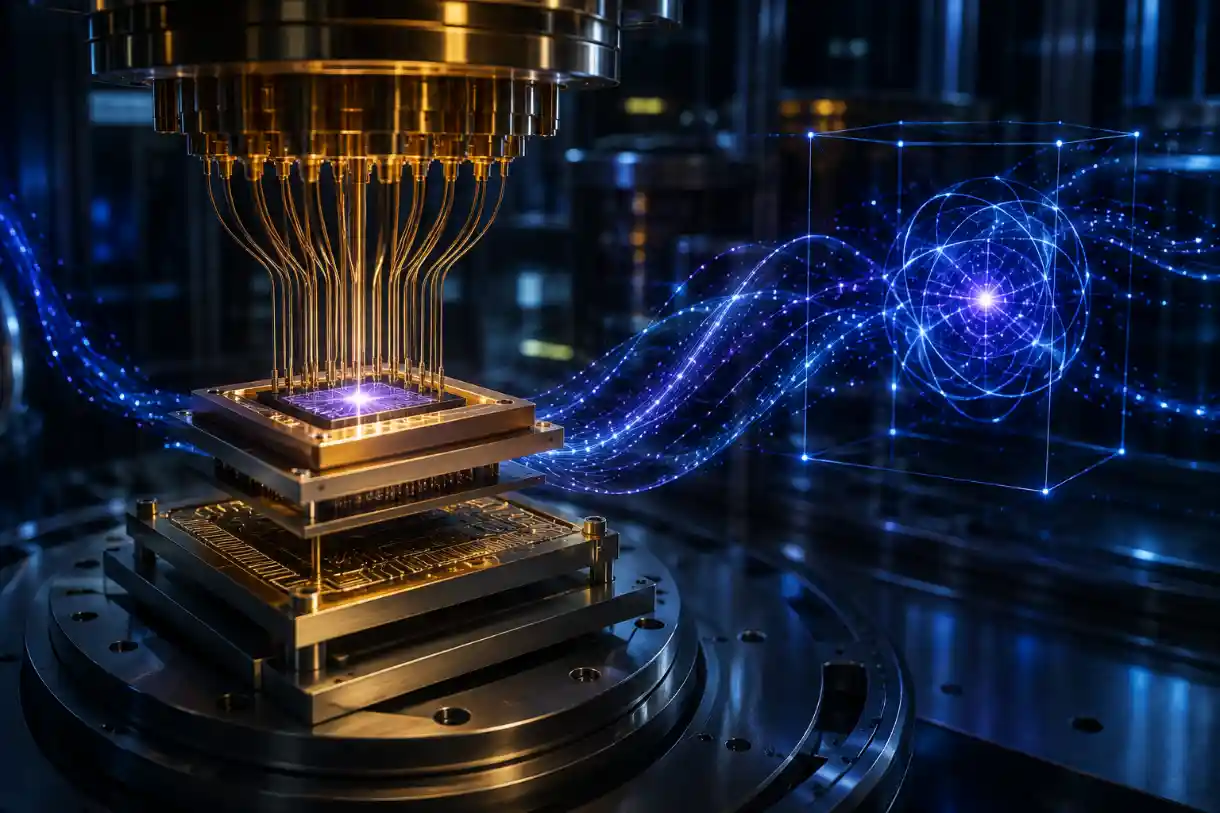
A superconducting qubit is a beautiful, fragile thing. It holds quantum information for a flicker, a fraction of a millisecond in the machines Google and IBM run, before noise wipes it. Extending that window, the coherence time, is one of the field’s oldest struggles, because a qubit that forgets too fast can’t finish a useful calculation. A Princeton team has now pushed a standard qubit past one millisecond, and it did this by changing what the qubit is made of instead of redesigning the circuit.
The work, published in Nature, is the largest single jump in transmon coherence in more than a decade. The team, from the DOE’s Co-design Center for Quantum Advantage, reports lifetimes over a millisecond, with peaks near 1.68, about three times the best previous lab result and about fifteen times what industrial processors manage. Andrew Houck, who co-invented this kind of qubit in 2007 and led the center, framed why it counts:
“The real challenge, the thing that stops us from having useful quantum computers today, is that you build a qubit and the information just doesn’t last very long. This is the next big jump forward.”
Where the energy leaks
Coherence dies when a qubit leaks energy, and most of that leak happens at tiny, invisible defects on the surfaces and interfaces of the materials the qubit consists of. Every defect is a little crack the quantum information can drain through. Standard transmons use aluminum and niobium; the Princeton group, working with chemist Robert Cava, switched to tantalum, a superconductor with fewer of those defects and a cleaner oxide.
It’s also tough. “You can put tantalum in acid, and still the properties don’t change,” said co-lead author Faranak Bahrami, which lets the team scrub contamination off during fabrication without wrecking the metal. That materials-first instinct runs through a lot of quantum progress, where the atoms under the qubit increasingly decide how well it works.
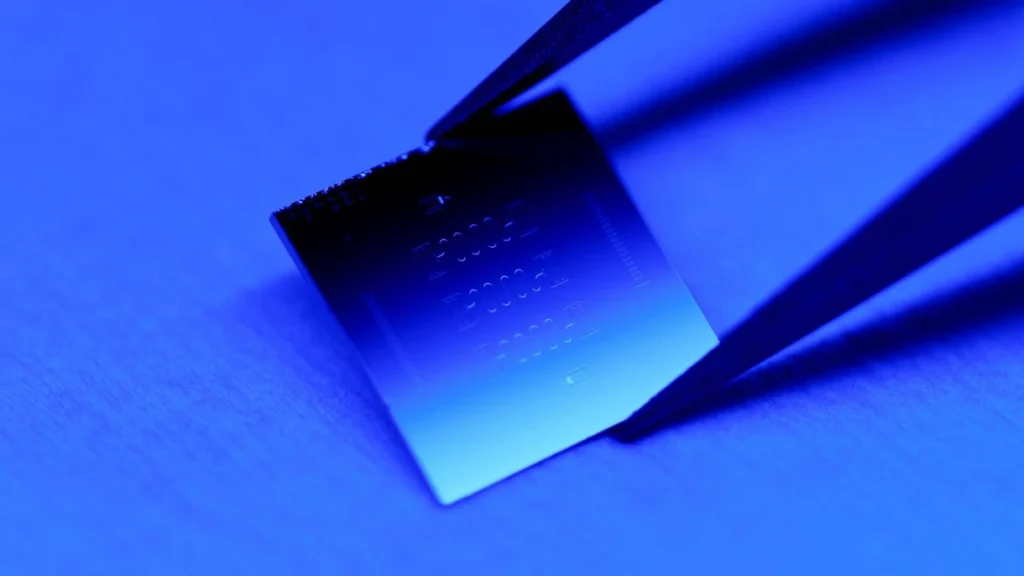
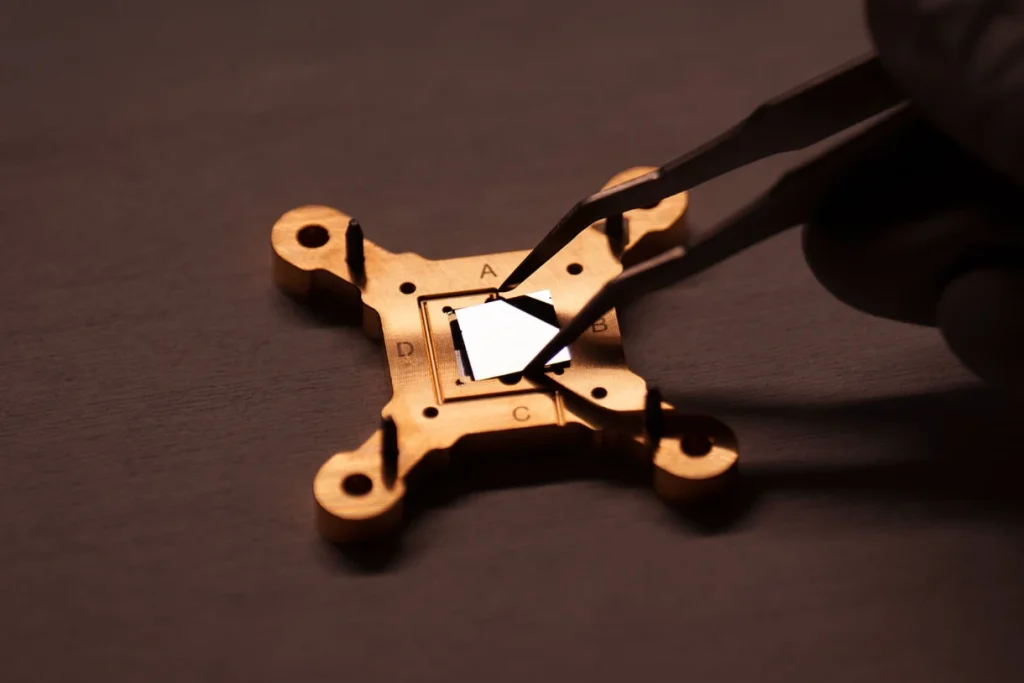
Tantalum on the usual sapphire base got them partway. The rest of the loss came from the sapphire itself, so they swapped it for high-purity silicon, the workhorse of the chip industry. Growing tantalum cleanly on silicon was the hard part, a fabrication problem that took serious work to solve, but the combination cut the energy leakage to record lows.
Michel Devoret, Google’s hardware chief and a 2025 physics Nobel laureate, called this challenge a “graveyard” of failed ideas, and credited de Leon with the “guts to pursue this strategy and make it work.”
Why longer-lived qubits ripple outward
The appeal isn’t only a bigger number. Longer coherence means fewer errors, the same goal behind new error-correcting codes, which means fewer qubits spent correcting other qubits, which means fewer control pulses and less of the noise that stabilization itself introduces. The gains compound.
Houck projects that dropping the Princeton design into Google’s best processor would make it work a thousand times better, and that a hypothetical thousand-qubit machine would improve a billionfold, since the benefit scales exponentially with size. Those are projections, not measurements, and are the rather optimistic end of the range. What’s measured is the coherence, and it’s a peer-reviewed record.
The practical part is that this is a drop-in change. The new qubit looks like the transmons already in Google and IBM machines, so, as de Leon put it, the critical steps are now clear enough for anyone building scaled processors to adopt. No new architecture required, which is why the result is drawing industry attention rather than staying a lab curiosity.
What it doesn’t fix
Coherence is the foundation, and it isn’t the whole building. Fault-tolerant quantum computing still needs error correction that runs in real time, a way to wire thousands of qubits together, and the architectural advances that come with scale. Houck hedges the timeline himself, saying a scientifically relevant quantum computer could arrive by the end of the decade, which is a maybe.
The field has learned to separate a genuine hardware advance from a finished machine, the same discipline that keeps error-correction results grounded and treats a qubit that exists only in simulation as a starting point.
Even so, this one stands out. It’s in Nature, it’s the biggest coherence gain in a decade, and it attacks the problem at the most basic level, the stuff that makes up the qubit The noise that breaks these chips hasn’t gone away, but the Princeton team has shown that much of a qubit’s fragility was never fundamental. It was the materials, and materials can be changed.