
Horizon Quantum and Quantum Machines Team on Calibration

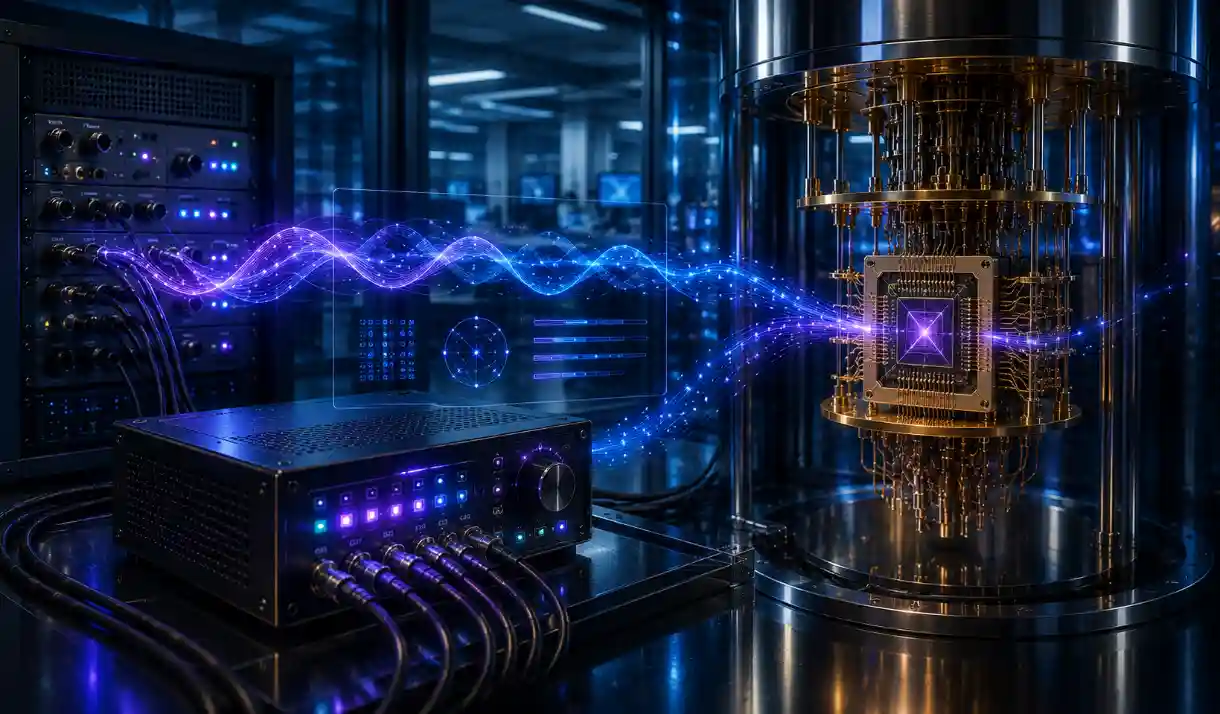
Horizon Quantum is working with Quantum Machines to keep a quantum computer tuned without switching it off. The two companies plan to build embedded calibration routines for Ember-1, Horizon’s first in-house superconducting testbed, which already runs on Quantum Machines’ OPX1000 control system. The aim is to trade slow, full-system calibration for lightweight updates that run during normal operation.
Why quantum computer calibration is important
Indeed, calibration is the tuning that keeps a quantum computer’s qubits accurate, and it directly sets the fidelity of everything the machine does. However, the catch is that a full calibration is slow, and a processor being recalibrated is a processor not running anyone’s computation. As systems grow larger, keeping them tuned without pulling them offline for long stretches becomes a real operational drag. According to the July 29 press release, the fix Horizon and Quantum Machines are chasing is to run small calibration routines continuously, as part of normal operation, updating parameters often enough that the machine stays sharp without stopping. Quantum Machines CEO Itamar Sivan tied that to the wider goal.
“We are excited to collaborate with Horizon Quantum on technologies that bring calibration closer to real-time operation, helping unlock more productive quantum systems and accelerating the path toward practical quantum computing.”
The problem is genuine, and it’s the same class of environmental drift and control overhead that shows up across hardware, from mapping the stray fields that disturb a chip to the control bottleneck the neutral-atom field flags as machines scale.
What Horizon Quantum and Quantum Machines plan to build
Read it as a collaboration to build something, not a result. The release revolves around intentions, developing a framework that “aims to” cut downtime and improve stability, with no measured improvement to point to yet. Ember-1 is a testbed rather than a commercial machine, and Horizon Quantum (Nasdaq: HQ) is primarily a software company that built its first in-house hardware partly to have a place to do work like this. The payoff named is more access time for the testbed’s Triple Alpha users, plus a real-world demonstration of Quantum Machines’ control technology, so it’s a showcase for both sides as much as an engineering effort.
The promotional labels, “industry-leading orchestration platform” and “best-in-class,” are the companies’ own. What’s real underneath is a sensible target. Reliable, continuously operating hardware is what turns a lab machine into something useful, the same reliability push behind work on superconducting error correction, the control and decoding stack that companies like Quantum Machines supply, and the move toward judging systems by practical business value.